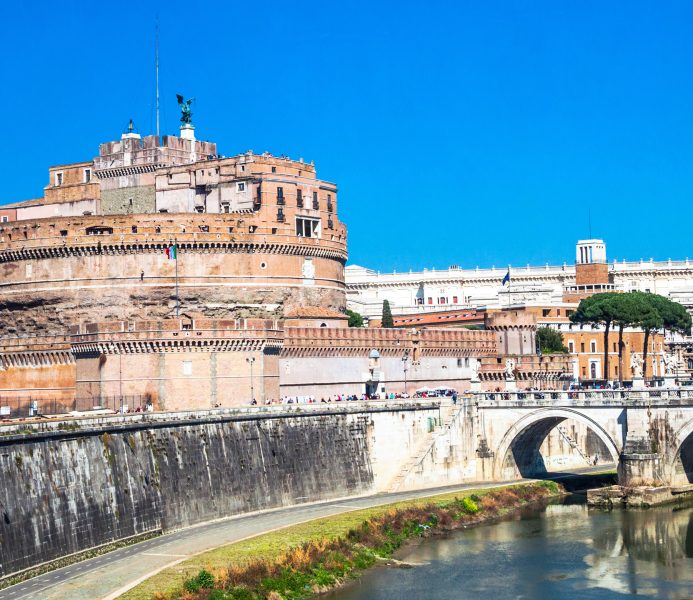
Ponte Sisto, an architectural marvel of Renaissance Rome, stands as a testament to the city’s enduring historical legacy. Constructed between 1473 and 1479 under the auspices of Pope Sixtus IV, the bridge serves as a vital link across the Tiber River, connecting the vibrant districts of Regola and Trastevere. This stone arch bridge, composed of four elegant spans, was meticulously designed to replace an ancient Roman predecessor, thereby preserving the continuity of Rome’s urban landscape.
The bridge’s historical significance is enriched by its association with notable figures and eras. Originally, the site was home to a bridge attributed to Marcus Vipsanius Agrippa, a close confidant of Emperor Augustus. Over the centuries, the structure underwent several reconstructions and restorations, notably under Emperor Antoninus Pius and later by Lucius Aurelius Avianius Symmachus during the reign of Emperors Valens and Valentinian I. Today, Ponte Sisto stands not only as a functional piece of infrastructure but also as a symbol of Rome’s rich tapestry of history, culture, and architectural innovation.
Description of Ponte Sisto
Ponte Sisto, an enduring symbol of Rome’s architectural heritage, stands as a testament to the city’s rich history and engineering prowess. This elegant stone bridge, which spans the Tiber River, is a remarkable example of Renaissance architecture, embodying both historical significance and functional design. As visitors approach Ponte Sisto, they are greeted by its graceful arches and the distinctive circular opening, or “oculus,” which serves both a practical and aesthetic purpose. The bridge’s structure is a marvel of engineering, designed to alleviate the pressure of water flow during floods, a testament to the foresight of its creators.
Tourists visiting Ponte Sisto can immerse themselves in the historical ambiance of the bridge while enjoying panoramic views of the surrounding cityscape. The bridge connects the lively district of Trastevere with the historic center of Rome, offering a picturesque route for pedestrians. As they stroll across the bridge, visitors can appreciate the intricate stonework and the harmonious blend of functionality and artistry that characterizes this iconic structure. The experience is further enriched by the bridge’s proximity to various cultural landmarks, making it an ideal starting point for exploring the vibrant neighborhoods it connects.
Architectural Features of Ponte Sisto
The architectural design of Ponte Sisto is distinguished by its four elegant arches, which span the Tiber River with a sense of balance and symmetry. Constructed from robust stone materials, the bridge reflects the durability and craftsmanship typical of Renaissance engineering. The arches are supported by sturdy piers, each meticulously crafted to withstand the test of time and the forces of nature. The central arch is notably larger, providing a focal point that enhances the bridge’s visual appeal while ensuring structural integrity.
A unique feature of Ponte Sisto is the “oculus,” a circular opening situated in the central pier. This innovative design element serves a dual purpose: it reduces the pressure exerted by the river’s current during high water levels and adds an aesthetic dimension to the bridge’s silhouette. The oculus is a testament to the ingenuity of the bridge’s designers, who combined practical engineering solutions with artistic considerations. As visitors observe this feature, they gain insight into the sophisticated techniques employed by Renaissance architects to address the challenges posed by the natural environment.
Artistic and Historical Significance
Ponte Sisto is not only an architectural marvel but also a monument steeped in history. Its construction was commissioned by Pope Sixtus IV, after whom the bridge is named, as part of his efforts to enhance the infrastructure of Rome. The bridge was inaugurated in 1475, coinciding with the Jubilee year, and played a crucial role in facilitating the movement of pilgrims across the Tiber. This historical context adds a layer of cultural significance to the bridge, making it a point of interest for those seeking to explore Rome’s rich heritage.
The bridge’s historical importance is further underscored by its connection to various periods of Roman history. Originally built on the site of an ancient Roman bridge, Ponte Sisto has witnessed the city’s evolution over centuries. The remnants of earlier structures, such as the Pons Agrippae and Pons Valentiniani, are echoed in the bridge’s design, offering visitors a tangible link to the past. As tourists traverse the bridge, they are walking in the footsteps of countless individuals who have crossed the Tiber throughout history, adding a sense of continuity and connection to their experience.
Points of Interest for Tourists
For tourists, Ponte Sisto offers more than just a crossing over the Tiber; it provides a vantage point for appreciating Rome’s scenic beauty. The bridge’s location affords stunning views of the riverbanks and the city’s skyline, making it a popular spot for photography and leisurely strolls. As visitors pause to take in the sights, they can also explore the vibrant neighborhoods on either side of the bridge. The Trastevere district, known for its charming cobblestone streets and lively atmosphere, is a short walk away, offering a taste of local culture and cuisine.
In addition to its architectural and historical allure, Ponte Sisto serves as a gateway to several nearby attractions. The bridge’s proximity to landmarks such as the Campo de’ Fiori and the Piazza Trilussa makes it an ideal starting point for exploring Rome’s cultural offerings. Whether visitors are interested in art, history, or simply soaking in the ambiance of the Eternal City, Ponte Sisto provides a convenient and picturesque route to some of Rome’s most cherished sites.
Curious Elements to Highlight
One of the intriguing aspects of Ponte Sisto is its role in the city’s flood management system. The bridge’s design, particularly the inclusion of the oculus, reflects a thoughtful approach to mitigating the impact of the Tiber’s fluctuating water levels. This feature not only enhances the bridge’s functionality but also adds an element of curiosity for those interested in engineering and design. Visitors can appreciate the foresight of the Renaissance architects who anticipated the challenges posed by the river’s natural behavior.
Another point of interest is the bridge’s connection to significant historical events. During its long history, Ponte Sisto has witnessed numerous moments of cultural and political importance. Its construction under Pope Sixtus IV marked a period of renewal and development for Rome, and the bridge has since become a symbol of the city’s resilience and adaptability. As tourists explore Ponte Sisto, they are engaging with a living monument that continues to play a vital role in the life of the city, bridging the past and present in a seamless and enduring manner.
The History of Ponte Sisto
Ponte Sisto, a significant architectural landmark in Rome, has a rich and varied history that reflects the city’s evolution over centuries. Originally built on the site of an ancient Roman bridge, its story is intertwined with the lives of emperors, popes, and the citizens of Rome. This bridge not only served as a vital crossing over the Tiber River but also as a symbol of continuity and change throughout Roman history.
The bridge we see today was constructed in the late 15th century by order of Pope Sixtus IV, but its roots stretch back to ancient times. Over the centuries, Ponte Sisto has undergone numerous transformations, restorations, and reconstructions, each adding a layer to its historical narrative. This section delves into the various periods that have shaped Ponte Sisto, offering a detailed exploration of its past.
Ancient Origins and the Pons Agrippae (Before 12 BCE)
The origins of what would become Ponte Sisto date back to the late Roman Republic. The initial construction, known as the Pons Agrippae, was attributed to Marcus Vipsanius Agrippa, a close confidant of Emperor Augustus. Agrippa, who married Augustus’s daughter Julia, constructed the bridge to connect his villa on the opposite bank of the Tiber to the bustling area of the Campus Martius.
This early wooden bridge served as a crucial link between different parts of the city, facilitating movement and trade. The existence of the Pons Agrippae is confirmed by inscriptions found on a stone marker, known as a cippo, discovered in 1887, which details maintenance work carried out during the reign of Emperor Claudius.
Imperial Restorations and Renamings (147 CE – 367 CE)
Under the reign of Emperor Antoninus Pius in 147 CE, the bridge underwent significant restoration, which led to its renaming as the Pons Aurelius or Pons Antonini. This period marked a time of architectural renewal, as the bridge was reinforced to accommodate increased traffic and to ensure its structural integrity.
Further modifications were made in the late 4th century, during the rule of Emperors Valens and Valentinian I. The bridge was then known as the Pons Valentiniani, featuring an impressive triumphal arch adorned with bronze statues. These embellishments reflected the grandeur of Roman engineering and the importance of the bridge as a civic structure.
Medieval Decline and the Ponte Rotto (589 CE – 791 CE)
The bridge suffered considerable damage during the floods of 589-590 CE, which led to its partial collapse. By 791 CE, another catastrophic flood had rendered it unusable, earning it the moniker Ponte Rotto, or “Broken Bridge.” This period of neglect saw the bridge fall into disrepair, with only remnants of its former glory remaining visible.
During the medieval era, the bridge’s ruins served as a reminder of Rome’s ancient past, with its once-grand structure reduced to a mere shadow of its original form. The name Ponte Rotto persisted, symbolizing the challenges faced by the city in maintaining its infrastructure amidst political and environmental upheavals.
Reconstruction under Pope Sixtus IV (1473 – 1479)
The modern incarnation of the bridge, known today as Ponte Sisto, was commissioned by Pope Sixtus IV in the late 15th century. The reconstruction was part of a broader effort to rejuvenate Rome’s infrastructure in preparation for the Jubilee of 1475. Although traditionally attributed to the architect Baccio Pontelli, the true designer remains a subject of scholarly debate.
Completed in 1479, the new stone bridge featured four arches and a distinctive central oculus, designed to alleviate pressure during floods. This architectural innovation highlighted the Renaissance’s emphasis on blending functionality with aesthetic appeal. The bridge’s completion marked a significant achievement for Pope Sixtus IV, who sought to enhance the city’s connectivity and accommodate the influx of pilgrims.
Subsequent Restorations and Modern Modifications (1567 – Present)
In the centuries following its reconstruction, Ponte Sisto underwent various restorations to address structural concerns and adapt to changing urban needs. Notably, under Pope Pius IV in 1567, the bridge’s piers were reinforced, a project overseen by the renowned architect Jacopo Barozzi da Vignola. Further repairs were carried out after the flood of 1598, ensuring the bridge’s continued use.
In the 19th century, the bridge was expanded with the addition of cast-iron sidewalks, but these were later removed during the Jubilee of 2000 to restore its original appearance. Today, Ponte Sisto stands as a testament to Rome’s enduring legacy, bridging the past and present while continuing to serve as a vital thoroughfare for residents and visitors alike.
Visiting Ponte Sisto
Approaching Ponte Sisto
Visitors approaching Ponte Sisto will find themselves in the vibrant heart of Rome, where the bridge serves as a picturesque connection between the historic districts of Regola and Trastevere. As one of the city’s iconic pedestrian bridges, it offers a unique vantage point over the Tiber River, providing a serene escape from the bustling city streets. The bridge’s elegant stone arches and central oculus, designed to alleviate water pressure during floods, are notable features that reflect its rich historical lineage.
The approach to Ponte Sisto is accessible and inviting, with no entry fee required, making it an ideal stop for those exploring the area on foot. The surrounding neighborhood is replete with charming cafes, artisanal shops, and historical landmarks, allowing visitors to immerse themselves in the local culture and history.
Observing the Bridge’s Architecture
As visitors traverse Ponte Sisto, they will be captivated by its architectural beauty. The bridge, reconstructed under the auspices of Pope Sixtus IV in the late 15th century, retains its Renaissance charm, characterized by four majestic stone arches. The central oculus, a distinctive feature, not only serves a practical purpose but also adds to the aesthetic appeal of the structure.
The bridge’s location offers stunning views of the Tiber River and the surrounding cityscape, making it a popular spot for photography and leisurely strolls. Visitors can take in the sights of nearby landmarks, such as the Gianicolo Hill and the bustling Campo de’ Fiori, enhancing their understanding of Rome’s historical and cultural tapestry.
Integrating Ponte Sisto into a Broader Itinerary
Ponte Sisto is ideally situated for those wishing to explore more of Rome’s historical and cultural offerings. After crossing the bridge, visitors can easily access the lively district of Trastevere, known for its narrow cobblestone streets and vibrant nightlife. This area is rich in history, with attractions such as the Santa Maria in Trastevere church and the Villa Farnesina.
For those interested in a more structured exploration, guided walking tours often include Ponte Sisto as a key highlight, providing context and stories that bring the bridge’s history to life. Whether part of a broader itinerary or a standalone visit, Ponte Sisto offers a memorable experience that captures the essence of Rome’s enduring allure.