-
Location:
Piazzale del Verano, 1, Rome, Italy
-
Built by:
Giuseppe Valadier, Virginio Vespignani, Agostino Mercandetti, and Gioacchino Ersoch between 1811-1814
-
What to see:
Monumental entrance, Santa Maria della Misericordia, Sacrario militare, Tempio egizio
-
Opening hours:
Freely accessible (check official site for current hours)
-
Transport:
Tram lines 3 and 19, Metro station: Policlinico (B)
The Monumental Cemetery of Verano, located in the Tiburtino district of Rome, stands as a significant testament to the city’s rich cultural and historical heritage. Established between 1811 and 1814, it was designed by renowned architects such as Giuseppe Valadier and Virginio Vespignani. The cemetery is adjacent to the Basilica of San Lorenzo fuori le mura, a site of profound historical importance. Spanning an impressive 83 hectares, it is the second-largest cemetery in Italy, following the Flaminio Cemetery. Managed by the municipal company AMA, the Verano Cemetery reflects the evolution of burial practices influenced by the Napoleonic edict of Saint-Cloud, which mandated burials outside city walls.
The cemetery’s layout and architecture showcase the neoclassical style, with its monumental entrance featuring a quadriportico and statues symbolizing Meditation, Hope, Charity, and Silence. Over the years, the cemetery has expanded to include sections for different religious confessions, including Jewish and non-Catholic areas. It also houses a military memorial honoring soldiers from both World Wars. The Verano Cemetery is not only a resting place for many illustrious figures such as Vittorio Gassman and Alberto Sordi, but it also serves as a cultural landmark, offering visitors a glimpse into Rome’s artistic and historical legacy.
Description of the Monumental Cemetery of Verano
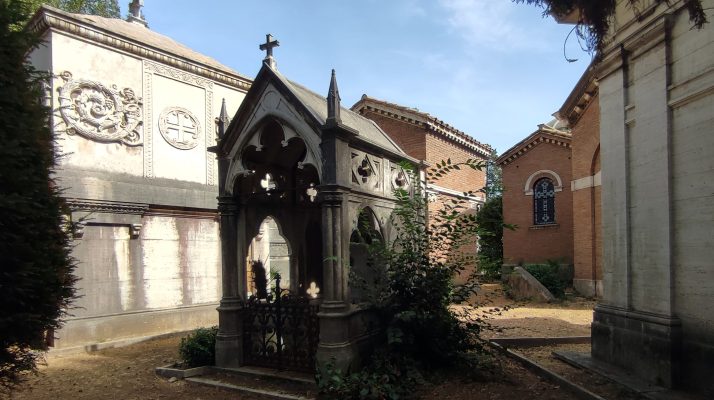
The Monumental Cemetery of Verano, nestled in the heart of Rome’s Tiburtino district, offers visitors a unique blend of history, architecture, and art. Spanning over 83 hectares, this vast necropolis is a testament to Rome’s rich cultural heritage and serves as a resting place for many notable figures. As visitors traverse its expansive grounds, they are greeted by a myriad of architectural and artistic marvels, each narrating a story of the past. From the grand entrance designed by Virginio Vespignani to the intricate funerary monuments scattered throughout, the cemetery is a treasure trove of historical and cultural significance.
Tourists visiting the Monumental Cemetery of Verano can explore various sections, each offering a distinct glimpse into the past. The cemetery is divided into multiple zones, each housing unique architectural and artistic elements. Among the highlights are the quadriportico, the Sacrario Militare, and the Tempio Egizio. These areas not only serve as points of interest for their historical value but also for their architectural beauty and the stories they tell. Visitors can also pay homage to the many illustrious individuals buried here, including renowned artists, writers, and political figures.
The Grand Entrance and Quadriportico
The entrance to the Monumental Cemetery of Verano is a masterpiece of neoclassical architecture, designed by the esteemed architect Virginio Vespignani. The grand portico, completed between 1864 and 1875, features three imposing fornici adorned with wrought iron gates. Flanking these are four statues representing Meditation, Hope, Silence, and Prayer, each sculpted by prominent artists of the time. The entrance sets the tone for the rest of the cemetery, offering a solemn yet majestic welcome to visitors.
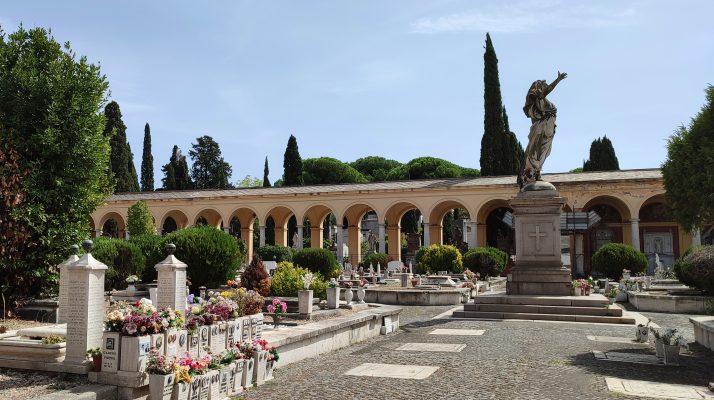
Beyond the entrance lies the quadriportico, a vast colonnaded area housing several monumental tombs. This section serves as a focal point for visitors, offering a serene space for reflection and remembrance. Among the notable tombs are those of Virginio and Francesco Vespignani, Paolo Mercuri, and Luigi Santarelli. The quadriportico’s design, with its harmonious blend of columns and arches, reflects the neoclassical style prevalent during its construction, providing a fitting backdrop for the many historical figures interred within its confines.
The Sacrario Militare
The Sacrario Militare, or Military Shrine, is a poignant reminder of Italy’s tumultuous past. Located in the eastern section of the cemetery, this area is dedicated to the soldiers who lost their lives in the two World Wars. Designed by Raffaele De Vico and completed between 1922 and 1931, the sacrario is structured like a theater, with a central altar framed by a semicircular marble wall. Inscribed on this wall are the names of the fallen, accompanied by the Latin phrase “Suis civibus in acie interemptis Roma mater,” which translates to “Rome, the mother, to her citizens killed in battle.”
This section of the cemetery is not only a place of mourning but also a space for contemplation and gratitude. The sacrario’s design, with its somber yet dignified architecture, invites visitors to reflect on the sacrifices made by those who fought for their country. Adjacent to the sacrario is the Mausoleo dei Mutilati e Invalidi di Guerra, a mausoleum dedicated to the war’s disabled and mutilated, further emphasizing the cemetery’s role as a site of national remembrance.
The Tempio Egizio
The Tempio Egizio, or Egyptian Temple, is one of the more unusual features of the Monumental Cemetery of Verano. Originally constructed as a crematorium between 1882 and 1883, this small building now serves as a venue for secular funeral ceremonies. Designed by Salvatore Rosa, the temple’s architecture is a nod to ancient Egyptian styles, with its distinctive columns and decorative motifs.
Though no longer functioning as a crematorium since 1980, the Tempio Egizio remains a point of interest for visitors due to its unique design and historical significance. The building’s restoration in 1938 ensured the preservation of its architectural features, allowing visitors to appreciate its blend of ancient and modern elements. As a space for secular ceremonies, the temple highlights the cemetery’s inclusive nature, accommodating various cultural and religious practices.
Artistic Monuments and Notable Burials
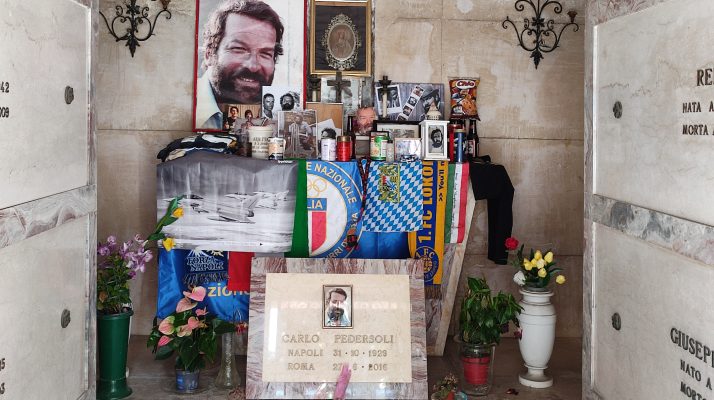
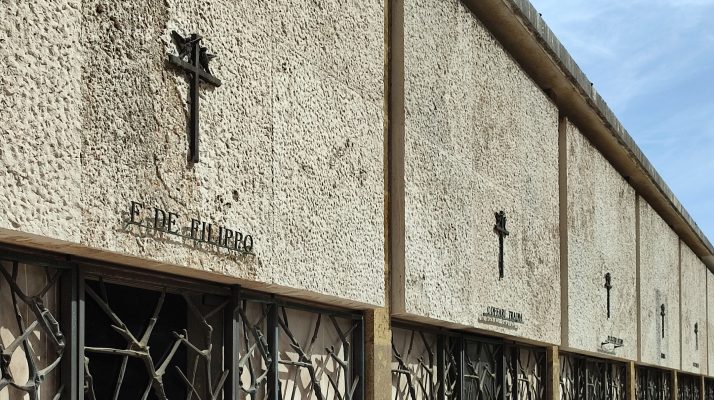
The Monumental Cemetery of Verano is home to an array of artistic monuments and the final resting places of many illustrious individuals. Among the notable burials are those of Alberto Sordi, Vittorio Gassman, and Giuseppe Ungaretti, each contributing to the cemetery’s rich tapestry of cultural history. The cemetery’s layout, with its carefully curated sections, allows visitors to explore these graves while appreciating the artistry of the monuments themselves.
Many of the tombs and monuments within the cemetery are the work of renowned artists and sculptors, including Ettore Ferrari, Giulio Monteverde, and Filippo Severati. Severati, in particular, is known for his unique technique of painting on lava stone, with over 100 of his works scattered throughout the cemetery. These artistic elements, combined with the cemetery’s historical significance, make the Monumental Cemetery of Verano a must-visit destination for those interested in Rome’s cultural heritage.
History of the Monumental Cemetery of Verano
The Monumental Cemetery of Verano stands as a testament to the rich historical and cultural tapestry of Rome. Its origins trace back to the early 19th century, a period marked by significant changes in burial practices across Europe. The cemetery, located in the Tiburtino district and adjacent to the Basilica of San Lorenzo fuori le mura, is a reflection of the evolving attitudes towards death and commemoration, influenced by both religious and secular considerations.
Throughout its history, the cemetery has been shaped by various socio-political events and developments. From its initial conception under Napoleonic rule to its expansion during the Kingdom of Italy, the Verano has been a site of architectural innovation and cultural significance. It serves not only as a resting place for the deceased but also as a repository of artistic and historical heritage, housing numerous monuments and sculptures by renowned artists.
Napoleonic Era and Initial Conception (1804-1814)
The establishment of the Monumental Cemetery of Verano was significantly influenced by the Edict of Saint-Cloud, issued by Napoleon Bonaparte in 1804. This decree mandated that burials be conducted outside city walls, a directive aimed at improving urban sanitation and public health. In response, the French authorities in Rome identified the need for a new burial ground, leading to the selection of the Verano field along the Via Tiburtina.
The initial plans for the cemetery were developed by architects Giuseppe Camporese and Raffaele Stern, who proposed two potential sites. Ultimately, the Verano was chosen, and architect Giuseppe Valadier was tasked with its design. Construction began in 1811 but was halted in 1814 following the restoration of the Papal States, which temporarily reinstated the practice of church burials.
Papal Restoration and Expansion (1830s-1846)
Under the pontificate of Pope Gregory XVI, the cemetery’s construction resumed in the 1830s. This period saw the implementation of new cemetery regulations, spearheaded by Cardinal Carlo Odescalchi, which aimed to standardize burial practices. The cemetery’s development gained momentum in 1837, driven by a cholera epidemic that underscored the need for adequate burial facilities.
By the time Pope Pius IX ascended to the papacy in 1846, the Verano, then known as Campo Verano, was operational. The pope, eager to modernize Rome, commissioned architect Virginio Vespignani to enhance the cemetery’s design. Vespignani’s contributions included the construction of the Church of Santa Maria della Misericordia and the monumental quadriportico at the main entrance, completed in 1860.
Post-Unification Developments and Modernization (1870s-1960s)
The unification of Italy and the designation of Rome as the capital brought further changes to the Verano. The cemetery underwent several expansions, incorporating additional land through purchases and expropriations. Notable developments during this period included the inauguration of the Jewish and non-Catholic sections between 1880 and 1906, as well as the construction of a crematorium and a municipal mortuary.
The early 20th century saw the introduction of new transportation links, with a horse-drawn tramway connecting the cemetery to Termini Station in 1879. The cemetery also became a site of remembrance for military sacrifices, with the inauguration of the ossuary for Roman soldiers of World War I in 1928, designed by Raffaele De Vico. Despite suffering damage during World War II, the cemetery was restored and continued to evolve, culminating in the opening of the Flaminio Cemetery in the 1960s to accommodate Rome’s growing population.
Visiting the Monumental Cemetery of Verano
Approaching the Site
The Monumental Cemetery of Verano is a prominent historical site located in the Tiburtino district of Rome, adjacent to the Basilica of San Lorenzo fuori le Mura. Visitors approaching the cemetery will find it easily accessible via public transportation, with tram lines 3 and 19 providing convenient stops near the main entrance at Piazzale del Verano. The cemetery’s entrance is marked by an impressive neoclassical portico designed by Virginio Vespignani, featuring three large arches adorned with statues symbolizing Meditazione, Speranza, Carità, and Silenzio.
Upon arrival, visitors are greeted by the expansive layout of the cemetery, which spans approximately 83 hectares. The site is divided into 21 distinct zones, each offering a unique glimpse into the rich tapestry of Rome’s cultural and historical heritage. A complimentary shuttle service is available within the cemetery grounds, facilitating movement between different areas and ensuring that visitors can explore the site comfortably.
Exploring the Grounds
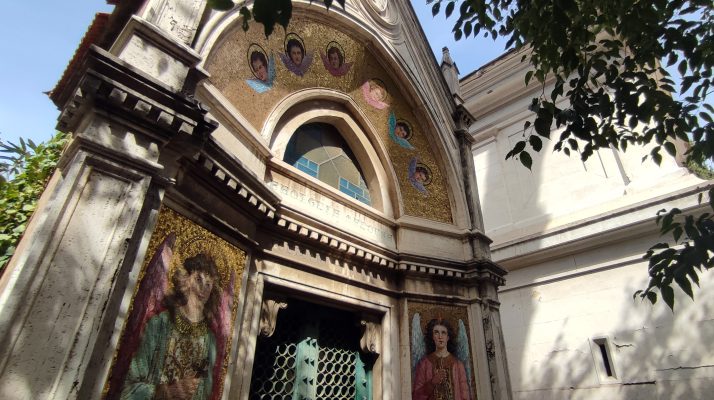
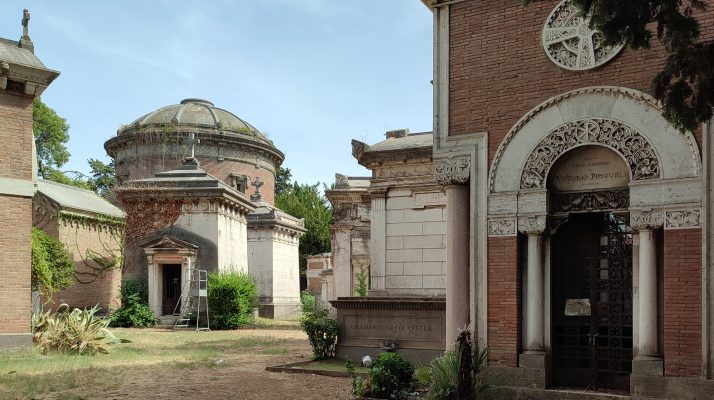
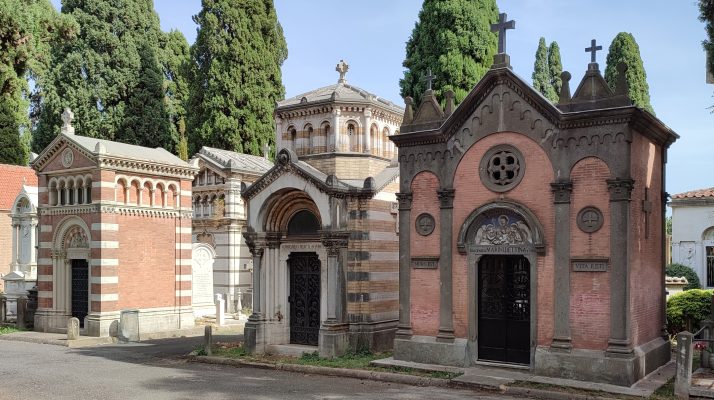
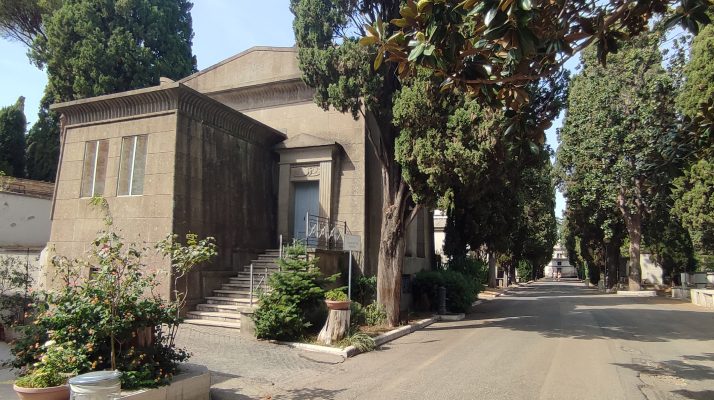
The cemetery itself is a vast open-air museum, home to numerous monuments and works by renowned artists such as Francesco Fabi Altini, Ettore Ferrari, and Giulio Monteverde. The cemetery’s design reflects the neoclassical style, with its carefully planned avenues and sections dedicated to various religious and cultural groups, including Catholic, Jewish, and Protestant communities. Notable sections include the Pincetto Vecchio and Pincetto Nuovo, which house some of the most elaborate and historically significant tombs.
Visitors can explore thematic itineraries within the cemetery, focusing on different aspects such as cinema, the Risorgimento, or notable female figures. While maps are available at the entrance, it is advisable to use modern navigation tools like Google Maps to locate specific graves or monuments, as the cemetery’s layout can be complex.
Practical Considerations
While planning a visit to the Monumental Cemetery of Verano, it is essential to consider the physical demands of exploring such a large site. Comfortable footwear and adequate hydration are recommended, especially during warmer months. The cemetery’s serene atmosphere provides a reflective space for visitors, offering an opportunity to connect with the past and appreciate the artistic and historical significance of the site.
The cemetery is open to the public, and while there are no entrance fees, guided tours may be available for those seeking a more in-depth understanding of its history and significance. Visitors are encouraged to respect the solemn nature of the site, maintaining a quiet demeanor and observing any guidelines provided by the cemetery staff.