-
Location:
Via Casilina 641, 00177, Roma
-
Built by:
Emperor Constantine I between 315 and 326 C.E.
-
What to see:
Mausoleum, catacombs, sarcophagus of Elena
-
Opening hours:
Monday-Wednesday and Friday-Sunday 10:00-12:00 and 15:00-17:00 (by reservation)
-
Transport:
Metro stations: Malatesta, Teano, Gardenie, Parco di Centocelle
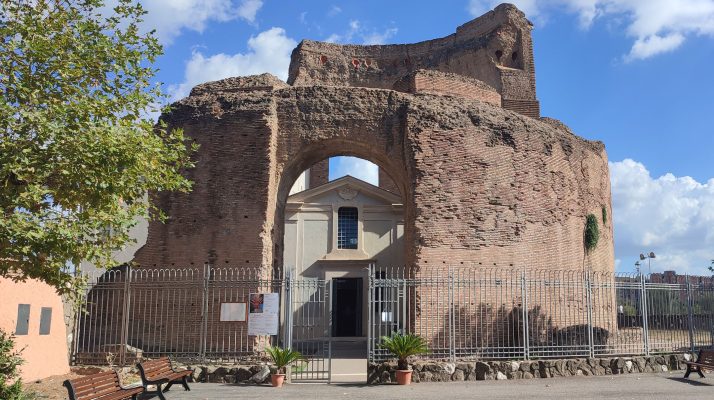
The Mausoleo di Elena, an eminent funerary monument of the Roman era, stands as a testament to the architectural ingenuity of the early 4th century AD. Situated at the third milestone of the ancient Via Labicana, now known as Via Casilina, the mausoleum was commissioned by Emperor Constantine I between 315 and 326 AD. Originally intended as a dynastic burial site, it ultimately became the resting place for Flavia Julia Helena, the emperor’s mother, following her death in 328 AD. This monumental structure is a significant part of the historical landscape of Tor Pignattara, a name derived from the distinctive construction technique involving amphorae, or “pignatte,” used in its dome.
The mausoleum is a crucial element of the broader archaeological complex known as Ad Duas Lauros, which includes the catacombs of Saints Marcellino and Pietro. This area was historically significant, serving as a necropolis from the late Republic period and later as a Christian burial site. Despite the ravages of time and human intervention, the mausoleum has been preserved and restored, offering a glimpse into the rich tapestry of Rome’s imperial and early Christian heritage. Today, it stands accessible to the public, embodying the intersection of history, architecture, and spirituality.
Description of Mausoleo di Elena
The Mausoleo di Elena, a significant monument of late Roman antiquity, offers visitors a fascinating glimpse into the architectural and historical legacy of the era. Located along the ancient Via Labicana, now known as Via Casilina, this mausoleum stands as a testament to the Roman Empire’s grandeur and its intricate relationship with early Christianity. Tourists visiting the site can explore its unique architectural features, such as the circular layout and the innovative use of materials, as well as appreciate the historical significance of the site, which served as the final resting place of Flavia Giulia Elena, the mother of Emperor Constantine. The mausoleum’s connection to the broader historical context of the Ad Duas Lauros estate and its transformation over the centuries adds layers of interest for those keen on understanding the evolution of Roman funerary architecture.
Architectural Layout and Structure
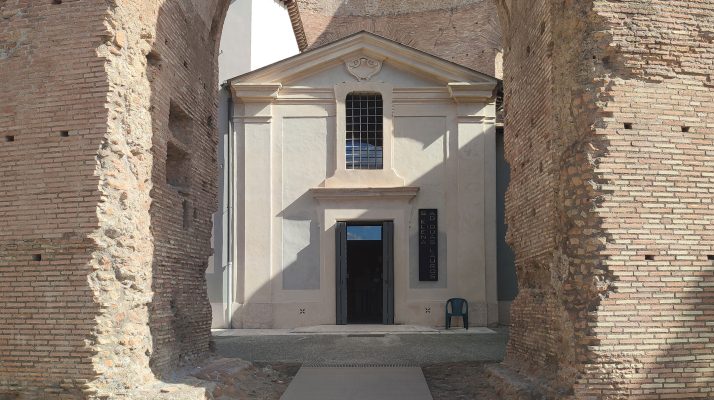
The Mausoleo di Elena is characterized by its distinctive circular design, a common feature in Roman mausolea that symbolized eternity. The structure consists of two concentric cylindrical drums, with the upper drum having a smaller diameter than the lower one. Originally, the mausoleum was capped with a grand dome, which has since been lost to time. The lower drum has an external diameter of approximately 27.74 meters and an internal diameter of 20.18 meters, providing a spacious interior that was once adorned with intricate decorations. The height of the mausoleum, initially reaching 25.42 meters, now stands at about 18 meters due to the absence of the dome.
Inside, the mausoleum features an octagonal plan, with eight alternating rectangular and semicircular niches. These niches were not merely decorative; they served structural purposes, supporting the weight of the upper drum and the dome. The rectangular niche facing the entrance likely housed the sarcophagus of Elena, a masterpiece of porphyry craftsmanship. The use of an octagonal layout, along with the strategic placement of niches, reflects the Roman architects’ mastery in combining aesthetic appeal with structural integrity.
Innovative Construction Techniques
A notable aspect of the mausoleum’s construction is the use of lightweight materials to reduce the overall weight of the dome. This was achieved by embedding empty amphorae, known as “pignatte,” within the masonry of the dome. This technique not only lightened the load but also contributed to the acoustic properties of the interior space. The presence of these amphorae is a defining feature of the mausoleum, giving rise to its colloquial name, “Torre delle Pignatte,” or “Tower of the Pignatte.” This innovative approach highlights the ingenuity of Roman engineering and their ability to adapt construction methods to suit specific architectural needs.
The outer walls of the mausoleum, constructed using opus latericium, a form of Roman brickwork, have withstood the test of time, although they have been subjected to erosion and human intervention over the centuries. The original decorations, including mosaics and possibly frescoes, have largely disappeared, but their remnants offer a glimpse into the artistic richness that once adorned the mausoleum. The careful restoration efforts undertaken in recent decades have aimed to preserve these elements, allowing visitors to appreciate the craftsmanship of Roman artisans.
Historical and Cultural Significance
The Mausoleo di Elena is not only an architectural marvel but also a site of profound historical significance. It was constructed by Emperor Constantine between 315 and 326 AD, initially intended as his own burial site before being dedicated to his mother, Elena, upon her death in 328 AD. This shift in purpose reflects the personal and dynastic considerations of the Constantinian family, as well as the broader cultural transitions occurring in the Roman Empire during this period.
Over the centuries, the mausoleum has undergone various transformations, serving as a fortress in the medieval period and later as a residential structure. These changes reflect the evolving needs and priorities of the communities that inhabited the area, as well as the enduring significance of the site within the local cultural landscape. Today, the mausoleum stands as a symbol of the Torpignattara neighborhood, its historical layers offering insights into the complex interplay between Roman imperial power, early Christian traditions, and local community life.
Visitor Experience and Points of Interest
Visitors to the Mausoleo di Elena can explore its architectural features and gain an understanding of Roman funerary practices and the early Christian influence on imperial monuments. The site offers a unique opportunity to witness the intersection of Roman engineering and religious symbolism, as seen in the mausoleum’s design and construction techniques. The adjacent catacombs of Marcellino and Pietro and the nearby Basilica circiforme further enrich the visitor experience, providing a comprehensive view of the area’s historical and cultural context.
The mausoleum’s connection to the broader Ad Duas Lauros estate, a significant imperial property, adds another layer of interest for visitors. The estate’s history, from its use as a necropolis for the Equites Singulares to its role in the Christianization of the Roman suburbs, is intricately linked to the mausoleum. This historical narrative, combined with the architectural and artistic elements of the site, makes the Mausoleo di Elena a compelling destination for those interested in exploring the rich tapestry of Rome’s past.
Historical Journey of the Mausoleo di Elena
Mausoleo di Elena, a remarkable funerary monument of the Roman era, stands as a testament to the architectural and historical legacy of ancient Rome. Located along the ancient Via Labicana, now known as Via Casilina, this mausoleum was initially conceived by the Roman Emperor Constantine I between 315 and 326 AD. Originally intended as his own burial site, it ultimately became the resting place of his mother, Flavia Giulia Elena, after her death in 328 AD. The monument’s strategic placement and its association with significant historical figures underscore its importance in the Roman imperial narrative.
The mausoleum’s history is intertwined with the broader historical developments of the Roman Empire, reflecting shifts in political power, religious transformation, and architectural innovation. Its evolution from a dynastic tomb to a symbol of the Christianization of Rome encapsulates the dynamic changes that characterized the late Roman Empire.
Construction and Initial Purpose (315-328 AD)
The construction of the Mausoleo di Elena was initiated by Emperor Constantine I, a pivotal figure in Roman history known for his role in the spread of Christianity. The mausoleum was part of a larger complex that included the Basilica circiforme, dedicated to the martyrs Marcellino and Pietro. This complex was strategically located on the imperial estate known as Ad Duas Lauros, an area rich in historical and religious significance.
Initially, the mausoleum was intended to serve as Constantine’s own burial site, symbolizing his dynastic aspirations and his connection to the Christian faith. However, following the death of his mother, Flavia Giulia Elena, in 328 AD, the mausoleum’s purpose shifted. Elena, a revered figure in the Christian tradition, was interred in the mausoleum, solidifying its status as a site of both familial and religious significance.
Transformation and Decline (4th-12th Century)
After Elena’s interment, the mausoleum continued to play a significant role in the religious and cultural landscape of Rome. Over the centuries, the site experienced both natural and human-induced transformations. The decline of the Roman Empire and subsequent invasions led to the erosion of the mausoleum’s structure, while the removal of stones and marble for construction purposes further contributed to its deterioration.
By the 8th century, the mausoleum had been repurposed as a defensive fortress, reflecting the turbulent socio-political climate of the time. Despite these changes, the mausoleum remained a revered site, housing Elena’s tomb until the 11th century. It was during this period that the sarcophagus was relocated to the Lateran, and eventually to the Vatican Museums, where it remains today.
Restoration and Modern Era (20th-21st Century)
The 20th century marked a renewed interest in the preservation and restoration of the Mausoleo di Elena. Extensive archaeological excavations and restoration efforts were undertaken between 1993 and 2000, aimed at uncovering the site’s historical layers and restoring its architectural integrity. These efforts were part of a broader initiative by the Soprintendenza Speciale di Roma and the Pontificia Commissione di Archeologia Sacra to preserve Rome’s rich cultural heritage.
In 2019, the mausoleum was reopened to the public, offering visitors a glimpse into its storied past. Today, it stands as a symbol of the enduring legacy of the Roman Empire and its transition from paganism to Christianity. The mausoleum’s architectural features, including its circular design and intricate mosaics, continue to captivate historians and visitors alike, serving as a testament to the ingenuity and artistry of ancient Roman architecture.
Visiting the Mausoleo di Elena
Approaching the Mausoleum
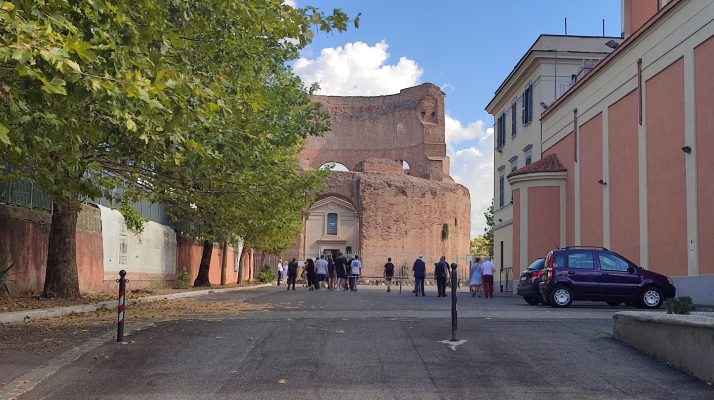
Visitors to the Mausoleo di Elena will find it situated along the historic Via Casilina, which corresponds to the ancient Via Labicana. This site, rich in historical significance, offers a unique glimpse into the past. As you approach, the mausoleum’s imposing structure stands as a testament to the architectural prowess of the Roman Empire. The surrounding area, known as Torpignattara, derives its name from the peculiar construction technique involving amphorae, or “pignatte,” used in the dome of the mausoleum.
The mausoleum is part of a broader archaeological landscape that includes the nearby catacombs of Marcellino and Pietro. This connection provides visitors with a comprehensive understanding of the area’s historical context, where ancient Roman and early Christian influences converge. The approach to the mausoleum is both a journey through history and a reflection on the cultural transformations that have shaped Rome.
Exploring the Site
The Mausoleo di Elena is accessible to the public as part of a guided itinerary that includes the adjacent catacombs. This structured visit allows guests to appreciate the mausoleum’s architectural features, such as its circular design and the remnants of its once-grand dome. The interior, though partially in ruins, still conveys the grandeur intended by its original builders.
While the mausoleum itself is a focal point, the broader itinerary offers insights into the praedium imperiale Ad Duas Lauros, a significant imperial estate. Visitors can explore the historical layers of the site, from its use as a necropolis for the Equites singulares to its transformation into a Christian burial ground. This exploration provides a deeper appreciation for the continuous evolution of the area over the centuries.
Practical Information
Access to the Mausoleo di Elena is typically organized through guided tours, which ensure that visitors gain a comprehensive understanding of the site’s historical significance. While the mausoleum itself is a key attraction, the tour also includes other nearby historical sites, creating a rich and educational experience.
Visitors are encouraged to wear comfortable footwear, as the terrain can be uneven. Additionally, it is advisable to check the latest information regarding accessibility and any potential restoration work that might affect the visit. This ensures that guests can fully enjoy the historical and cultural insights offered by this remarkable site.