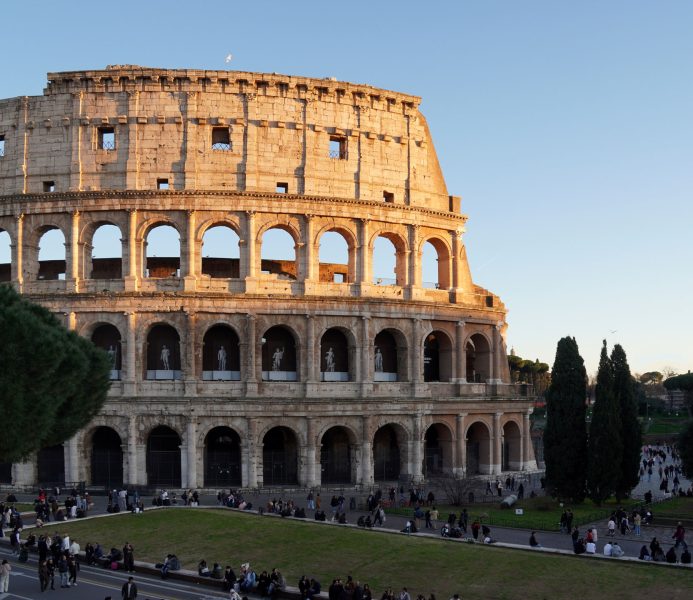
The Janiculum is a prominent hill in Rome, located on the right bank of the Tiber River. Although it is not one of the traditional seven hills of Rome, its strategic importance has been recognized since ancient times. The hill offers breathtaking panoramic views of the city, including the historic center and its major architectural landmarks, extending to the Colli Albani and the Apennine Mountains. The eastern slope descends towards the historic district of Trastevere, while the western side is home to the older parts of the Monteverde neighborhood.
Historically, the Janiculum has played a significant role in Rome’s defense and cultural heritage. According to tradition, it was fortified by King Anco Marzio and connected to the city via the Pons Sublicius. The hill was sacred to the god Janus, who is said to have established a settlement here known as Ianiculum. In the 19th century, the Janiculum became a symbol of the Italian unification movement, with the Garibaldian forces making a valiant stand against French troops in 1849. Today, it serves as a public park and a memorial to the Risorgimento, featuring monuments and commemorations of key historical figures and events.
Description of Janiculum
The Janiculum Hill, though not one of the traditional seven hills of Rome, offers a unique blend of historical, cultural, and natural attractions that captivate visitors with its panoramic views and rich heritage. As tourists explore this area, they are greeted with a tapestry of monuments, parks, and historical sites that narrate the stories of Rome’s past. The hill’s strategic position provides commanding views of the city, making it a favored spot for both locals and tourists who wish to immerse themselves in the scenic beauty and historical depth of Rome. Among the notable features are the Monument to Giuseppe Garibaldi, the Faro del Gianicolo, and the Orto Botanico di Roma, each offering a distinct glimpse into the multifaceted character of the Janiculum.
Visitors can engage in leisurely strolls along the tree-lined avenues, such as the Passeggiata del Gianicolo, which is renowned for its breathtaking vistas of the Roman skyline. The hill is also home to several important memorials and statues that commemorate significant events and figures in Italian history, such as the Mausoleo Ossario Garibaldino and the Monument to Anita Garibaldi. These sites not only serve as reminders of the past but also as places of reflection and appreciation of the cultural and historical fabric of Rome. Additionally, the daily firing of the cannon at noon provides a unique auditory experience that ties contemporary visitors to a tradition dating back to the 19th century.
Monument to Giuseppe Garibaldi
At the summit of the Janiculum Hill stands the imposing Monument to Giuseppe Garibaldi, a tribute to one of Italy’s most revered national heroes. The statue, crafted by Emilio Gallori and unveiled in 1895, depicts Garibaldi on horseback, symbolizing his pivotal role in the unification of Italy. The monument is not merely a statue but a comprehensive memorial site that includes several smaller bronze sculptures around its base, illustrating scenes of battle and allegorical figures that celebrate the spirit of the Risorgimento.
The monument’s location on the Janiculum is significant, as it overlooks the city that Garibaldi once fought to defend during the Roman Republic of 1849. The base of the statue is inscribed with the famous motto “O ROMA O MORTE” (“Rome or Death”), encapsulating the fervent dedication of Garibaldi and his followers. Visitors to the site can reflect on the historical importance of this figure while enjoying the panoramic views that the hill offers, making it a place of both historical reverence and natural beauty.
Faro del Gianicolo
The Faro del Gianicolo, or Lighthouse of Janiculum, stands as a beacon of national pride and a symbol of the Italian diaspora’s connection to their homeland. Erected in 1911 through the efforts of Italian expatriates in Argentina, the lighthouse commemorates the 50th anniversary of Italy’s unification. Its strategic placement at the northern tip of the hill allows it to serve as both a navigational aid and a monument of cultural significance.
The lighthouse is surrounded by a small park area, providing visitors with a serene spot to relax and take in the views of Rome. The presence of the Faro del Gianicolo underscores the global reach of Italian culture and the enduring ties between Italy and its communities abroad. The lighthouse, with its distinctive architectural style and historical context, adds another layer to the rich tapestry of sites that make the Janiculum a compelling destination for tourists and history enthusiasts alike.
Orto Botanico di Roma
Nestled on the eastern slopes of the Janiculum, the Orto Botanico di Roma offers a verdant escape from the urban environment, showcasing a diverse array of plant species from around the world. This botanical garden, part of the Sapienza University of Rome, serves both as a center for botanical research and a public garden where visitors can explore themed areas, including a Japanese garden, a Mediterranean section, and a collection of medicinal plants.
The garden’s layout is designed to facilitate leisurely exploration, with winding paths leading to various sections that highlight different ecological zones. The Orto Botanico is not only a place of scientific interest but also a cultural and educational resource, hosting events and exhibitions that promote environmental awareness and appreciation for the natural world. For tourists, it provides an opportunity to experience the tranquility and beauty of nature while learning about the diverse flora that thrives in the Mediterranean climate.
Monument to Anita Garibaldi
Located nearby is the Monument to Anita Garibaldi, a tribute to the wife of Giuseppe Garibaldi and a heroine in her own right. Sculpted by Mario Rutelli and inaugurated in 1932, the statue captures Anita in a dynamic pose, astride a rearing horse, symbolizing her courage and active participation in the struggles for Italian independence. The monument also serves as her final resting place, with her remains interred within its base.
Anita Garibaldi’s legacy as a symbol of bravery and dedication to the cause of freedom is immortalized in this striking monument. Visitors to the site can reflect on her contributions and the broader role of women in the Risorgimento, gaining insight into the personal sacrifices and collective efforts that shaped modern Italy. The monument’s location on the Janiculum further reinforces its significance, as it stands amidst other memorials that commemorate the turbulent yet transformative period of Italian history.
The Janiculum Cannon
A unique feature of the Janiculum is the daily firing of the cannon, a tradition that dates back to the papacy of Pius IX in 1847. Originally intended to provide a synchronized time signal for the churches of Rome, the cannon continues to fire a blank shot at noon each day, echoing across the city and serving as a reminder of Rome’s historical continuity and resilience.
The cannon, now a 105/22 Mod. 14/61 howitzer, is managed by the Italian Army and remains a popular attraction for visitors who gather to witness the ritual. The tradition not only offers a glimpse into the past but also connects the present-day city with its historical roots, providing a tangible link to the customs and practices of a bygone era. For tourists, the cannon firing is a memorable experience that adds to the rich tapestry of cultural and historical experiences available on the Janiculum.
The History of Janiculum
The Janiculum, a prominent hill in Rome, boasts a rich tapestry of history that stretches from ancient times to modernity. It has served as a strategic military site, a cultural landmark, and a symbol of resilience throughout the ages. Its historical significance is intertwined with the development of Rome itself, offering panoramic views that have witnessed countless events shaping the city’s legacy.
Ancient Origins and Etruscan Influence (Pre-753 BC – 509 BC)
The origins of the Janiculum are steeped in legend and tradition. According to ancient sources, the hill was named after the god Janus, a deity associated with gates and transitions, reflecting its role as a threshold between the city and the outside world. The Janiculum was initially part of the Etruscan territory, serving as a critical point for controlling access to the river Tiber. Its strategic location made it a natural fortification, crucial for the defense of early settlements.
During the reign of Anco Marzio, the fourth king of Rome, the Janiculum was integrated into the burgeoning Roman state. It was fortified and connected to the city by the construction of the Pons Sublicius, the first bridge over the Tiber. This integration marked the beginning of the hill’s enduring relationship with Rome, as it became a vital part of the city’s defensive and infrastructural network.
Roman Republic and Military Significance (509 BC – 27 BC)
Throughout the Roman Republic, the Janiculum maintained its military importance. It served as a lookout point and a defensive bastion against invasions from the north. The hill was not included within the Servian Wall, the early fortifications of Rome, but its strategic value was recognized and utilized by the Roman military. The hill’s elevation provided an advantageous position for monitoring the surrounding areas and protecting the city from potential threats.
In times of conflict, the Janiculum was a site for military encampments and exercises. The Romans also established a signaling system on the hill, using flags to communicate with the city during assemblies in the Campus Martius. This system underscored the hill’s role as a communication hub and its integration into the broader military strategy of the Roman Republic.
Imperial Era and Cultural Developments (27 BC – 476 AD)
During the Roman Empire, the Janiculum’s role evolved beyond its military origins. It became a place of cultural and religious significance, housing several temples and shrines. Among these was a sanctuary dedicated to the goddess Furrina, reflecting the hill’s continued spiritual importance. The Janiculum also became a favored location for the villas of wealthy Romans, who were drawn to its scenic views and relative tranquility.
The hill’s cultural landscape was further enriched by the presence of poets and intellectuals. Notable figures such as Ennius and Cecilius Statius were buried on the Janiculum, cementing its status as a site of artistic and intellectual heritage. This period saw the Janiculum transition from a purely strategic asset to a cherished part of Rome’s cultural and social fabric.
Medieval and Renaissance Transformations (476 AD – 1600 AD)
In the medieval period, the Janiculum underwent significant transformations. As Rome’s political and economic power waned, the hill’s military significance diminished. However, it remained a site of local importance, with legends and folklore adding layers to its historical narrative. The hill was often associated with mystical tales, including stories of hidden gates and supernatural occurrences, which captivated the imaginations of medieval Romans.
The Renaissance brought renewed interest in the Janiculum, as the city experienced a cultural revival. The hill became a focal point for architectural and artistic endeavors, with the construction of villas and gardens that showcased the era’s aesthetic ideals. The Janiculum’s panoramic vistas inspired artists and architects, who sought to capture its beauty in their works, further enhancing its reputation as a place of inspiration and creativity.
Modern Era and the Risorgimento (1600 AD – Present)
The modern era saw the Janiculum play a pivotal role in the Risorgimento, the movement for Italian unification. In 1849, the hill was the site of a heroic defense during the Roman Republic against French forces. Giuseppe Garibaldi and his followers valiantly resisted the superior French army, and the Janiculum became a symbol of national pride and resilience. Monuments and memorials, including the equestrian statue of Garibaldi, were erected to commemorate these events, solidifying the hill’s place in Italy’s national consciousness.
Today, the Janiculum is a cherished public space, offering visitors a glimpse into Rome’s storied past. Its historical legacy is preserved through monuments, museums, and the daily firing of the Janiculum cannon, a tradition that dates back to the 19th century. The hill continues to be a testament to Rome’s enduring spirit, bridging the ancient and modern worlds in a harmonious blend of history and culture.
Visiting Janiculum
Overview and Accessibility
The Janiculum Hill, though not one of the traditional seven hills of Rome, offers a unique vantage point over the city, providing panoramic views that are unparalleled. Visitors approaching the site can expect a blend of historical ambiance and natural beauty. The hill is accessible to the public and can be reached by foot, car, or public transportation. While there are no entrance fees to explore the hill itself, certain attractions within the area might require tickets or guided tours.
The pathways leading to the summit are well-maintained, making it suitable for visitors of all ages. However, due to its elevation, those with mobility issues might find the ascent challenging. For those driving, parking is available in designated areas, though it can be limited during peak tourist seasons. The site is generally safe for visitors, but it is always advisable to stay on marked paths and be cautious of uneven terrain.
Key Attractions and Itinerary
At the summit, visitors are greeted by the imposing Monument to Giuseppe Garibaldi, a tribute to one of Italy’s most revered historical figures. This equestrian statue is a focal point of the hill and offers an insight into the country’s rich history. Nearby, the Monument to Anita Garibaldi commemorates the bravery of Garibaldi’s wife, further enriching the historical narrative of the site.
The Passeggiata del Gianicolo is a popular walking route that takes visitors through lush avenues lined with plane trees, offering a serene escape from the bustling city below. Along this route, one can also find the Faro del Gianicolo, a lighthouse erected by Italians in Argentina, symbolizing the enduring connection between the two nations. The hill is also home to the cannon of Janiculum, which fires a blank shot at noon daily, a tradition dating back to the 19th century.
Practical Tips for Visitors
Visitors are encouraged to wear comfortable walking shoes, as exploring the Janiculum involves a fair amount of walking. Bringing a camera is highly recommended to capture the breathtaking views of Rome’s skyline and the surrounding landscapes. It is also advisable to carry water, especially during the warmer months, as the hill can get quite sunny and warm.
For those interested in a more structured visit, guided tours are available and can provide deeper insights into the historical significance of the Janiculum and its monuments. Additionally, the hill’s proximity to the historic district of Trastevere makes it an ideal starting point or conclusion for a broader exploration of Rome’s cultural and historical offerings.