Palatine Hill, one of the legendary seven hills of Rome, stands as a testament to the city’s ancient origins and its enduring historical significance. Nestled between the Velabro and the Roman Forum, this hill is not only a geographical landmark but also a cultural and archaeological treasure. Its strategic location offered early inhabitants a vantage point over the Tiber River, facilitating both defense and trade. The hill’s storied past is intertwined with the myth of Romulus and Remus, the legendary founders of Rome, who were said to have been nurtured by a she-wolf in the nearby Lupercal Cave.
Throughout the centuries, Palatine Hill evolved into a prestigious residential area, housing the opulent palaces of Roman emperors such as Augustus, Tiberius, and Domitian. These imperial residences, along with temples and other structures, reflect the architectural grandeur of ancient Rome. Today, Palatine Hill serves as an open-air museum, inviting visitors to explore its ruins and gardens, offering a glimpse into the city’s illustrious past. The hill remains a focal point of archaeological research and cultural heritage, underscoring its role as a cornerstone of Roman history.
Description of Palatine Hill
Palatine Hill, one of the most significant archaeological sites in Rome, offers visitors a unique glimpse into the ancient world. As they wander through its expansive grounds, tourists can explore the ruins of imperial palaces, ancient temples, and lush gardens that once served as the heart of Roman aristocracy. The hill’s strategic location, overlooking the Roman Forum on one side and the Circus Maximus on the other, provides breathtaking views and a tangible connection to the city’s storied past. Key highlights include the remains of the imperial palaces, the legendary Lupercal cave, and the Farnese Gardens, each offering a distinct narrative of Rome’s evolution from a humble settlement to a sprawling empire.
Imperial Palaces
The Imperial Palaces on Palatine Hill are a testament to the grandeur and ambition of Rome’s emperors. The most notable among them is the Domus Augustana, a sprawling complex that served as the primary residence of Emperor Augustus. Visitors can explore the remnants of its grand halls and private chambers, which once housed the political and social activities of the empire. The architecture here reflects the transition from the Republic to the Empire, with its intricate mosaics and frescoes showcasing the artistic prowess of the era.
Adjacent to the Domus Augustana is the Domus Flavia, an equally impressive structure that functioned as the public wing of the palace complex. It was here that the emperor conducted official business and entertained dignitaries. The layout of the Domus Flavia, with its spacious courtyards and ceremonial rooms, illustrates the importance of public life in Roman governance. The remnants of the Aula Regia, or the “Royal Hall,” stand as a reminder of the power and authority wielded by the emperors who once walked its halls.
The Lupercal and Other Mythical Sites
Among the most intriguing aspects of Palatine Hill is its connection to Roman mythology. The Lupercal, a cave believed to be the site where the legendary founders of Rome, Romulus and Remus, were suckled by a she-wolf, is a focal point for visitors interested in the mythological origins of the city. Although the exact location of the Lupercal remains a topic of scholarly debate, its symbolic significance is undeniable, drawing tourists eager to connect with Rome’s foundational myths.
In addition to the Lupercal, the hill is home to several other sites steeped in legend, such as the Casa Romuli, a reconstruction of the humble dwelling attributed to Romulus. This site offers a stark contrast to the opulence of the imperial palaces, providing insight into the early days of Rome’s development. Visitors can also explore the remnants of ancient temples, such as the Temple of Apollo Palatinus, which was commissioned by Augustus and served as a center for religious and cultural activities.
The Farnese Gardens
The Farnese Gardens, established in the 16th century, add a touch of Renaissance elegance to the ancient landscape of Palatine Hill. Created by Cardinal Alessandro Farnese, these gardens were among the first botanical gardens in Europe and represent a fusion of classical and Renaissance aesthetics. Visitors can stroll through the terraced gardens, enjoying the meticulously arranged flora and the panoramic views of the surrounding cityscape.
Within the gardens, tourists will find a series of architectural features, including nymphaea and grottoes, that reflect the Renaissance fascination with classical antiquity. The gardens also serve as a serene retreat from the bustling city below, offering a peaceful environment for reflection and appreciation of Rome’s layered history. The juxtaposition of ancient ruins and Renaissance landscaping provides a unique opportunity for visitors to experience the continuity of Rome’s cultural heritage.
History of Palatine Hill
Palatine Hill, one of the most ancient and significant areas of Rome, has witnessed a myriad of historical events that have shaped its legacy. From its early settlement by ancient tribes to its transformation into the epicenter of imperial power, Palatine Hill reflects the evolution of Roman civilization. This section delves into the rich tapestry of history that has unfolded on this iconic hill, offering insights into its pivotal role across different eras.
Legendary Beginnings and Archaic Period (circa 1000 BC – 753 BC)
The origins of Palatine Hill are steeped in legend and myth, with tales suggesting that it was the birthplace of Rome itself. Archaeological evidence indicates that the hill was inhabited as early as 1000 BC, with early settlers establishing a village that would later become known as “Roma Quadrata.” This settlement was strategically positioned to oversee the Tiber River, providing a vantage point for trade and defense.
According to Roman mythology, the hill was the site where the legendary twins, Romulus and Remus, were discovered by the she-wolf Lupa. This mythological narrative underscores the hill’s significance in the foundational story of Rome. The early inhabitants, possibly the Siculi, laid the groundwork for what would become a thriving urban center.
Republican Era and Cultural Flourishing (509 BC – 27 BC)
During the Republican Era, Palatine Hill emerged as a hub of cultural and religious activity. It became the residence of Rome’s elite, with prominent figures such as Marcus Tullius Cicero and Marcus Antonius establishing homes on the hill. The presence of influential individuals underscored the hill’s status as a center of power and prestige.
The hill was also a focal point for religious practices, hosting temples dedicated to deities such as Magna Mater and Apollo. The introduction of these cults, particularly during the Second Punic War, highlighted the hill’s role in the spiritual life of the city. The construction of these sacred spaces reflected the blending of cultural influences that characterized the Republic.
Imperial Transformation and Architectural Grandeur (27 BC – 476 AD)
With the advent of the Roman Empire, Palatine Hill underwent a monumental transformation. Emperor Augustus, born on the hill, chose it as the site for his imperial residence, marking the beginning of its association with imperial authority. Subsequent emperors, including Tiberius, Nero, and Domitian, expanded upon Augustus’s legacy, constructing opulent palaces that showcased the architectural prowess of the era.
The hill’s landscape became a tapestry of imperial residences, gardens, and temples, epitomizing the grandeur of Roman architecture. The term “palace” itself is derived from “Palatium,” a testament to the hill’s enduring influence on language and culture. As the seat of imperial power, Palatine Hill played a central role in the administration and ceremonial life of the empire.
Medieval Decline and Renaissance Revival (476 AD – 16th Century)
Following the fall of the Roman Empire, Palatine Hill experienced a period of decline. The once-magnificent structures fell into disrepair, and the hill’s prominence waned. However, its historical and cultural significance ensured that it remained a site of interest for scholars and archaeologists.
In the Renaissance, the hill saw a revival as wealthy families, such as the Farnese, acquired the land and initiated restoration projects. The creation of the Horti Farnesiani gardens marked a renewed appreciation for the hill’s historical legacy. These efforts laid the groundwork for future archaeological endeavors that would uncover the hill’s ancient past.
Modern Archaeological Exploration (17th Century – Present)
The modern era has witnessed extensive archaeological exploration on Palatine Hill, revealing the layers of history embedded within its soil. Excavations have unearthed remnants of ancient structures, offering insights into the architectural and cultural achievements of Rome’s past. The hill has become a vital site for understanding the complexities of Roman civilization.
Today, Palatine Hill stands as an open-air museum, attracting visitors from around the world. Its ruins serve as a testament to the enduring legacy of Rome and its ability to captivate the imagination of those who walk its storied paths. The hill remains a symbol of the city’s rich heritage and its pivotal role in shaping the course of history.
Visiting Palatine Hill
Access and Entry
Visitors to Palatine Hill can expect a journey through one of the most historically rich areas of Rome. The site is accessible through a ticketed entry, which can be purchased at the entrance located on Via di San Gregorio. Alternatively, visitors may enter through the Roman Forum, which offers an integrated experience of both sites. The pathways are well-marked, providing a seamless transition between the ancient ruins and the lush gardens that adorn the hill. It is recommended to wear comfortable footwear, as the terrain can be uneven in places.
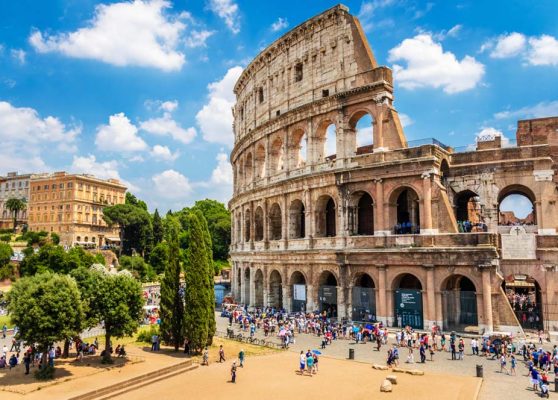
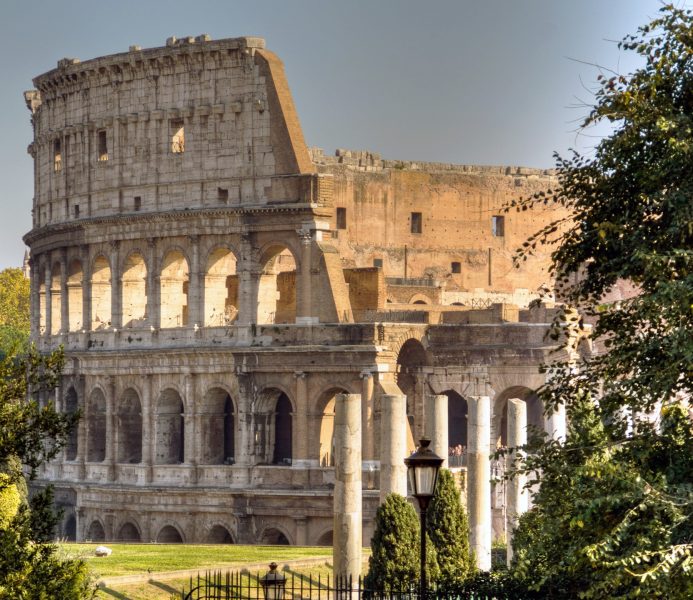
Palatine Hill is part of a larger archaeological circuit that includes the Colosseum and the Roman Forum, making it a central component of any historical itinerary in Rome. The hill itself is a vast open-air museum, with numerous ruins and structures to explore, each offering a glimpse into the grandeur of ancient Roman civilization.
Exploration and Highlights
Once inside, visitors are greeted with panoramic views of the surrounding cityscape, including the Circus Maximus and the Foro Boario. The hill is dotted with the remnants of imperial palaces, such as the Domus Augustana and the Domus Flavia, which stand as testaments to the architectural prowess of ancient Rome. These structures, though in ruins, convey the opulence and scale of the imperial residences that once dominated the landscape.
As you explore, you will encounter the House of Livia, reputed to be the residence of Emperor Augustus’s wife, and the Temple of Apollo Palatino, which Augustus himself commissioned. These sites provide a tangible connection to the figures who shaped Roman history. Informational plaques and guided tours are available to enrich your understanding of the site’s historical significance.
Practical Tips and Considerations
Visitors are encouraged to take their time exploring the hill, as there is much to see and absorb. The area is generally safe and well-maintained, but it is advisable to stay on designated paths to preserve the integrity of the archaeological site. During peak tourist seasons, the site can become crowded, so visiting early in the day may offer a more serene experience.
While exploring, it is beneficial to carry water and sun protection, especially during the warmer months. The site offers limited shaded areas, and the Italian sun can be intense. Rest areas are available throughout the site, providing opportunities to relax and enjoy the surroundings. Engaging with a knowledgeable guide can enhance the visit, offering insights into the historical context and significance of the various structures and artifacts encountered along the way.