The Church of Sant’Agata dei Goti stands as a remarkable testament to the rich historical tapestry of Rome, nestled in the heart of the city within the Monti district. Originally founded in the 5th century by the Roman general Flavio Ricimero, the church is a unique surviving example of an Arian place of worship from the Gothic community in Rome. Its dedication to Saint Agatha, a revered virgin and martyr from Catania, underscores its significance in early Christian history. The church was later consecrated to Catholicism in 593 by Pope Gregory I, marking a pivotal moment in its storied past.
Over the centuries, Sant’Agata dei Goti has undergone numerous transformations, reflecting the architectural and cultural shifts of its time. The current Baroque facade, completed in 1729, is attributed to the architect Francesco Ferrari. Inside, the church retains elements of its original 5th-century structure, enhanced by Baroque and 19th-century additions. Notable features include a stunning Cosmatesque pavement and a 12th-century ciborium. The church’s historical and architectural significance is further enriched by its association with various religious orders and its role as a cardinal diaconia, making it a vital part of Rome’s ecclesiastical heritage.
Description of Sant’Agata dei Goti
Situated in the heart of Rome, the Church of Sant’Agata dei Goti offers visitors a unique glimpse into the architectural and artistic heritage of the city. This historic site, nestled within the vibrant rione Monti, stands as a testament to the evolving religious and cultural landscape of Rome from the 5th century onwards. As tourists step into this sacred space, they are greeted by a blend of ancient and baroque elements that narrate the church’s storied past. Visitors can explore the intricacies of its architectural design, delve into the history encapsulated within its walls, and appreciate the artistic endeavors that have adorned this site over the centuries.
Among the highlights of Sant’Agata dei Goti are its quadriportico, a remarkable feature that offers a serene introduction to the church’s interior, and the ciborio on the main altar, a fine example of cosmatesque artistry. The church’s layout, with its three naves and the remnants of its original 5th-century structure, provides a fascinating study for those interested in ecclesiastical architecture. Additionally, the presence of historical artifacts, such as the cenotaph of Cardinal Carlo Bichi, adds layers of historical intrigue and artistic merit to the visitor’s experience.
The Quadriportico
Upon entering Sant’Agata dei Goti, visitors are welcomed by the quadriportico, a distinctive architectural feature that serves as a transitional space from the bustling streets of Rome to the tranquility of the church’s interior. This area, accessed via a double flight of stairs, is situated at a lower level than the street, creating an intimate and secluded atmosphere. The quadriportico is notable for its central well, which dates back to the 16th century and bears the inscription “SEMPER” alongside a Medici coat of arms. This well is believed to have been constructed in honor of Clement VII de’ Medici’s visit to the church, reflecting the site’s historical significance and its connections to prominent figures of the time.
Surrounding the well, the quadriportico houses a small lapidary museum, where visitors can observe various stone artifacts and inscriptions that offer insights into the church’s past. The harmonious blend of architectural elements within this space, including the interplay of light and shadow created by the portico’s arches, provides a contemplative setting for visitors to begin their exploration of Sant’Agata dei Goti.
Interior Architecture and Artistic Features
The interior of Sant’Agata dei Goti is a captivating blend of ancient and baroque influences, showcasing the church’s historical evolution. The layout consists of three naves, separated by arcades supported by twelve columns with Ionic capitals. Originally, there were sixteen columns, but four were later incorporated into the walls to close off the last two arcades. This structural adaptation highlights the church’s dynamic history and the changes it underwent over the centuries.
One of the most striking features within the church is the cosmatesque pavement in the central nave. This intricate flooring, dating back to the late 15th century, was commissioned by Cardinal Francesco Gonzaga and exemplifies the exquisite craftsmanship of the period. The geometric patterns and vibrant colors of the pavement are a testament to the artistic heritage of the church and provide a visual focal point for visitors as they navigate the space.
The Ciborio and Apse
At the heart of Sant’Agata dei Goti is the main altar, adorned with a cosmatesque ciborio from the 12th century. This elegant structure, supported by four columns of pavonazzetto marble, features intricate cosmatesque decorations and a canopy reminiscent of a small temple. The ciborio not only serves as a liturgical focal point but also exemplifies the rich artistic traditions that have shaped the church’s interior.
Above the altar, the apse is graced by an affresco depicting the Glory of Sant’Agata, painted by Paolo Gismondi in 1636. This vibrant fresco replaced an earlier mosaic from the 5th century, which was lost due to the collapse of the apse in the 16th century. Gismondi’s work captures the celestial vision of Sant’Agata, enveloping the viewer in the spiritual narrative that defines the church’s identity.
The Cenotaph of Cardinal Carlo Bichi
Among the notable artistic treasures within Sant’Agata dei Goti is the cenotaph of Cardinal Carlo Bichi, a masterpiece of funerary art designed by Carlo de Dominicis. This elaborate monument is housed within a niche flanked by two pilasters supporting an arch. At the center of the arch, a fan-shaped marble relief features a sculpted hourglass and a serpent entwined with oak branches, symbolizing the passage of time and eternity.
Below the arch, a white marble sarcophagus is adorned with the heraldic emblems of the Bichi family, including an eagle with outstretched wings and a lion’s head. Above the sarcophagus, two cherubs hold a medallion bearing the profile of Cardinal Bichi, one resting his leg on a cushion with a cardinal’s hat, while the other hovers with a lit torch. This cenotaph not only commemorates the cardinal’s legacy but also serves as a testament to the artistic prowess of the period.
Additional Artistic and Historical Elements
Visitors to Sant’Agata dei Goti can also admire the statue of Sant’Agata, commissioned by Cardinal Podocataro in 1504. This wooden sculpture, crafted by an anonymous artist in the 18th century, occupies a central position on the altar dedicated to the saint. The statue’s presence underscores the church’s dedication to Sant’Agata and serves as a focal point for devotion and reflection.
Moreover, the church’s secondary entrance on Via Panisperna features a commemorative plaque that highlights the historical significance of the site. This inscription notes that the bodies of Greek martyrs, including Hippolytus, his sister Paulina, her husband Adrian, and their children Maria and Neon, were relocated to Sant’Agata dei Goti in the 8th century to protect them from barbarian invasions. This historical detail adds depth to the church’s narrative and underscores its role as a sanctuary for revered relics.
History of Sant’Agata dei Goti
Sant’Agata dei Goti stands as a significant monument in the heart of Rome, embodying a rich tapestry of historical transformations. Founded in the 5th century, this church has witnessed the ebb and flow of religious, architectural, and cultural changes, marking its place in the annals of Roman history. From its origins as an Arian place of worship to its present status, Sant’Agata dei Goti reflects the enduring legacy of the past.
Throughout its existence, the church has been a focal point for various communities, adapting to the shifting tides of religious and political landscapes. Its history is not merely a chronicle of events but a testament to the resilience and continuity of faith and tradition in the Eternal City.
Founding and Arian Period (5th Century)
The origins of Sant’Agata dei Goti can be traced back to the 5th century when it was established by Flavio Ricimero, a prominent Roman general of Gothic descent. Initially, the church served as a center for the Arian community, reflecting the religious diversity of Rome during this era. The Arian doctrine, which diverged from mainstream Christianity, found a temporary haven within the walls of this sacred space.
As the sole surviving example of an Arian place of worship in Rome, Sant’Agata dei Goti offers a unique glimpse into the religious dynamics of the time. Its foundation by Ricimero underscores the intersection of political power and religious influence, highlighting the complex relationships between the Roman Empire and its Gothic allies.
Transition to Catholicism and Medieval Renovations (593 – 16th Century)
The year 593 marked a pivotal transformation for Sant’Agata dei Goti when it was consecrated to Catholicism by Pope Gregory I. This transition was not without its challenges, as legend tells of a demonic presence resisting the change. However, the church emerged as a bastion of Catholic faith, becoming a diaconia cardinalizia, a title reflecting its elevated status within the ecclesiastical hierarchy.
Over the centuries, the church underwent several renovations, notably under the auspices of Pope Leo III in the late 8th century. These restorations included the construction of a Benedictine monastery, further solidifying its role as a religious and communal hub. Despite the loss of its original mosaic adornments, the church retained its spiritual significance, adapting to the evolving needs of its congregation.
Baroque Revival and Modern Transformations (17th Century – Present)
The 17th century heralded a Baroque revival for Sant’Agata dei Goti, with significant architectural enhancements. The facade, designed by Domenico Castelli in 1633, exemplifies the Baroque style, characterized by its dynamic forms and ornate detailing. This period also saw the addition of a quadriportico and a museum lapidary, enriching the church’s cultural and artistic heritage.
In the 20th century, further changes occurred as the church adapted to modern needs. The demolition of the Benedictine monastery and the subsequent establishment of the Collegio Irlandese reflect the ongoing evolution of Sant’Agata dei Goti. Today, it stands as a testament to the enduring spirit of Rome, a place where history and faith continue to intertwine.
Visiting Sant’Agata dei Goti
Approaching the Site
Visitors to Sant’Agata dei Goti will find this historic church nestled within the bustling rione Monti, a district rich in Roman history and culture. The church is located on Via Mazzarino, offering a serene escape from the lively streets surrounding it. As you approach, the baroque facade designed by Francesco Ferrari stands prominently, inviting admiration for its architectural beauty. The facade, with its elegant design, is a testament to the church’s historical significance and the artistic endeavors of the 18th century.
The church’s location is advantageous for those exploring Rome’s historical center, as it is situated near other notable landmarks. This makes it a convenient stop for those on a broader itinerary of the city’s ancient and cultural sites. Visitors are encouraged to take a moment to appreciate the church’s exterior and its place within the urban landscape, even before stepping inside.
Exploring the Interior
Upon entering Sant’Agata dei Goti, visitors are greeted by a blend of historical and artistic elements that span several centuries. The interior retains much of its original 5th-century structure, complemented by baroque and 19th-century additions. The church is structured with three naves, divided by arcades supported by columns with Ionic capitals. This architectural layout provides a glimpse into the evolution of church design over the ages.
One of the highlights within is the cosmatesque flooring, a remnant of the church’s medieval past, which offers a vivid example of the intricate artistry of the period. The central nave leads to the altar, where a ciborium from the 12th century stands, showcasing the enduring craftsmanship of the era. Visitors can also admire the fresco depicting the Glory of Sant’Agata by Paolo Gismondi, a masterpiece that replaced an earlier mosaic lost to time.
Practical Information and Nearby Attractions
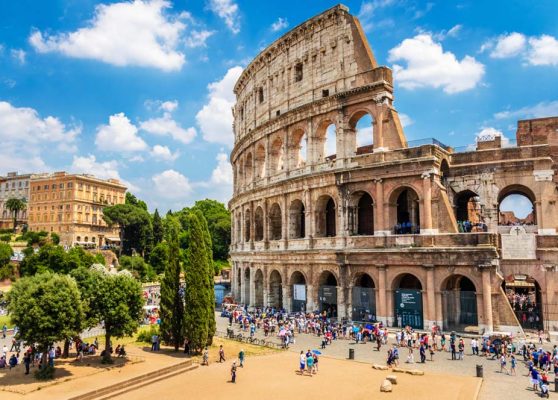
Access to Sant’Agata dei Goti is generally available to the public, allowing visitors to explore the church’s interior and appreciate its historical and artistic treasures. While the church itself is a focal point, its proximity to other attractions in the Monti district makes it an ideal addition to a day of sightseeing. Nearby, visitors can explore the Roman Forum, the Colosseum, and other significant sites that paint a comprehensive picture of Rome’s rich history.
For those planning a visit, it is advisable to check for any ongoing events or services that might affect access. The church’s serene atmosphere provides a reflective space amidst the vibrant city, making it a worthwhile stop for those interested in Rome’s ecclesiastical and cultural heritage. Visitors are encouraged to respect the sanctity of the site and enjoy the peaceful ambiance it offers.