San Clemente al Laterano
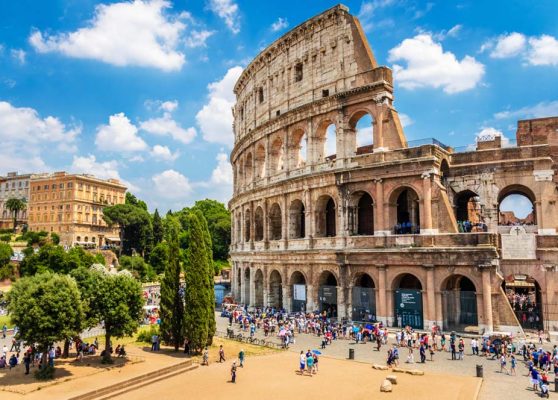
The Basilica of San Clemente al Laterano in Rome is a remarkable site where history unfolds across three layers. Located near the Colosseum, this minor basilica, managed by the Irish Dominicans, offers visitors a journey through time, from ancient Roman structures to medieval and Baroque art.
Location:
Piazza di San Clemente, 00184 Roma RM, Italy
Built by:
Pope Paschal II in 1108
What to see:
Gold mosaics, Medieval frescoes, Mithraeum
Opening hours:
Freely accessible (8.30-16.30/19:15)
Transport:
Metro station: Colosseo (B), Tram 3

The Basilica of San Clemente al Laterano stands as a remarkable testament to Rome’s layered history, offering a unique glimpse into the city’s architectural and religious evolution. Located in the heart of Rome, just a short distance from the iconic Colosseum, this basilica is an extraordinary blend of paleochristian, Romanesque, and Baroque styles. It is dedicated to Saint Clement I, an early pope, and is managed by the Irish Dominicans, who have been custodians since the 17th century.
The basilica is renowned for its three distinct historical layers, each representing a different era. The current basilica, completed in the 12th century, sits atop a 4th-century church, which itself was constructed over a 1st-century Roman house and a Mithraic temple. These layers reveal a rich tapestry of religious and cultural transformation, from ancient Roman times through to the rise of Christianity. Visitors can explore these underground levels, discovering ancient frescoes, mosaics, and the architectural remnants of a bygone era, making the Basilica of San Clemente a hidden gem in the eternal city.
San Clemente al Laterano, an architectural and historical marvel, offers a unique journey through time, revealing layers of Roman, early Christian, and medieval history. Visitors to this site can explore its intricate architecture, admire the artistic treasures, and delve into the fascinating history embedded within its walls. The basilica is divided into three distinct levels, each representing a different era and style, providing a comprehensive insight into the evolution of Roman architecture and art. Among the highlights are the splendid mosaics, the schola cantorum, and the ancient Mithraeum, each offering a glimpse into the past and the artistic endeavors of different periods.
The uppermost level of San Clemente al Laterano, the current basilica, is a testament to Romanesque and Baroque architectural styles. Constructed in the 12th century and later renovated in the 18th century by Carlo Stefano Fontana, this level showcases a harmonious blend of historical influences. The basilica’s interior is characterized by its three-aisled nave, separated by ancient Roman columns, and its semicircular apse, which houses a magnificent mosaic. This mosaic, dating back to the early 12th century, depicts Christ crucified, flanked by the Virgin Mary and Saint John the Evangelist, surrounded by intricate vine scrolls and symbolic figures.
Another notable feature of the current basilica is the Cosmatesque mosaic floor, a striking example of medieval craftsmanship. This floor, with its vibrant geometric patterns in marble, reflects the artistic trends of the 12th century. The ceiling, adorned with wood and gold, further enhances the basilica’s grandeur. Visitors can also observe the schola cantorum, a choir area marked by marble panels intricately carved with Christian symbols. These elements, along with the monograms of Pope John II, provide insight into the religious and artistic significance of the basilica.
Beneath the current basilica lies the remains of the first basilica, constructed in the 4th century. This level offers a fascinating glimpse into early Christian architecture and art. The brick-vaulted crypt, with its marble altar and tombs, serves as a reminder of the site’s historical and religious importance. Visitors can explore the second-largest collection of early Medieval frescoes in Rome, which illustrate the life and miracles of Saint Clement. These frescoes, sponsored by a wealthy family in the 11th century, are a testament to the artistic endeavors of the time.
Among the frescoes, one can find dialogues inscribed in the early Italian vernacular, marking a significant linguistic transition from Latin to the common language of the people. This feature highlights the cultural and historical evolution of the region. The first basilica’s architectural elements, including its stone altar and tomb slabs, provide a tangible connection to the past, allowing visitors to appreciate the site’s enduring legacy.
Descending further, visitors reach the Mithraeum, an ancient temple dedicated to the deity Mithras. This 3rd-century structure is set within a labyrinth of rooms belonging to a 2nd-century Roman house. The Mithraeum offers a unique insight into the religious practices of the time, particularly the Mithraic cult, which gained popularity among Roman men. The main room of the temple features a marble altar shaped like a sarcophagus, depicting Mithras slaying a bull, a central motif in Mithraic worship.
The altar is surrounded by stone benches, where worshippers would have sat during ceremonies. This level of the basilica provides a rare opportunity to explore the intersection of Roman and early Christian religious practices, offering a deeper understanding of the cultural and spiritual dynamics of ancient Rome. The Mithraeum, with its historical and archaeological significance, is a highlight of any visit to San Clemente al Laterano.
San Clemente al Laterano is not only a place of religious and historical significance but also a site filled with intriguing elements. One such feature is the exposed pipe in one of the domus rooms, which still has water flowing through it. This pipe is part of the Cloaca Maxima, the main sewer system of ancient Rome, showcasing the advanced engineering of the time. Additionally, the basilica’s association with the Irish Dominicans, who have owned the church since the 17th century, adds another layer of historical interest.
Visitors can also explore the basilica’s quadriportico, an architectural feature that enhances the site’s grandeur. This four-sided portico, with its varied columns and pilasters, offers a serene space for reflection and appreciation of the basilica’s architectural beauty. The quadriportico, along with the basilica’s other features, makes San Clemente al Laterano a must-visit destination for those interested in history, art, and architecture.
San Clemente al Laterano is a testament to the deep and layered history of Rome, reflecting the city’s evolution from ancient times through the medieval period and into the modern era. This basilica is not just a place of worship but a historical palimpsest, with each layer revealing a different epoch of Roman history. Its story is one of transformation, resilience, and cultural significance, making it a unique monument in the heart of Rome.
Located near the Colosseum, the basilica stands as a symbol of the continuity of Christian worship on a site that has been sacred for centuries. The history of San Clemente al Laterano is marked by significant architectural and religious developments, each contributing to its current form and status.
The origins of San Clemente al Laterano can be traced back to the 4th century when the first basilica was constructed on the site. This initial structure was built over a Roman house, known as a domus, which had been used by early Christians for clandestine worship during times of persecution. The transformation of this house into a basilica marks the transition from covert gatherings to the formal establishment of Christianity as the dominant religion in the Roman Empire.
During this period, the basilica became associated with Saint Clement, a revered figure in early Christianity who is believed to have been one of the first popes. The dedication of the basilica to him underscores the importance of preserving the memory and legacy of early Christian martyrs and leaders.
In the 11th century, the basilica underwent significant changes due to the events surrounding the Norman invasion of Rome in 1084. The city was sacked, and the original basilica suffered considerable damage, leading to its abandonment and subsequent burial beneath street level. This marked a turning point in the history of San Clemente, as it necessitated the construction of a new basilica on the same site.
Pope Paschal II commissioned the construction of the new basilica, which was completed in 1108. This medieval structure incorporated elements of the earlier building, preserving its sacred heritage while adapting to the architectural styles and needs of the time. The new basilica also served as a symbol of the resilience and continuity of the Christian community in Rome.
The 18th century brought about another significant transformation for San Clemente al Laterano, as it underwent extensive renovations under the direction of the renowned architect Carlo Fontana. Commissioned by Pope Clement XI, these renovations gave the basilica its current Baroque appearance, characterized by ornate decorations and a grand facade.
Fontana’s work not only enhanced the aesthetic appeal of the basilica but also reinforced its structural integrity, ensuring its preservation for future generations. The Baroque renovations reflect the artistic and cultural trends of the time, as well as the continuing importance of the basilica as a center of worship and pilgrimage.
The modern era has seen a renewed interest in the historical and archaeological significance of San Clemente al Laterano. Excavations in the 19th and 20th centuries uncovered the layers of history beneath the current basilica, revealing the remains of the earlier structures and providing valuable insights into the site’s evolution.
These discoveries have positioned San Clemente as a key site for understanding the development of early Christian architecture and the complex history of Rome. Today, the basilica continues to attract scholars, historians, and tourists, all drawn by its rich heritage and the stories embedded within its walls.
Visitors to the Basilica of San Clemente al Laterano will find it nestled in the heart of Rome, just a short distance from the iconic Colosseum. The basilica’s exterior may appear modest, yet it conceals a wealth of historical and artistic treasures within its walls. As you approach, the basilica’s elegant façade, designed by Carlo Stefano Fontana in the 18th century, sets the stage for the layers of history that await inside. The surrounding area is rich in historical sites, making San Clemente a fitting addition to any itinerary focused on exploring Rome’s ancient past.
Upon entering the basilica, visitors are greeted by a stunning example of Romanesque and Baroque architecture. The interior is adorned with intricate Cosmatesque mosaics, a style known for its geometric patterns and vibrant colors, which were popular in the 12th century. The apse features shimmering gold mosaics depicting religious figures and symbols, while the schola cantorum showcases marble panels with Christian iconography. These elements reflect the basilica’s long history and its significance as a place of worship and art.
One of the most compelling aspects of visiting San Clemente is the opportunity to explore its underground layers. Beneath the current basilica lies the 4th-century basilica, home to a remarkable collection of early Medieval frescoes. These artworks provide a glimpse into the religious and cultural life of the period, with some frescoes dating back to the 6th century. Descending further, visitors can discover the remains of a Mithraeum, a temple dedicated to the ancient deity Mithras, set within a labyrinth of rooms from a 2nd-century Roman house. This unique archaeological journey through time offers a rare insight into the complex history of the site.
Access to the basilica’s underground levels requires a pre-booked ticket, as these areas are a highlight for many visitors. While the ground-floor basilica can be explored freely, the deeper layers offer a more intimate look at Rome’s layered history. Visitors should be prepared for uneven surfaces and stairs, making comfortable footwear advisable. As an active place of worship, modest attire is recommended, with shoulders and knees covered. The basilica’s location near other major attractions, such as the Colosseum, makes it a convenient stop on a broader exploration of Rome’s rich historical landscape.
San Clemente al Laterano: your opinions and comments
Have you visited this monument? What does it mean to you? What advice would you give to a tourist?
Tours

from 18 €

from 29 €

from 6 €
45 m
from 11 €