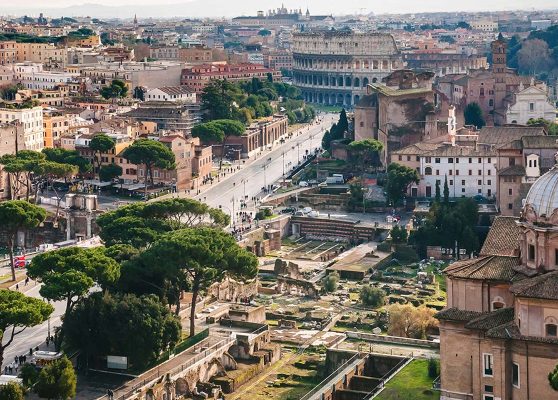
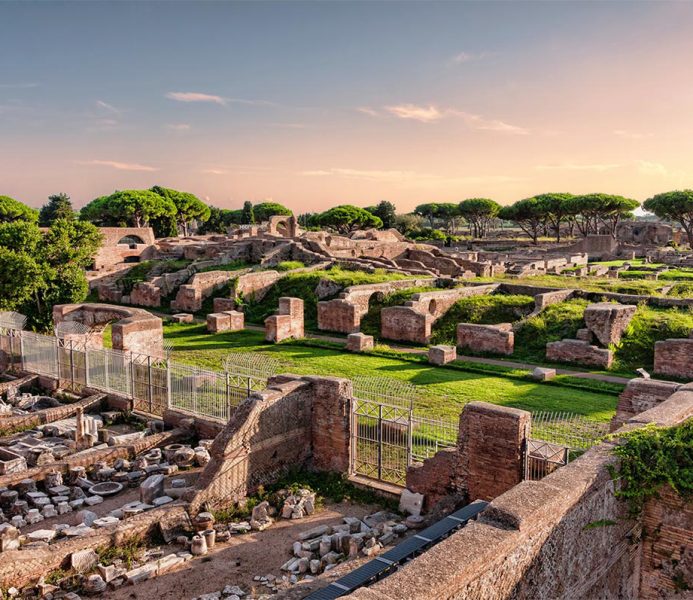
The Roman Forum (Italian: Foro Romano) stands as a testament to the grandeur of ancient Rome, situated at the heart of the city. This monumental plaza, once the epicenter of Roman public life, is surrounded by the remnants of significant government buildings. It served as the nucleus for political, judicial, and commercial activities, reflecting the vibrant life of the Roman Republic and Empire. The Forum’s strategic location, nestled between the Palatine and Capitoline Hills, made it a focal point for triumphal processions, public speeches, and elections, thus earning its place as one of the most celebrated meeting places in history.
Over the centuries, the Roman Forum evolved organically, adapting to the needs of the growing city. It was the site of many significant events, including the orations of Julius Caesar and the political maneuvers of Augustus. Today, the Forum remains a sprawling archaeological site, attracting millions of visitors each year who come to witness the enduring legacy of Rome’s architectural and cultural achievements. As a living museum of history, the Roman Forum continues to captivate and educate, offering a glimpse into the lives of those who shaped the ancient world.
Description of Foro Romano
The Foro Romano, or Roman Forum, stands as a testament to the grandeur and complexity of ancient Rome, offering visitors a window into the past through its myriad of ruins and historical structures. As one traverses the cobblestone pathways, the remnants of ancient temples, basilicas, and arches unfold, each narrating a chapter of Rome’s illustrious history. Tourists can explore the heart of the ancient city, where political, commercial, and social activities once thrived. Among the notable attractions are the Temple of Saturn, the Arch of Septimius Severus, and the Basilica of Maxentius, each offering unique insights into Roman architectural ingenuity and cultural practices.
The Central Square and Surrounding Structures
The central square of the Foro Romano, a sprawling open space, was once the bustling heart of ancient Rome. This area was the nucleus of public life, flanked by significant buildings that served various civic and religious functions. The Basilica Aemilia, located on the north side, and the Basilica Julia to the south, defined the long sides of the square. These basilicas were not only architectural marvels but also centers for legal proceedings and public gatherings. The Curia Julia, the meeting place of the Roman Senate, stands as a testament to the political significance of the Forum, with its robust brick structure reflecting the power and authority of the Roman state.
Adjacent to the central square, the Rostra, a platform for public speeches, played a crucial role in the democratic processes of ancient Rome. Here, orators would address the populace, influencing public opinion and political decisions. The Umbilicus Urbi, considered the symbolic center of Rome, and the Milliarium Aureum, the golden milestone from which all roads in the Roman Empire were said to radiate, are also located in this area, emphasizing the Forum’s role as the epicenter of Roman civilization.
Religious and Commemorative Structures
The Foro Romano is home to several temples and religious edifices that highlight the spiritual and ceremonial aspects of Roman life. The Temple of Saturn, one of the oldest sacred sites in the Forum, served as the state treasury and a place of worship. Its iconic columns, though partially in ruins, still evoke the grandeur of Roman religious architecture. Nearby, the Temple of Vesta and the House of the Vestals offer a glimpse into the lives of the Vestal Virgins, priestesses who played a vital role in maintaining the sacred fire and performing rituals essential to the well-being of the city.
Commemorative monuments such as the Arch of Septimius Severus and the Arch of Titus celebrate military victories and honor emperors. These triumphal arches, adorned with intricate reliefs and inscriptions, serve as enduring symbols of Roman military prowess and imperial authority. The Column of Phocas, the last addition to the Forum, stands as a solitary reminder of the Byzantine influence and the Forum’s continued significance into the early medieval period.
Curious Elements and Lesser-Known Areas
Beyond the more prominent structures, the Foro Romano houses several lesser-known yet intriguing elements that captivate the curious visitor. The Lapis Niger, a mysterious black stone, is believed to mark the grave of a revered figure or a sacred site, shrouded in legend and historical ambiguity. Nearby, the Lacus Curtius, a seemingly unremarkable depression in the ground, is steeped in myth, with stories of heroic sacrifice and divine intervention adding to its mystique.
The Cloaca Maxima, one of the world’s earliest sewer systems, highlights the advanced engineering skills of the Romans. Though largely hidden from view, its presence underscores the practical and infrastructural achievements that supported the growth of the ancient city. Additionally, the Vicus Tuscus and Vicus Jugarius, ancient streets that once teemed with merchants and citizens, provide a sense of the daily life and commerce that animated the Forum in its heyday.
The History of Foro Romano
Foro Romano, known as the Roman Forum, stands as a testament to the grandeur and complexity of ancient Rome. This central public space, once the heart of Roman political, commercial, and social life, has witnessed the evolution of Rome from its earliest days as a kingdom through its transformation into a republic and eventually an empire. Over the centuries, the Forum has been the stage for significant historical events and developments, reflecting the changing dynamics of Roman society.
Today, the remnants of Foro Romano offer a glimpse into the past, inviting visitors to explore its ruins and imagine the vibrant life that once animated this iconic site. From its origins as a marshy basin to its peak as a bustling civic center, the history of Foro Romano is a narrative of growth, adaptation, and resilience.
Pre-Roman and Early Roman Period (c. 1200 BC – 509 BC)
The earliest evidence of human activity in the area now known as Foro Romano dates back to the Final Bronze Age, around 1200 BC. Archaeological findings suggest that the site was initially used as a cemetery for the communities residing on the Palatine and Capitoline Hills. By the 8th century BC, the area began its transformation from a burial ground into a public space, marked by the construction of early shrines and temples.
According to Roman tradition, the Forum’s development is linked to the alliance between Romulus and Titus Tatius, the legendary founders of Rome. The valley between their respective settlements on the Palatine and Capitoline Hills became a neutral meeting ground, eventually evolving into a bustling marketplace and civic center. The construction of the Cloaca Maxima, one of the world’s earliest sewer systems, facilitated the drainage of the marshy land, paving the way for further development.
Roman Republic (509 BC – 27 BC)
During the Roman Republic, Foro Romano emerged as the epicenter of political and judicial life in Rome. The expansion of the Forum was driven by the need for larger public spaces to accommodate the growing population and the increasing complexity of Roman governance. The construction of significant structures such as the Temple of Saturn and the Temple of Castor and Pollux reflected the Forum’s dual role as a religious and civic hub.
The Forum witnessed numerous historical events, including the famous speeches of Cicero and the public funeral of Julius Caesar. The assassination of Caesar in 44 BC marked a turning point in Roman history, and the subsequent civil wars led to significant changes in the Forum’s layout. The construction of the Basilica Julia and the Curia Julia by Caesar and his successors exemplified the ongoing transformation of the Forum into a more organized and monumental space.
Roman Empire (27 BC – 476 AD)
With the establishment of the Roman Empire, Foro Romano continued to evolve under the patronage of emperors like Augustus and Trajan. Augustus completed the work initiated by Caesar, adding the Temple of Caesar and the Arch of Augustus to the Forum’s landscape. The Forum became a symbol of imperial power, hosting triumphal processions and public ceremonies that showcased the might of Rome.
As the Empire expanded, the Forum’s role as a commercial center diminished, with economic activities shifting to the newly constructed imperial fora. Despite this, the Forum remained a focal point for political and religious life. The construction of the Basilica of Maxentius in the early 4th century marked the last major architectural addition to the Forum, highlighting the continued importance of this historic site.
Medieval and Renaissance Periods (476 AD – 16th Century)
Following the fall of the Western Roman Empire, Foro Romano experienced a period of decline. The once vibrant civic center became a field of ruins as the population of Rome dwindled and the city’s infrastructure deteriorated. During the Middle Ages, the Forum was largely abandoned, with many of its structures repurposed or dismantled for building materials.
The Renaissance brought renewed interest in Rome’s ancient heritage, leading to efforts to excavate and preserve the Forum. However, this period also saw significant destruction as the Forum was used as a quarry for new constructions. Despite these challenges, the Forum’s historical significance endured, inspiring artists and scholars who sought to document and restore its ancient glory.
Modern Excavation and Preservation (19th Century – Present)
The systematic excavation of Foro Romano began in the 19th century, driven by a growing interest in archaeology and the preservation of cultural heritage. Under the direction of figures like Carlo Fea and Giacomo Boni, significant progress was made in uncovering the Forum’s ancient structures and restoring its historical landscape.
Today, the Roman Forum stands as a testament to the enduring legacy of ancient Rome. Ongoing archaeological efforts continue to reveal new insights into the Forum’s history, ensuring that this iconic site remains a vital part of Rome’s cultural and historical identity. As a symbol of Rome’s past, Foro Romano continues to captivate visitors from around the world, offering a window into the rich tapestry of Roman civilization.
Visiting Foro Romano
Approaching the Site
Visitors approaching the Foro Romano will find themselves in the heart of ancient Rome, surrounded by a landscape that has witnessed the rise and fall of one of history’s greatest civilizations. The site is nestled between the Palatine and Capitoline Hills, offering a unique vantage point to explore the remnants of Rome’s political, social, and economic center. As you walk towards the entrance, the grandeur of ancient architecture becomes evident, with the towering columns of the Temple of Saturn and the Arch of Septimius Severus standing as testaments to Rome’s enduring legacy.
The Foro Romano is accessible to the public, with entry typically requiring a ticket. This allows visitors to wander through the ruins, experiencing firsthand the historical significance of the structures that once housed the Senate and various temples. The site is well-signposted, providing context and historical insights into each monument’s role in ancient Roman life. Visitors are encouraged to take their time exploring the area, as each corner of the Forum reveals a new layer of history.
Exploring the Ruins
Once inside, visitors can embark on a self-guided tour or opt for a guided experience to gain deeper insights into the significance of the Forum’s structures. The Curia Julia, where the Roman Senate convened, is a highlight, offering a glimpse into the political machinations of ancient Rome. The Rostra, the platform from which leaders addressed the public, remains a focal point of interest, symbolizing the Forum’s role as a hub of public discourse and decision-making.
The Forum’s layout allows for a leisurely exploration, with pathways leading to notable sites such as the Temple of Vesta and the Basilica of Maxentius. These structures, although in varying states of preservation, provide a tangible connection to Rome’s storied past. Visitors are advised to wear comfortable footwear, as the terrain can be uneven, and to bring water, especially during warmer months.
Contextual Tips for Visitors
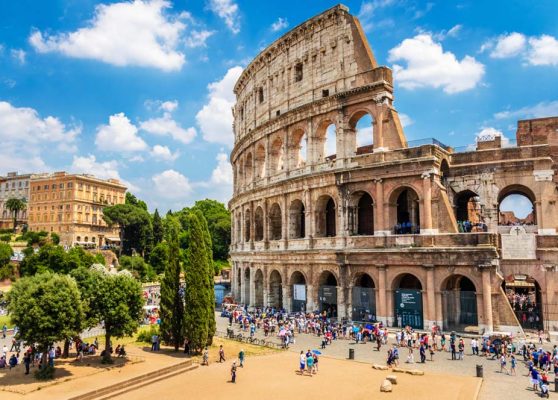
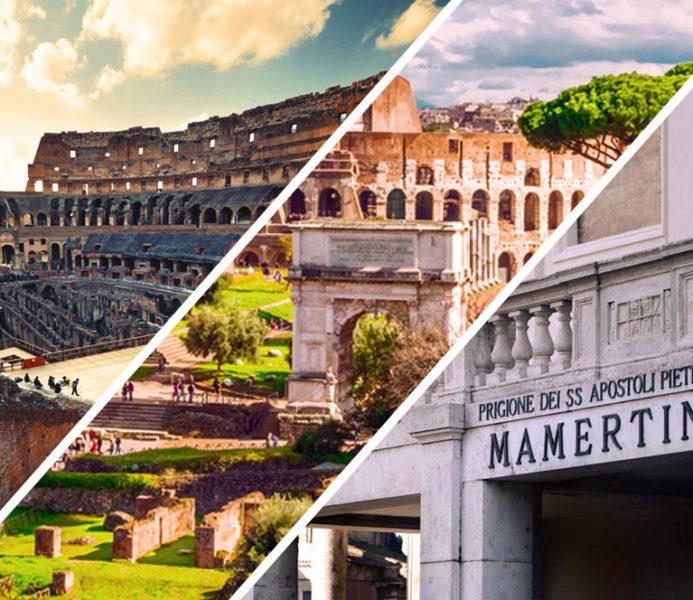
For those planning a visit, it is beneficial to consider the Foro Romano as part of a broader itinerary that includes nearby attractions such as the Colosseum and the Palatine Hill. These sites, in conjunction with the Forum, offer a comprehensive understanding of ancient Rome’s architectural and cultural achievements. The proximity of these landmarks allows for a seamless exploration of Rome’s historical core.
It is recommended that visitors allocate sufficient time to fully appreciate the Foro Romano’s expansive grounds. The site not only offers a journey through history but also provides picturesque views of the surrounding cityscape. Photography is permitted, allowing visitors to capture the timeless beauty of the ruins. As a place of immense historical importance, the Foro Romano invites reflection on the enduring legacy of the Roman Empire and its impact on modern civilization.