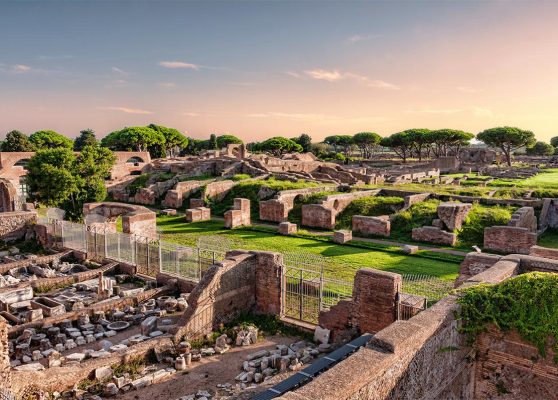
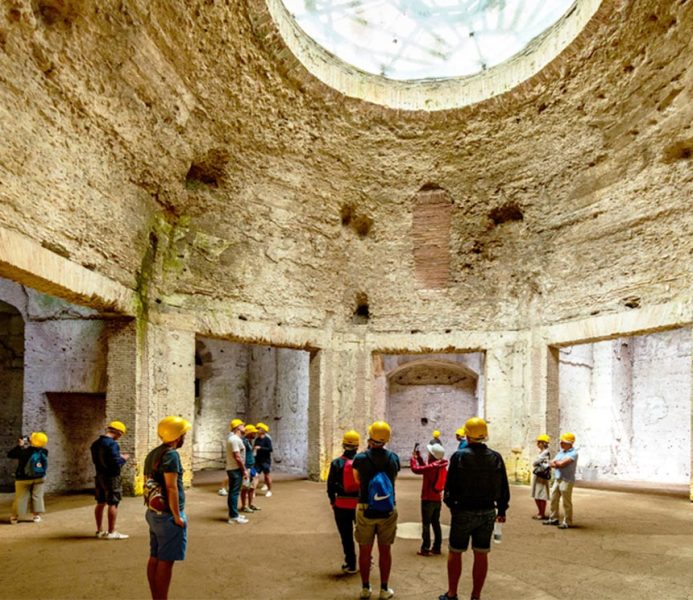
The Archaeological Park of Ostia Antica is a significant historical site located near the mouth of the Tiber River, offering a glimpse into the daily life and urban planning of ancient Rome. Founded in the 7th century BC by King Anco Marzio, Ostia served as the first Roman colony and played a crucial role as a commercial and port center during the Roman Empire. Its strategic location facilitated the grain supply to Rome, underscoring its importance in the annona, the grain provisioning system for the capital.
Over the centuries, Ostia evolved from a military outpost into a bustling urban center, characterized by its diverse architecture, including public buildings, residential areas, and temples. Despite its decline in the late antique period, replaced by the nearby port of Porto, Ostia’s ruins have been remarkably preserved. Excavations that began in the 19th century have uncovered a wealth of artifacts and structures, providing invaluable insights into ancient Roman civilization. Today, the Archaeological Park of Ostia Antica stands as a testament to the enduring legacy of Rome’s maritime prowess and urban sophistication.
Description of the Archaeological Park of Ostia Antica
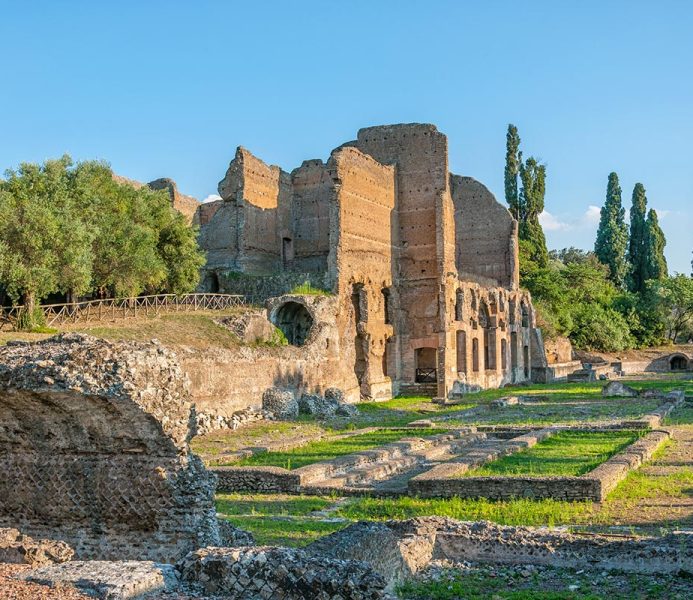
The Archaeological Park of Ostia Antica offers visitors a unique glimpse into the life of an ancient Roman city, with its well-preserved ruins providing a vivid picture of the past. As tourists wander through the park, they can explore the remnants of a once-thriving port city that served as a crucial hub for trade and commerce in ancient Rome. The park is home to a variety of architectural and artistic sections, each offering its own insights into the daily life, culture, and infrastructure of the time. Key attractions include the expansive Forum, the impressive Theatre, and a range of residential and commercial buildings that showcase the ingenuity and architectural prowess of the Romans.
The Forum and Surrounding Structures
The heart of Ostia Antica is undoubtedly the Forum, which served as the central public space for political, religious, and social activities. Visitors can admire the Capitolium, a temple dedicated to the Capitoline Triad of Jupiter, Juno, and Minerva, which dominates the northern end of the Forum. This structure, with its imposing columns and elevated platform, reflects the architectural style and religious significance of the period. Adjacent to the Capitolium, the Temple of Roma and Augustus stands as a testament to the imperial cult and the veneration of the emperor.
Surrounding the Forum are several other notable buildings, including the Basilica, which served as a venue for legal proceedings and public gatherings. The Curia, or council house, is another significant structure where the local magistrates would convene. These buildings, with their robust construction and strategic placement, highlight the importance of civic life in Ostia and the role of architecture in facilitating public administration and governance.
The Theatre and Piazzale delle Corporazioni
One of the most remarkable features of Ostia Antica is its Theatre, an architectural marvel that could accommodate thousands of spectators. Built under the patronage of Marcus Vipsanius Agrippa, the theatre was a center for entertainment and social interaction. The semi-circular seating arrangement and the stage area, with its remnants of decorative elements, offer a glimpse into the cultural life of the ancient Romans. The theatre’s acoustics and design are a testament to the advanced engineering skills of the time.
Adjacent to the theatre is the Piazzale delle Corporazioni, a large square that once housed the offices of various trade guilds. The mosaic pavements, each representing different corporations, provide valuable insights into the economic activities and trade networks that were vital to Ostia’s prosperity. This area underscores the city’s role as a bustling commercial hub and highlights the diversity of goods and services that flowed through its port.
Residential and Commercial Buildings
The residential quarters of Ostia Antica offer a fascinating look at the living conditions and architectural styles of the period. The Caseggiato di Diana is a prime example of an insula, or apartment building, where the city’s inhabitants lived. These multi-story structures were ingeniously designed to maximize space and accommodate a growing population. Inside, visitors can observe the remnants of frescoes and mosaics that once adorned the walls, providing a glimpse into the aesthetic preferences and domestic life of the ancient Romans.
Commercial activities were equally integral to Ostia’s economy, as evidenced by the numerous tabernae or shops that lined the streets. These establishments, often located on the ground floor of residential buildings, catered to the daily needs of the city’s inhabitants. The layout and organization of these commercial spaces reflect the bustling nature of Ostia as a center of trade and commerce.
Baths and Public Amenities
The public baths of Ostia Antica, such as the Terme di Nettuno, illustrate the importance of bathing culture in Roman society. These facilities were not only places for hygiene but also social hubs where citizens could relax and engage in conversation. The intricate mosaics depicting Neptune and marine scenes are a highlight, showcasing the artistic talent and thematic preferences of the time.
In addition to the baths, the city was equipped with essential public amenities, including aqueducts and latrines, which highlight the advanced infrastructure and urban planning that characterized Roman cities. These features underscore the Romans’ commitment to public health and their ability to create functional urban environments.
Curious Elements and Lesser-Known Areas
Beyond the major attractions, Ostia Antica is home to several curious elements that capture the imagination of visitors. The Mithraeum, a subterranean sanctuary dedicated to the god Mithras, offers a mysterious glimpse into the religious practices of the time. The intimate setting and symbolic iconography provide insights into the spiritual life of Ostia’s inhabitants.
Another intriguing area is the Necropolis, where visitors can explore the burial practices and funerary architecture of ancient Rome. The diversity of tombs, ranging from simple columbaria to elaborate mausoleums, reflects the social stratification and cultural values of the period. These lesser-known areas add depth to the understanding of Ostia Antica and enrich the visitor experience.
History of the Archaeological Park of Ostia Antica
Ostia Antica, an ancient city of great significance, served as the harbor city of Rome and played a pivotal role in the commercial and military activities of the Roman Empire. Its history is a testament to the evolution of Roman urbanism and trade, reflecting the city’s strategic importance at the mouth of the Tiber River. Over the centuries, Ostia Antica witnessed periods of growth, decline, and eventual abandonment, leaving behind a rich tapestry of ruins that today form the Archaeological Park of Ostia Antica.
The park’s history is marked by various phases, each characterized by significant developments in architecture, economy, and society. From its foundation as a military colony to its transformation into a bustling commercial hub, and finally to its decline in the late antiquity, Ostia Antica offers a unique glimpse into the life of an ancient Roman city.
Foundation and Early Development (7th Century BC – 1st Century BC)
The foundation of Ostia Antica is traditionally attributed to the Roman King Anco Marzio in the 7th century BC. Initially established as a military colony to protect the coastline and control the salt flats near the Tiber’s mouth, Ostia quickly evolved into a vital port city. The strategic location of Ostia facilitated its growth as a center for trade and commerce, particularly during the Republican era.
During this period, Ostia’s urban layout began to take shape, characterized by its castrum, a military camp that later evolved into a more complex urban settlement. The construction of the Via Ostiense, a major road connecting Ostia to Rome, further enhanced its importance as a trade hub. The city’s infrastructure, including warehouses and docks, supported the burgeoning grain trade essential for feeding Rome’s population.
Imperial Prosperity and Expansion (1st Century AD – 3rd Century AD)
Under the Roman Empire, Ostia Antica reached the height of its prosperity. The construction of the Portus by Emperor Claudius and later expanded by Trajan significantly boosted Ostia’s capacity to handle maritime trade. This period saw extensive urban development, with the construction of public buildings, baths, temples, and residential complexes, reflecting the city’s wealth and importance.
The population of Ostia swelled to an estimated 50,000 inhabitants, making it a bustling urban center. The city’s architecture during this time showcased a blend of utilitarian and aesthetic elements, with structures like the Theater of Ostia and the Piazzale delle Corporazioni highlighting its cultural and commercial vibrancy. Ostia’s role as the administrative center for the annona, the grain supply system of Rome, underscored its critical economic function.
Decline and Abandonment (4th Century AD – 9th Century AD)
The decline of Ostia Antica began in the 3rd century AD, as the Roman Empire faced economic and political challenges. The rise of the nearby port of Portus shifted commercial activities away from Ostia, leading to a gradual reduction in its economic significance. The city experienced a decrease in population, and many buildings fell into disrepair.
By the 4th century AD, Ostia had transformed into a more residential area, with many of its commercial functions relocated to Portus. The construction of a Christian basilica and the establishment of a bishopric reflected the changing religious landscape. However, by the 9th century, repeated Saracen raids and the rise of malaria led to the city’s abandonment in favor of the newly established settlement of Gregoriopoli.
Rediscovery and Excavation (19th Century – Present)
The ruins of Ostia Antica were largely forgotten until the 19th century when systematic excavations began under the auspices of Pope Pius VII and continued under Pope Pius IX. These efforts uncovered a wealth of archaeological treasures, providing valuable insights into the daily life and urban planning of ancient Rome.
Today, the Archaeological Park of Ostia Antica stands as a testament to the city’s historical significance. Ongoing excavations and conservation efforts aim to preserve and interpret the site for future generations, offering visitors a glimpse into the rich tapestry of Roman history and culture that once thrived at the mouth of the Tiber River.
Visiting the Archaeological Park of Ostia Antica
Site Overview and Accessibility
Visitors approaching the Archaeological Park of Ostia Antica will find a site rich in history and architectural marvels. The park is open to the public, allowing for an immersive experience into the remnants of ancient Roman civilization. As you enter, the well-preserved ruins offer a glimpse into the daily life of what was once a bustling port city. The site is accessible via public transportation, with the nearby Ostia Antica station providing convenient access for those traveling from Rome.
The park’s layout is extensive, and visitors are encouraged to explore its various regions, each showcasing different aspects of Roman urban planning and architecture. Pathways are well-marked, and informational signs are strategically placed to enhance understanding of the historical context. While the terrain is generally flat, comfortable walking shoes are recommended to navigate the ancient cobblestones and uneven surfaces.
Exploring the Ruins
Within the park, numerous structures stand as testament to Ostia’s historical significance. The Capitolium, a central feature of the site, offers a commanding view of the surrounding area and serves as a focal point for understanding the civic and religious life of the ancient city. The theatre, another key attraction, provides insight into the cultural and entertainment practices of the time. Visitors can wander through the remains of residential areas, commercial establishments, and public baths, each revealing the intricacies of Roman engineering and daily life.
Guided tours are available for those seeking a deeper understanding of the site. These tours often include expert commentary on the architectural styles, historical events, and notable figures associated with Ostia Antica. For a more leisurely experience, self-guided tours allow visitors to explore at their own pace, with the aid of maps and audio guides available at the entrance.
Practical Tips for Visitors
When planning a visit to the Archaeological Park of Ostia Antica, it is advisable to allocate several hours to fully appreciate the site’s offerings. The park’s expansive nature means there is much to see, and taking time to explore each section will enrich the overall experience. Facilities such as restrooms and refreshment areas are available within the park, providing convenience during your visit.
Given the outdoor setting, visitors should be prepared for varying weather conditions. Sunscreen, hats, and water are recommended during warmer months, while layers and umbrellas may be necessary in cooler or unpredictable weather. As the site is a protected historical area, visitors are reminded to respect the ruins by staying on designated paths and refraining from touching or climbing on the structures.