Among the great foundation narratives of the ancient world, few have exerted such a profound and lasting influence as that of Troy. The city celebrated by Homer, suspended between history, archaeology and legend, has crossed the centuries to become a powerful cultural symbol capable of shaping collective identities, political memories and historical narratives.
Bringing together more than three hundred artefacts from prestigious Italian and Turkish collections, the exhibition offers an up-to-date and scientifically rigorous interpretation of the relationship between myth and history, revealing the complexity of a narrative that, for over two millennia, has helped define the cultural identity of the Mediterranean.
Troy and Rome: a narrative at the origins of Mediterranean Civilization
The exhibition revolves around one of the most significant themes of classical culture: the relationship between Troy and Rome. Since the Republican period, Roman tradition identified the survivors of the Trojan War as the ancestors of its own people. Through the figure of Aeneas, the hero destined to leave the shores of Asia Minor and reach Latium, myth became a fundamental instrument in the construction of Rome’s political and cultural identity.
The exhibition explores this theme through an interdisciplinary perspective that combines archaeology, history, literature and the history of religions. Visitors are guided through a journey that demonstrates how the Trojan myth was not merely an epic tale, but a genuine cultural matrix that profoundly influenced the imagination of the ancient Mediterranean.
From Homeric Poetry to historical memory
The Trojan War is one of the most celebrated episodes in Western tradition. The poems attributed to Homer have immortalised legendary figures such as Achilles, Hector, Priam, Helen and Odysseus, transforming the conflict into a universal paradigm of heroism, destiny and tragedy.
Archaeological research conducted since the nineteenth century has gradually demonstrated that behind the mythical narrative lies a complex historical reality. The city identified as ancient Ilium proved to be a major centre in western Anatolia, a crossroads of trade, cultures and political relations between East and West.
Troy between archaeology and legend
One of the most fascinating aspects of the exhibition is its analysis of the continuous dialogue between archaeological evidence and literary tradition. The artefacts on display reveal how the site of Troy was inhabited and transformed over the millennia, becoming a symbolic place capable of generating ever-new narratives.
The city thus emerges not only as the setting of the famous war described by the Greeks, but also as a real place that played a fundamental role in the history of the eastern Mediterranean.
The Myth of Aeneas and the Foundation of Rome
The conceptual core of the exhibition is represented by the figure of Aeneas, protagonist of a narrative that symbolically links the destruction of Troy to the birth of Rome. Through his story, Roman tradition elaborated a noble and ancient origin for its civilization, placing it within the broader framework of Mediterranean history.
The Aeneid and the construction of Roman identity
The Trojan myth reached its highest expression with Virgil’s Aeneid. Written during the reign of Augustus, the poem transformed Aeneas’ journey into a narrative designed to legitimise the origins of Roman power.
In Virgil’s account, the hero’s destiny consists not only in surviving the destruction of his homeland, but also in founding a new civilization. The exhibition highlights how this interpretation profoundly influenced Roman art, politics and culture for centuries.
Images of Aeneas in Ancient Art
Numerous works featured in the exhibition testify to the widespread iconography of Aeneas. Sculptures, reliefs, coins and artefacts illustrate key episodes from his story, from his escape from Troy to his Mediterranean journey and eventual arrival in Italy.
Through these materials, visitors can appreciate the extraordinary adaptability of the myth, which acquired different political, religious and cultural meanings over time.
Augustus and the Trojan Genealogy
Particular attention is devoted to the way in which the Augustan principate strengthened its connection to Troy. The descent of the gens Iulia from Iulus, son of Aeneas, allowed Augustus to present his authority as the fulfilment of a story that had begun many centuries earlier.
This ideological construction found expression in public art, literature and urban planning, helping to shape one of the most influential identity narratives of antiquity.
The exhibition route
The exhibition is conceived as a journey through nearly three millennia of Mediterranean history. The display brings together artefacts from major Italian museums with more than two hundred works on loan from Turkish institutions, offering an unprecedented overview of the reception of the Trojan myth.
A dialogue between Italy and Turkey
The exhibition is the result of a significant international collaboration involving cultural institutions from both countries. This partnership makes it possible to present objects rarely displayed in Italy and to compare different archaeological and historiographical traditions.
The exhibition therefore possesses considerable cultural and scientific value, fostering new perspectives on the connections that have characterised the Mediterranean since antiquity.
The monumental entrance and the Trojan Horse
Among the most striking features of the exhibition is a monumental reconstruction of the Trojan Horse, designed to introduce visitors to the symbolic universe of the display.
Far beyond its scenographic impact, the famous stratagem described in ancient tradition remains one of the most recognisable symbols of Western culture and provides an ideal starting point for exploring the complex relationship between historical memory and myth-making.
Artefacts from Troy
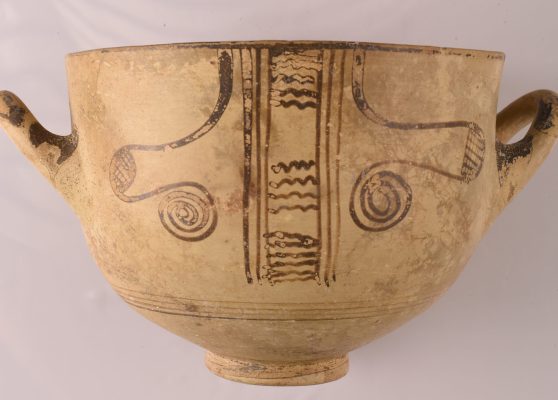
A particularly significant section is devoted to materials from the archaeological site of Troy and major Turkish museums. These artefacts allow visitors to trace the city’s development through different chronological phases, documenting its strategic and commercial importance.
Many of the works on display have never before been exhibited in Italy, offering a unique opportunity to deepen knowledge of one of the world’s most celebrated archaeological sites.
Evidence from the Roman World
Alongside the Anatolian materials, the exhibition presents artefacts from important Italian collections illustrating the reception of the Trojan myth in Roman times. Statues, inscriptions, reliefs and everyday objects testify to the dissemination of images and stories connected with Aeneas and the Trojan War.
The direct comparison between these materials highlights the remarkable vitality of a tradition that endured across centuries and diverse cultural contexts.
Why visit the exhibition
The exhibition offers a rare opportunity to understand how myths contributed to the formation of the historical and political identities of the ancient world. Going beyond the simple narration of legendary events, it provides a thoughtful reflection on the role of cultural memory in shaping Mediterranean civilizations.
A scientific and interdisciplinary approach
One of the exhibition’s greatest strengths lies in its ability to integrate archaeological evidence, literary testimonies and historical documentation. This approach overcomes the traditional opposition between myth and reality, demonstrating how both contributed to the construction of collective memory.
Visitors are therefore invited not only to discover what Troy was, but also to understand how its image has been reinterpreted and transformed throughout the centuries.
A reflection on the ancient Mediterranean
Through the comparison of different cultures, peoples and traditions, the exhibition presents the Mediterranean as a space characterised by constant exchanges and interactions. Troy and Rome emerge as key nodes within a cultural network that contributed significantly to the formation of ancient Europe.
A shared heritage
The works brought together in the exhibition testify to the existence of a common history that transcends geographical and national boundaries. The myth of Aeneas, the memory of the Trojan War and the foundation of Rome become tools for understanding the profound interconnectedness of Mediterranean civilizations.
Thanks to the exceptional quality of the artefacts on display, the breadth of the archaeological documentation presented and the strength of its scholarly framework, the exhibition stands as one of the most important events dedicated to the archaeology and culture of the ancient world, offering an updated interpretation of the relationship between history, myth and identity in the Mediterranean.