Few photographers of the twentieth century transformed the language of portraiture and the representation of the human body as profoundly as Robert Mapplethorpe. Both admired and controversial, his work occupies a unique position in the history of contemporary art, where the traditions of classical beauty intersect with the visual culture of modernity. An extensive exploration of this artistic universe, examining the photographer’s enduring fascination with harmony, proportion and sculptural form.
Through a carefully curated selection of 200 photographs and related works, the exhibition highlights the dialogue between Mapplethorpe’s practice and the artistic legacy of antiquity, revealing how the visual ideals of the classical world continued to inspire one of the most original artistic voices of the late twentieth century.
Robert Mapplethorpe and the reinvention of classical beauty
The exhibition is dedicated to one of the most significant figures in the history of modern photography. Although Robert Mapplethorpe is often associated with the artistic and cultural transformations of New York during the 1970s and 1980s, his work extends far beyond the social and political debates that surrounded his career. At its core lies a rigorous investigation of beauty, understood as an aesthetic principle capable of transcending historical periods and artistic media.
Mapplethorpe developed a highly distinctive visual language in which photography became a means of constructing ideal forms rather than merely documenting reality. His images reveal a remarkable attention to balance, symmetry and composition, qualities that establish an immediate connection with the artistic traditions of classical antiquity and Renaissance art.
The artist and his cultural context
Born in New York in 1946, Robert Mapplethorpe emerged during a period of profound artistic experimentation. Initially interested in collage, assemblage and mixed media, he gradually turned to photography as his primary medium, recognising its potential to create images of extraordinary precision and emotional intensity.
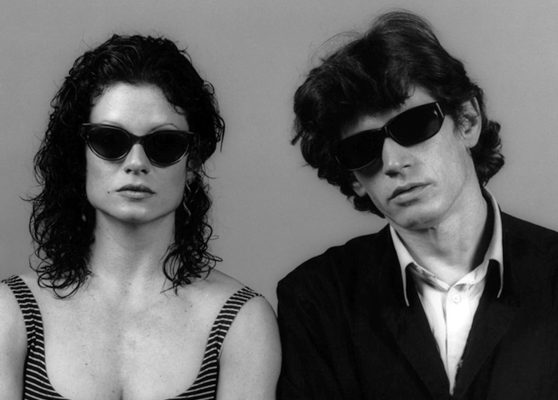
His career developed within the vibrant artistic environment of downtown Manhattan, where he established relationships with musicians, writers, performers and visual artists who would shape the cultural landscape of the late twentieth century: Yoko Ono, Robert Rauschenberg, Donald Sutherland, David Byrne, Richard Gere. His friendship with Patti Smith, immortalised in numerous portraits and memoirs, became one of the defining episodes of this creative milieu.
Yet Mapplethorpe’s artistic ambitions extended well beyond the documentation of contemporary culture. Throughout his career, he sought to elevate photography to the status traditionally reserved for painting and sculpture, producing works characterised by technical perfection and conceptual sophistication.
Photography as sculpture
One of the most distinctive aspects of Mapplethorpe’s artistic practice is his treatment of photography as a sculptural medium. Light and shadow are employed not simply to describe surfaces but to model volumes, emphasise contours and reveal the underlying geometry of bodies and objects.
This approach explains the enduring dialogue between his work and the traditions of classical sculpture. Human figures are presented with the clarity and monumentality of marble statues, while flowers and everyday objects acquire an almost architectural presence through careful composition and controlled lighting.
The exhibition highlights this formal dimension of Mapplethorpe’s work, encouraging visitors to consider his photographs as carefully constructed aesthetic objects rather than spontaneous visual records.
The themes of the exhibition
The exhibition explores explores the central themes that shaped the photographer’s artistic vision, revealing the remarkable coherence of a body of work often perceived through the lens of controversy alone. Portraits, nudes, floral compositions, still lifes and sculptural studies are presented as interconnected expressions of a single aesthetic inquiry: the pursuit of beauty through form, balance and visual perfection.
Rather than organising these subjects into separate artistic categories, the exhibition demonstrates how Mapplethorpe approached each of them with the same rigorous formal discipline. Whether photographing a human figure, an orchid or a fragment of classical sculpture, he sought to reveal an underlying order that transcended the individuality of the subject itself. Beauty, in this context, becomes less a matter of narrative than of structure, proportion and the careful orchestration of light.
The human body and the classical tradition
The representation of the human body occupies a central place within Mapplethorpe’s artistic production. Male and female figures are rendered with extraordinary precision, their physical presence enhanced by carefully controlled compositions that emphasise anatomy, symmetry and sculptural volume.
Rather than depicting the body as a purely documentary subject, Mapplethorpe transforms it into a timeless artistic form. Muscles, gestures and silhouettes are isolated against neutral backgrounds, encouraging the viewer to contemplate the universal qualities of shape and proportion. In doing so, his photographs establish a direct dialogue with the ideals of ancient Greek and Roman sculpture, where physical beauty was regarded as the visible expression of harmony and order.
The nude between antiquity and modernity
One of the exhibition’s most compelling aspects is its exploration of the nude as a continuous artistic tradition. Throughout Western art, the nude has served as a privileged vehicle for investigating the relationship between beauty, identity and the human condition. Mapplethorpe embraces this tradition while reinterpreting it through the visual language of contemporary photography.
His images evoke the idealised forms of classical statuary, yet they also reflect the social and cultural complexities of the modern world. The exhibition highlights how the artist succeeded in creating works that are simultaneously rooted in antiquity and unmistakably contemporary.
Portraiture and the construction of identity
Portraiture constitutes another fundamental aspect of Mapplethorpe’s artistic research. Throughout his career, he photographed an extraordinary range of individuals, including artists, musicians, writers, collectors and members of New York’s vibrant cultural scene.
Far from simple likenesses, these portraits are carefully orchestrated compositions in which pose, expression and lighting combine to reveal the personality of the sitter while preserving a sense of timeless dignity. Every detail is meticulously controlled, transforming the portrait into an encounter between individual identity and ideal form.
Flowers, still lifes and the search for perfection
Alongside portraits and nudes, floral studies and still lifes occupy a prominent position in the exhibition. Orchids, lilies, tulips and other botanical subjects are photographed with the same formal discipline reserved for the human figure, revealing delicate correspondences between nature and artistic design.
These compositions demonstrate that Mapplethorpe’s concept of beauty extended beyond the human body to encompass the natural world. Through the careful manipulation of light and composition, flowers become sculptural objects whose curves and textures echo the elegance of classical forms.
Sculpture, objects and formal abstraction
The exhibition also draws attention to Mapplethorpe’s fascination with sculpture and the abstract qualities of everyday objects. Classical statuary, decorative artefacts and simple still-life arrangements are approached through the same aesthetic principles that govern his portraits and floral studies.
This continuity of vision reveals the essential unity of Mapplethorpe’s artistic project. Regardless of subject matter, his photographs pursue an ideal of visual perfection in which light, geometry and proportion become the fundamental elements of artistic expression. The exhibition ultimately demonstrates that, for Mapplethorpe, beauty was not confined to a particular object or genre but represented a universal language capable of connecting antiquity with the contemporary world.
Patti Smith and the artistic circle of New York
Special attention is devoted to Mapplethorpe’s relationship with the creative community of New York, particularly his enduring friendship with Patti Smith. Their collaboration reflects the intense artistic exchanges that characterised the city’s cultural life during the 1970s and provides valuable insight into the intellectual environment that shaped Mapplethorpe’s development.
Through these portraits and related works, visitors gain a deeper understanding of the social and artistic networks that influenced the photographer while appreciating his ability to transform personal relationships into enduring works of art.
The exhibition route
The exhibition is conceived as a carefully structured journey through the artistic evolution of Robert Mapplethorpe, revealing the intellectual coherence that underlies his diverse photographic production. Rather than presenting his work according to rigid chronological criteria, “Robert Mapplethorpe. The Forms of Beauty” explores the recurring ideas that shaped his career, inviting visitors to discover the connections between portraiture, the nude, floral studies and sculptural form.
The curatorial approach emphasises the photographer’s lifelong investigation of beauty as a universal aesthetic principle. Individual works are presented not as isolated masterpieces but as elements of a broader visual discourse in which classical ideals, contemporary culture and technical innovation converge.
A dialogue between photography and antiquity
One of the most distinctive features of the exhibition is its exploration of the relationship between Mapplethorpe’s photography and the artistic heritage of antiquity. The photographer repeatedly drew inspiration from the formal qualities of Greek and Roman sculpture, adopting principles of symmetry, proportion and equilibrium that have shaped Western art for centuries.
Within the exhibition, this dialogue becomes particularly meaningful. The juxtaposition of photographic images with the broader classical context encourages visitors to recognise the continuity of aesthetic values across different historical periods and artistic media.
The geometry of form
A recurring theme throughout the exhibition is the artist’s fascination with geometry. Human bodies, flowers and objects are organised according to rigorous compositional structures in which curves, lines and volumes establish harmonious visual relationships.
This formal precision reflects Mapplethorpe’s conviction that beauty emerges through order and balance rather than ornamentation. Light itself becomes a sculptural instrument capable of revealing hidden structures and transforming ordinary subjects into timeless artistic forms.
Technical mastery and the art of the photograph
Mapplethorpe’s reputation rests not only upon the originality of his artistic vision but also upon his extraordinary technical abilities. Working primarily with medium and large format cameras, he developed an exceptional command of photographic printing, tonal range and studio lighting.
The exhibition demonstrates the importance of these technical choices in shaping the final image. Every element, from the quality of the paper to the intensity of black and white contrasts, contributes to the aesthetic experience of the work.
The importance of black and white
Although the artist also worked in colour, black and white photography occupies a central place within his oeuvre. The reduction of visual information to light, shadow and texture allows the essential qualities of form to emerge with extraordinary clarity.
The monochromatic image eliminates distractions and directs attention towards composition, structure and material presence. In this sense, Mapplethorpe’s photographs recall the qualities of marble sculpture, where volume and surface become the primary vehicles of artistic expression.
The legacy of Robert Mapplethorpe
Few twentieth-century artists have generated as much debate as Robert Mapplethorpe. During his lifetime, his photographs provoked intense discussions concerning artistic freedom, censorship and the representation of the human body. Yet the passage of time has increasingly revealed the broader significance of his contribution to the history of art.
Today, Mapplethorpe is recognised not merely as a controversial photographer but as one of the most sophisticated image-makers of the modern era. His work occupies a place within an artistic tradition extending from classical sculpture and Renaissance portraiture to nineteenth-century academic photography and contemporary visual culture.
Beyond controversy
One of the exhibition’s principal achievements is its ability to move beyond the controversies that once dominated discussions of Mapplethorpe’s work. While acknowledging the historical context in which his photographs were produced, the exhibition focuses on the intellectual and formal dimensions of his artistic practice.
This perspective allows visitors to appreciate the complexity of his achievement without reducing his work to social or political categories alone. Beauty, identity, mortality and the relationship between the body and art emerge as central themes that transcend historical circumstances.
The Robert Mapplethorpe Foundation
The preservation and promotion of Mapplethorpe’s artistic legacy have been significantly supported by the Robert Mapplethorpe Foundation, established by the artist shortly before his death. Through exhibitions, research projects and collaborations with major museums, the Foundation has contributed to a deeper understanding of his work and its place within the history of photography.
This ongoing commitment has made it possible for new generations of audiences and scholars to encounter Mapplethorpe’s images within increasingly diverse cultural and artistic contexts.
Why visit the exhibition
“Robert Mapplethorpe. The Forms of Beauty” offers far more than a retrospective dedicated to a celebrated photographer. The exhibition provides an opportunity to reflect upon the enduring nature of beauty and the ways in which artistic traditions evolve across centuries while maintaining essential aesthetic principles.
Visitors are invited to discover an artist whose photographs establish unexpected connections between antiquity and modernity, sculpture and photography, the natural world and the human figure. Through these relationships, the exhibition demonstrates that the search for harmony and proportion remains one of the defining characteristics of artistic creation.
An Exceptional Opportunity to Understand Contemporary Photography
The exhibition provides valuable insight into the development of contemporary photography as an independent artistic medium. By examining Mapplethorpe’s technical innovations and conceptual approach, visitors gain a deeper appreciation of photography’s capacity to engage with the great themes of art history.
Portraits, still lifes and nudes reveal the versatility of the photographic image while illustrating its ability to reinterpret established artistic traditions through modern visual language.
A new perspective on classical beauty
Perhaps the exhibition’s most compelling contribution lies in its reconsideration of classical beauty itself. Rather than treating antiquity as a distant historical phenomenon, Mapplethorpe demonstrates that classical ideals continue to shape contemporary artistic practice.
The concepts of symmetry, balance and proportion that informed Greek and Roman art remain visible within his photographs, creating an unexpected dialogue between ancient aesthetics and modern experience.
Accessibility and exhibition resources
Special attention has been devoted to making the exhibition accessible to the widest possible audience through a range of interpretative and educational resources designed to enrich the visitor experience. The exhibition also features a comprehensive accessibility programme. Integrated guided tours, tactile experiences and Italian Sign Language (LIS) tours are complemented by tactile audio itineraries and subtitled LIS video guides placed throughout the exhibition route.
The exhibition is accompanied by an official audio guide, curated by Denis Curti, one of Italy’s leading photography scholars and curators. Through critical commentary and historical insights, the guide offers visitors a deeper understanding of Mapplethorpe’s.