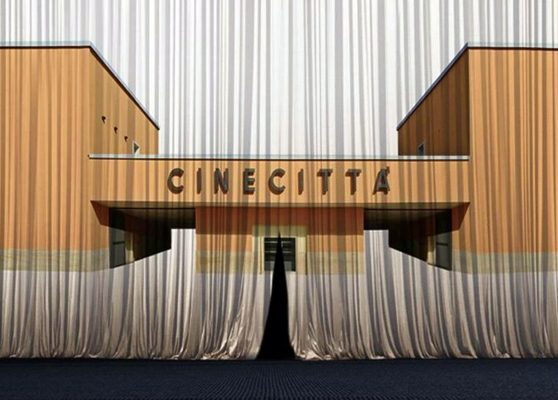
“Cinecittà si Mostra” opens an exceptional window onto the history and imagination of Italian cinema, granting the public direct access to one of Europe’s most influential film studios. Through an articulated exhibition path, the event reveals the creative processes, artistic languages, and technical craftsmanship that have shaped cinematic production from the twentieth century to the present. Designed as both a cultural and experiential journey, the exhibition invites visitors to explore cinema as a total art form, where visual culture, narrative construction, and industrial practice converge.
Cinecittà has long occupied a singular position within the cultural geography of Rome and within the broader history of European cinema. Conceived not merely as a production facility but as a symbolic and operational heart of the film industry, it has functioned for decades as a space where artistic ambition, technological innovation, and industrial organization converge. The event is structured as a comprehensive exhibition project that translates this complex identity into an accessible yet critically rigorous narrative. The exhibition does not present cinema as a finished product alone, but rather as a layered process in which imagination is materialized through labor, technique, and collaboration. Visitors are invited to traverse spaces usually reserved for production, encountering cinema in its making and understanding Cinecittà as a living organism rather than a static monument to the past.
Cultural project of Cinecittà
At the core of “Cinecittà si Mostra” lies a reflection on Cinecittà as a cultural institution whose influence extends far beyond the boundaries of film production. Since its foundation, the studios have served as a meeting point between national identity and international visual culture, hosting directors, actors, set designers, costume makers, and technicians who collectively shaped a recognizable cinematic language. The exhibition foregrounds this plural dimension, emphasizing how cinema emerges from a network of skills and disciplines rather than from isolated authorship. In doing so, it situates Cinecittà within a broader discourse on cultural heritage, highlighting its role as an archive of images, practices, and shared memories.
Cinema as an industrial art form
One of the exhibition’s most compelling aspects is its focus on cinema as an industrial art form. Through carefully selected materials and reconstructed environments, the review reveals the organizational structures that sustain creativity: production schedules, technical departments, workshops, and sound stages. This perspective dismantles the romantic notion of cinema as pure inspiration, replacing it with a more nuanced understanding of filmmaking as a collective enterprise. The visitor encounters cinema as a system in which artistic vision is inseparable from material conditions and technological infrastructures.
Between artistry and technique
The exhibition emphasizes the constant negotiation between artistic intent and technical execution. Set design, lighting, sound engineering, and costume production are presented not as ancillary components but as decisive factors in the construction of cinematic meaning. By exposing these processes, the exhibition fosters a deeper appreciation of the craftsmanship that underpins the visual power of film.
Language of Cinema
Rather than focusing on a single director or historical period, the exhibition adopts a thematic approach centered on the language of cinema itself. This choice allows the exhibition to traverse different eras and stylistic tendencies, from classical narrative forms to contemporary experimentation, without imposing a linear chronology. Cinema is examined as a visual language composed of codes, conventions, and innovations that evolve in response to cultural, social, and technological changes.
Visual storytelling and collective memory
A significant section of the exhibition is dedicated to the relationship between cinema and collective memory. Films produced at Cinecittà have contributed to shaping shared imaginaries, influencing how historical events, social dynamics, and personal narratives are perceived and remembered. The exhibition underscores this function by juxtaposing iconic imagery with contextual information, encouraging visitors to reflect on how cinema mediates reality rather than merely representing it.
Myth, history, and representation
Through sets and visual reconstructions, the exhibition addresses cinema’s capacity to create myths and reinterpret history. Ancient Rome, epic narratives, and historical dramas emerge as recurring subjects, revealing how Cinecittà has participated in the global circulation of classical imagery. This dialogue between past and present reinforces the studios’ role in transforming cultural heritage into visual spectacle.
Exhibition path
The exhibition path is conceived as a progressive immersion into the spaces and processes of filmmaking. Visitors move through a sequence of environments that alternate between original studios, reconstructed sets, and exhibition areas, creating a rhythm that mirrors the phases of cinematic production. The curatorial design privileges clarity and coherence, ensuring that each section contributes to a unified narrative without sacrificing analytical depth.
Studios, sets, and spaces of creation
Central to the exhibition are the studios themselves, which are presented not only as architectural spaces but as active agents in the creative process. Walking through sound stages and backlots, visitors gain insight into how spatial organization influences cinematic language. The exhibition highlights the adaptability of these spaces, capable of accommodating vastly different narratives and aesthetic demands.
Materiality of Cinema
Props, set fragments, and technical equipment are displayed to emphasize the material dimension of cinema. These elements testify to the physical labor and artisanal knowledge that sustain the illusion of the screen. By foregrounding materiality, “Cinecittà si Mostra” counters the immaterial perception of film as mere image, reasserting its roots in tangible practices.
Costumes and character construction
Another key component of the exhibition path is the section devoted to costume design. Costumes are presented as narrative tools that articulate character identity, social context, and historical setting. The exhibition explores the dialogue between fabric, body, and movement, demonstrating how costume design contributes to the emotional and symbolic resonance of cinematic characters.
From sketch to screen
Through preparatory drawings, fabric samples, and finished garments, visitors can trace the evolution of costumes from conceptual sketches to their final appearance on screen. This process-oriented approach reinforces the exhibition’s broader emphasis on cinema as a collaborative and iterative practice.
Why visit the exhibition
The exhibition offers a rare opportunity to engage with cinema from a critical and experiential perspective. Rather than celebrating film as a distant or untouchable art form, the exhibition invites visitors to enter its spaces of production and to understand its mechanisms from within. This approach is particularly valuable for those interested in visual culture, art history, and media studies, as it provides concrete insights into the relationship between artistic vision and industrial practice.
Educational and critical experience
The exhibition is designed to address a diverse audience, from scholars and professionals to students and general visitors. Its clear structure and layered content allow for multiple levels of engagement, making it possible to appreciate both the historical significance and the contemporary relevance of Cinecittà. By combining experiential elements with critical interpretation, the exhibition fosters an informed and reflective encounter with cinema.
Cinecittà as living heritage
Ultimately, the event frames Cinecittà as living heritage, continuously reshaped by new productions and creative practices. The exhibition underscores the importance of preserving not only films but also the spaces, skills, and knowledge that make them possible. In doing so, it reaffirms Cinecittà’s role as a vital cultural resource, capable of generating meaning and innovation in the present as much as in the past.