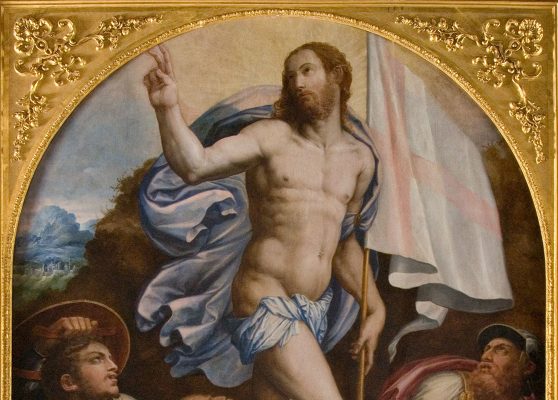
The Capitoline Museums, in the exhibition spaces of Palazzo Caffarelli, present the exhibition “Vasari and Rome”, an exhibition project dedicated to Giorgio Vasari and his relationship with the city that more than any other contributed to defining the artistic culture of the Renaissance. Through a path that brings together paintings, drawings, prints, letters, and documentary materials from major Italian and international institutions, the exhibition reconstructs the different phases of the Roman stays of the artist from Arezzo.
Painter, architect, stage designer and above all author of the celebrated “Lives of the Most Excellent Painters, Sculptors and Architects”, Vasari was one of the principal interpreters of sixteenth-century artistic culture. The exhibition restores the complexity of his artistic and intellectual personality, showing how Rome represented a decisive place of training, confrontation, and affirmation for his career.
Vasari and Rome, the memory of the Renaissance
A central figure in sixteenth-century artistic culture, Giorgio Vasari (Arezzo, 1511 – Florence, 1574) occupies a singular role in the history of European art. A prolific painter and architect, but also a writer and theorist, Vasari was the first author to conceive a true systematic narrative of Italian art of the Renaissance. His most famous work, the Lives, first published in 1550 and expanded in 1568, remains one of the fundamental texts for understanding Renaissance art.
Through this monumental editorial project, Vasari did not simply recount the biographies of artists: he elaborated a genuine historical interpretation of Italian art, identifying the Renaissance as the culmination of a process that began with Giotto and reached its peak in the figures of Leonardo da Vinci, Raphael, and Michelangelo. Within this perspective, Rome occupies a central position, since it represented the place where the artistic traditions of the Italian peninsula found synthesis and a new monumental dimension.
Rome as an artistic laboratory
During the course of his career Vasari stayed in Rome several times, entering into contact with a complex network of commissions connected to the papal court, the nobility, and the intellectual circles of the time. The city was then the principal center of artistic production in Europe, where the most ambitious projects and the most influential personalities were concentrated.
The encounter with the works of classical antiquity and with the masterpieces of the Roman Renaissance contributed to defining Vasari’s figurative language, characterized by dynamic compositions, an elaborate use of perspective, and a strong narrative tension. This language fully belongs to the culture of Mannerism, the artistic current that in the second half of the sixteenth century reinterpreted the models of the great Renaissance tradition.
Vasari’s role in the construction of art history
Vasari’s contribution is not limited to his pictorial and architectural production. His name is inseparably linked to the birth of modern art historiography. In the pages of the Lives, the author constructs a narrative of Italian art as a continuous progress toward formal perfection, identifying the work of Michelangelo as the culmination of this development.
This interpretative model, despite the limits of the culture of its time, influenced the perception of Renaissance art for centuries. The exhibition at the Capitoline Museums makes it possible to understand how the Roman experience played a decisive role in shaping this historical vision.
Between painting, architecture, and scenography
Vasari’s personality stands out for its extraordinary versatility. In addition to painting, he worked as an architect and as an organizer of ephemeral decorative apparatuses for public celebrations and court ceremonies. This multidisciplinary dimension reflects the model of the Renaissance artist, capable of operating in different fields of artistic production.
In the Roman context, such versatility found fertile ground. The great papal building campaigns required artists capable of coordinating complex projects in which painting, architecture, and decoration were integrated into a single iconographic program.
The exhibition project
The exhibition “Vasari and Rome” was conceived with the aim of reconstructing the relationship between the artist and the city through a wide selection of artworks and documentary materials. The project restores the complexity of Vasari’s figure, presenting him not only as a painter and architect but also as a chronicler and interpreter of the culture of his time.
The exhibition path brings together paintings, drawings, engravings, letters, medals, and documents, offering a multifaceted view of the different aspects of his activity. This variety of materials allows visitors to observe the artist’s work not only in the finished form of the artwork, but also in the processes of conception and in the relationships with patrons.
Loans and participating institutions
The exhibition is enriched through the collaboration of numerous Italian and international institutions. Among the principal loans are works from prestigious collections such as the Uffizi Galleries, the Museo e Real Bosco di Capodimonte, the National Gallery of Siena, and the National Gallery of Bologna, together with important archives and libraries including the Vatican Apostolic Library.
This network of collaborations makes it possible to reunite works rarely seen together, creating a scholarly context that highlights the European dimension of Vasari’s figure.
Masterpieces on display
Among the most significant works presented are several paintings that testify to the different phases of the artist’s career. Among these stands out the “Resurrection”, created around 1545 in collaboration with Raffaellino del Colle and preserved in the Museo e Real Bosco di Capodimonte. The work represents one of the most eloquent examples of Vasari’s painting, characterized by articulated compositions and a strong dynamism of figures.
Alongside it is the “Resurrection of Christ” from 1550, from the National Gallery of Siena, which demonstrates the stylistic evolution of the artist toward greater compositional and symbolic complexity.
Vasari’s portraiture
Another important section of the exhibition is dedicated to portrait painting. In this field Vasari demonstrates his ability to capture the psychological dimension of his subjects, as shown by the “Portrait of a Gentleman” from the Strada Nuova Museums in Genoa.
The painting reveals a particular sensitivity in the rendering of expressions and in the construction of the social image of the sitter, qualities that place Vasari within the broader tradition of Renaissance portraiture.
Works from the beginning and end of his career
The exhibition also includes works marking crucial moments in the artist’s activity. Among them are the “Nativity” of 1538, known as the Night of Camaldoli, and the “Annunciation” created between 1570 and 1571. These works allow visitors to observe the evolution of Vasari’s language across more than three decades of artistic production.
The comparison between these works highlights the transition from an early phase still linked to the models of the early Renaissance to a mature phase fully embedded in Mannerist culture.
The exhibition path
The installation within the spaces of Palazzo Caffarelli at the Capitoline Museums offers a particularly meaningful setting for the exhibition. Located on the Capitoline Hill, one of the symbolic places of Rome’s history, the palace allows for a direct dialogue between the works on display and the historical dimension of the city.
The exhibition path is conceived as a narrative that follows the fundamental stages of Vasari’s presence in Rome, connecting the artworks with the cultural and political environments in which they were conceived.
The artist’s Roman stays
One of the central aspects of the exhibition concerns the reconstruction of Vasari’s different Roman stays. During these periods the artist had the opportunity to engage with the great artistic enterprises promoted by the papal court and by aristocratic families.
Rome was then a crossroads for artists coming from all parts of the Italian peninsula, a place where different experiences converged and where new forms of figurative language developed. In this environment Vasari was able to observe firsthand the works of Michelangelo and other protagonists of the Renaissance.
Documents, letters, and drawings
Alongside the paintings, the exhibition presents a rich selection of drawings, letters, and documentary materials. These sources offer a privileged insight into the processes of design and the professional relationships of the artist.
The drawings in particular make it possible to grasp the conceptual phase of the works, revealing the precision with which Vasari constructed his compositions and studied the organization of pictorial space.
Drawing as a tool of design
In Renaissance artistic culture, drawing represented the foundation of the entire creative process. Vasari himself attributed a central role to this practice, considering it the common basis of painting, sculpture, and architecture.
The graphic works displayed in the exhibition allow visitors to observe the artist’s working method, characterized by great attention to the construction of figures and the distribution of masses within space.
Why visit the exhibition
The exhibition represents an important opportunity to explore the figure of one of the protagonists of Renaissance culture. The exhibition does not simply present a selection of artworks, but proposes a broader reflection on Vasari’s role as an interpreter and narrator of the art of his time.
An artist at the center of sixteenth-century culture
Through the dialogue between paintings, drawings, and documents, the exhibition path allows visitors to understand the complexity of Vasari’s figure. Painter and architect, but also theorist and historian, Vasari contributed decisively to the construction of the image of Italian art during the Renaissance.
The exhibition also highlights the role of Rome as a center of cultural elaboration, a place where artists, writers, and patrons participated in the definition of new figurative models.
Rome and the memory of the Renaissance
Visiting this exhibition also means reflecting on the relationship between the city and its artistic tradition. Rome was not only the stage for the monumental enterprises of the Renaissance, but also the place where a critical reflection on art and its history developed.
In this context, the figure of Vasari acquires particular significance. Through his work as both writer and artist, he helped define the very image of the Italian Renaissance, transforming the memory of artworks and artists into a narrative that would influence European culture for centuries.