The exhibition brings together masterpieces that testify to the breadth and quality of the Habsburg imperial collections, built over the centuries as instruments of political, cultural, and symbolic affirmation. Paintings, sculptures, and works of art engage in dialogue within a path that restores to the public the complexity of an era in which collecting was not mere accumulation, but the expression of a worldview and a precise dynastic strategy. Rome, a city of stratifications and memories, thus becomes the stage for an encounter between two capitals of European history, united by the universal language of art and by a shared tension toward the representation of power.
Habsburgs and the construction of an imperial collection
The theoretical core of the exhibition is embodied by the Habsburg dynasty and the decisive role it played in defining a modern idea of collecting. Through a coherent and forward-looking cultural policy, the Habsburgs transformed the gathering of artworks into an instrument of self-representation and consolidation of power.
European dynasty between politics and culture
From the end of the Middle Ages to the contemporary era, the Habsburgs ruled vast territories stretching from Central Europe to the Iberian Peninsula, from the Low Countries to Italy. This supranational dimension is reflected in the imperial collections, which include works from various European artistic schools. Art thus becomes the mirror of a political vision founded on the universality of the Empire and the construction of a shared dynastic memory.
Flemish school
The presence of Flemish masters reflects the dynastic bond between the Habsburgs and the Low Countries. Northern painting, with its attention to detail and material rendering, introduces a visual language in which realism and symbolism coexist in subtle balance.
Marriage strategy and artistic heritage
The celebrated Habsburg matrimonial alliances not only produced geopolitical effects but also led to the transfer of artworks, treasures, and entire collections among European courts. In this way, the imperial collection was enriched with Flemish, Italian, and Spanish masterpieces, giving rise to a heritage of extraordinary stylistic and iconographic variety.
Collecting as a language of power
Within the early modern context, Habsburg collecting assumed a symbolic dimension. The works were not simply precious objects, but instruments of political communication. The choice of subjects, official portraits, mythological scenes, allegories of virtue and justice, helped shape the ideal image of the sovereign.
Birth of a modern museum vision
The gradual organization of the imperial collections foreshadowed the birth of the public museum. The Kunsthistorisches Museum, established to preserve this heritage, represents the outcome of a long process of systematization and enhancement, in which the private dimension of the collection was transformed into shared cultural patrimony.
Renaissance and Baroque
The exhibition allows visitors to traverse two fundamental seasons of European art history: the Renaissance and the Baroque. The Habsburg collections take shape as a visual atlas documenting the evolution of figurative languages between the fifteenth and seventeenth centuries, offering a privileged perspective on the aesthetic and ideological transformations of the period.
Legacy of the Italian Renaissance
For the Habsburgs, the Renaissance represented an indispensable cultural model. Admiration for Italian art translated into the acquisition of works embodying principles of harmony, proportion, and the centrality of the human figure. Renaissance painting, with its pursuit of compositional balance and narrative clarity, became a paradigm of civilization and prestige.
Centrality of drawing and perspective
The Renaissance works included in the exhibition highlight the importance of drawing as the foundation of form and perspective as a tool for organizing space. In them one perceives the ambition to restore a rational order to the visible world, in harmony with the political vision of an ordered and hierarchical empire.
Theatricality of the european Baroque
With the seventeenth century, figurative language became more dynamic and dramatic. The Baroque expressed a new sensibility characterized by movement, pathos, and luminous intensity. Works from Flemish and Italian contexts demonstrate how art became a vehicle of emotion and persuasion, aligned with the needs of the Counter-Reformation and the self-representation of absolute power.
Rubens and the international dimension of the Baroque
The presence of works connected to the circle of Peter Paul Rubens testifies to the international vocation of the Habsburg court. Rubens, an artist-diplomat, perfectly embodied the conjunction of art and politics: his monumental compositions, animated by twisting bodies and vibrant chromaticism, translate into images the complexity of Baroque Europe.
Works linked to the culture of Peter Paul Rubens express the vitality and dynamism of the Baroque. Bodies in motion, intense colors, and diagonal compositions render visually the spiritual and political tension of seventeenth-century Europe.
Exhibition path
The curatorial project develops according to a structure that intertwines chronology and themes, enabling visitors to understand not only the stylistic evolution of the works but also the historical and ideological context in which they were acquired.
Representation of sovereignty
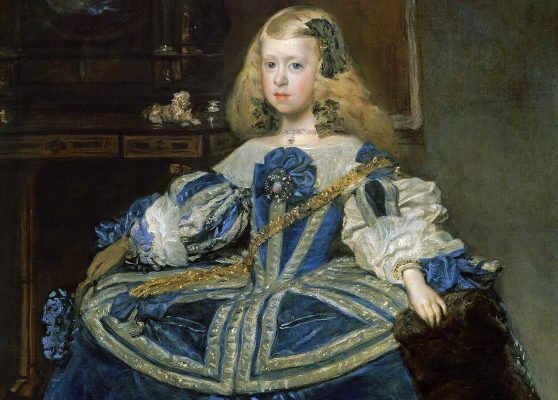
An initial section is devoted to the construction of the sovereign’s image. Official portraits, characterized by rigorous frontal settings or solemn poses, define an iconographic model aimed at expressing authority, continuity, and legitimacy.
Symbols, attributes, and visual codes
Each iconographic element, from armor to heraldic coats of arms, from precious fabrics to symbolic objects, contributes to building a codified language of power. The analysis of these details reveals the complexity of visual communication in the early modern period.
Wunderkammer and universal knowledge
A further nucleus explores the theme of the Wunderkammer, the “cabinet of curiosities” that brought together artworks, rare objects, and natural wonders. This model reflects the aspiration to encyclopedic knowledge, in which the sovereign presents himself as guarantor of the world’s order.
Art, nature, and wonder
The coexistence of artistic artifacts and natural objects suggests a unified vision of knowledge. Art is not separated from science but serves as its symbolic complement, contributing to the definition of an image of power capable of understanding and mastering reality.
Dialogue with Rome
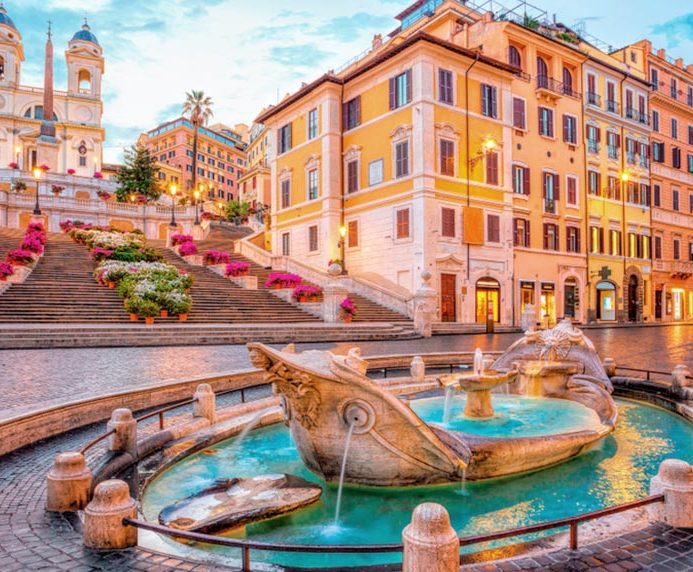
The exhibition’s arrival in Rome carries particular significance. The city, center of Christianity and a place of millennial artistic stratification, offers an ideal context for reflecting on the relationship between tradition and power. The encounter between the Viennese works and Rome’s historical memory enriches the reading of the exhibition path.
The Italian school is represented by works that highlight the centrality of drawing, compositional harmony, and the masterful use of light. In them one recognizes the legacy of a tradition that, from the Renaissance to the Baroque, redefined the parameters of Western art.
Cultural bridge between Vienna and Rome
The exhibition configures itself as a cultural bridge between two symbolic capitals of Europe. Through the dialogue between the works and the exhibition space, visitors are invited to consider art history as a fabric of relationships, exchanges, and reciprocal influences.
From Renaissance composure to Baroque drama, the itinerary allows one to grasp the transformations of figurative language, offering an articulated perspective on the stylistic dynamics that traversed Europe.
Why visit the exhibition
The visit represents an opportunity for in-depth study for scholars, enthusiasts, and a cultivated public. The exhibition allows close observation of works rarely visible outside their Viennese home, offering a broad perspective on European figurative culture. The exhibition does not merely display masterpieces but proposes a reflection on the role of art as an instrument of representation and construction of identity.
Critical and conscious experience
The scientific rigor of the curatorial framework, combined with the quality of the selected works, enables a thoughtful rather than superficial experience. The exhibition invites reflection on the relationship between art and power, between collecting and cultural identity.
Opportunity to understand Europe
In a contemporary context marked by tensions and redefinitions of identity, the exhibition path offers the opportunity to rediscover the shared roots of European culture. The wonders of the Habsburgs thus become instruments of knowledge and historical reflection, restoring to art its primary function as testimony and memory.