Historical perspective: colour, symbolism and power
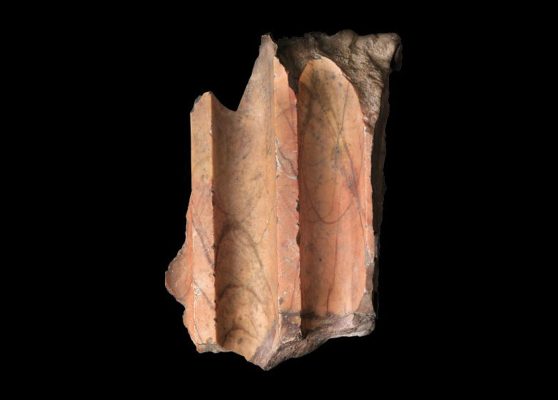
Throughout antiquity, polychrome marble adorned temples, palaces, and public spaces, functioning as a visual language of prestige and piety. In ancient Rome, marble was a metaphor for empire, the material embodiment of wealth drawn from conquered lands. Egyptian porphyry, Phrygian pavonazzetto, and Numidian giallo antico formed a palette that reflected both political domination and cosmological order. Colour signified geography, and geography implied power.
During the Renaissance, this ancient fascination with coloured stone was revived through humanist scholarship and papal patronage. Artists such as Michelangelo and Bernini embraced the expressive potential of marble’s natural hues, integrating them into sacred and secular contexts alike. By the Baroque period, the use of polychrome marble reached theatrical intensity: chapels gleamed with red jasper and green serpentine, their surfaces orchestrated like music. The exhibition guides visitors through this evolving dialogue between stone and spirit, culminating in the rediscovery of marble as an emotional material in modern design.
Living legacy: from classical ideals to contemporary dialogues
“The Colours of Antiquity” does not confine itself to the past. It also traces the enduring influence of marble’s chromatic and symbolic potential on contemporary art and design. The exhibition’s final galleries present modern interpretations by artists who reimagine marble as a medium of reflection, ecology, and transformation. Their works respond to the ancient stones with humility and innovation, casting light on how materials once reserved for temples and emperors can now speak to issues of sustainability, identity, and perception.
In architecture, designers revisit polychrome surfaces as sustainable alternatives to industrial uniformity. Sculptors embrace the imperfections of natural stone as metaphors for the human condition. The Santarelli Foundation encourages this living dialogue, positioning marble not as relic but as inspiration. Thus, the exhibition closes where it began: in the awareness that beauty is not static but evolving, an interplay between time, matter, and imagination.
Exhibition layout: a path through light and substance
The exhibition unfolds across a sequence of thematic rooms, each conceived as an atmosphere rather than a mere display space. Lighting, sound, and spatial rhythm guide the visitor from geological origins to artistic transcendence. The first rooms evoke the subterranean world of the quarries, with projected imagery of mineral strata and the resonance of distant tools. Subsequent galleries open into luminous halls where colour takes center stage, marbles arranged not by chronology but by chromatic harmony.
In each section, explanatory panels blend historical scholarship with sensory engagement. Fragments of pavements, architectural cornices, and sculptures are juxtaposed to reveal how the same material could serve both sacred and domestic realms. Visitors are encouraged to trace with their eyes the transitions of hue and polish, perceiving marble as both object and narrative. The exhibition culminates in a contemplative space dedicated to the metaphysics of colour, where light, filtered through marble slabs, creates an immersive environment reminiscent of ancient sanctuaries.
Highlights and masterpieces
Among the treasures of the exhibition, several pieces stand as icons of artistic mastery. A Roman mosaic pavement dazzles with geometric precision, its tesserae of giallo antico, porphyry, and serpentine composing a kaleidoscope of imperial splendour. Nearby, a bust of a young deity carved in Phrygian marble demonstrates the sculptor’s understanding of translucency, flesh and stone merging in a single pulse of light.
Equally compelling are fragments of Baroque altars, where contrasting stones evoke the drama of faith and illusion. Each artifact is accompanied by detailed analysis, tracing its provenance, stylistic lineage, and symbolic significance. In doing so, the exhibition restores to marble its voice as a medium of storytelling, a language of veins and colours, through which civilizations have expressed divinity, power, and beauty.
Dialogue between ancient and modern
One of the exhibition’s most thought-provoking aspects is its juxtaposition of ancient artifacts with contemporary installations. Artists working today reinterpret marble not as a symbol of permanence but as a witness to change. Video projections, sculptural interventions, and soundscapes establish a dialogue across centuries. Through these interactions, marble ceases to be an inert relic and becomes a participant in the conversation about art’s future.
The dialogue also extends to scientific innovation: new imaging technologies reveal the microstructures of ancient marbles, allowing researchers to reconstruct trade routes and workshop practices. By combining art and science, the exhibition underscores a timeless truth, that every material carries within it a story of transformation, awaiting rediscovery.
The role of light and perception
Light is the silent protagonist of Event. It is through light that marble’s hues come alive, revealing the complexity of their inner worlds. The exhibition’s lighting design, meticulously crafted, allows each piece to shift subtly as viewers move around it, mimicking the natural play of sunlight on stone surfaces. This choreography of illumination transforms static objects into living presences.
In ancient temples, marble was animated by light filtered through architectural openings; in Baroque chapels, candles multiplied its sheen into divine spectacle. Here, those traditions are evoked through modern means: LED gradients and optical fibres recreate the ephemeral radiance that once defined sacred spaces. Visitors experience marble as a dynamic encounter between matter and vision, a phenomenon that invites contemplation of how perception itself sculpts meaning.
Interactive and educational experiences
To complement its aesthetic dimension, the exhibition integrates interactive technologies that bridge scholarship and public engagement. Digital installations guide visitors through virtual reconstructions of ancient quarries and Roman workshops. Augmented reality applications allow close examination of microscopic pigment traces on marble surfaces, offering insight into techniques once invisible to the naked eye.
Educational workshops invite participants of all ages to handle replica tools and sample materials, deepening understanding through tactile exploration. These activities transform the exhibition into a laboratory of perception, a place where art history, geology, and technology meet in dialogue. For younger audiences, immersive storytelling sessions bring mythological figures to life, linking the stones to their ancient narratives.
Why visit “The Colours of Antiquity”
To visit this exhibition is to enter a conversation across millennia. It reminds us that marble, once quarried, carved, and polished, remains a living bridge between civilizations. Each piece displayed embodies not only artistic mastery but also human curiosity, endurance, and reverence for the material world. The exibition is both a celebration and a meditation: a recognition that colour, texture, and form are languages through which humanity has always sought the divine.
For scholars, the exhibition offers valuable new research on provenance and restoration. For artists and designers, it opens pathways of inspiration grounded in nature’s complexity. For the general public, it provides a sensory and intellectual experience that unites science, art, and emotion. In the tranquil halls of the Capitoline Museums, surrounded by the murmuring echoes of history, visitors may rediscover what it means to see, not only with the eyes, but with the imagination.