The exhibition offers an unprecedented encounter between Cartier’s historic creations and the classical sculptures of the Albani Collection. Through refined juxtapositions and scholarly interpretation, the exhibition examines how the Maison has drawn from antiquity since the 19th century, transforming ancient forms into modern luxury and symbolic language.
Palazzo Nuovo at the Capitoline Museums abandons its traditional layout to host its first temporary exhibition. and specifically for an encounter with the creations of Maison Cartier, introduces a narrative of continuity rather than disruption. The result is an ambitious dialogue between antiquity and modernity that foregrounds the processes of reinterpretation at the heart of artistic creation.
Curated by Bianca Cappello, Stéphane Verger and Claudio Parisi Presicce, the exhibition brings together historical works from the Cartier Heritage Collection and ancient sculptures from the Albani Collection, alongside significant loans from Italian and international institutions. The display conceived by Sylvain Roca, enriched by evocative scenographic interventions by Dante Ferretti, emphasises the theatricality inherent in both jewelry and sculpture: each object, whether a jewel or a fragment of antiquity, becomes part of a staged dialogue that invites contemplative immersion.
Understanding the cultural horizon
The exhibition operates on a fundamental premise: antiquity is not a stylistic reservoir fixed in the past, but a cultural field that continues to shape contemporary aesthetics. For Cartier, the classical world has served as a matrix for innovation rather than imitation. The Maison’s relationship with antiquity is grounded in a fascination with proportion, symbolism and the expressive potential of form, elements that underpin both ancient sculpture and high jewelry.
This section of the exhibition explores the broader intellectual and artistic contexts that informed Cartier’s engagement with antiquity. As Europe underwent waves of archaeological discovery, neoclassical revivalism, and cosmopolitan travel, the ancient world became a shared visual and conceptual language. Cartier responded to these currents with a distinctive aesthetic approach that merged classical discipline with modern creativity.
Antiquity as a living sSource
From its earliest years, Cartier navigated a world captivated by the discoveries at Pompeii, Herculaneum, Greece and Egypt. The Maison’s designers absorbed the stylistic lessons of antiquity not by replicating ancient artifacts, but by distilling them into essential forms and symbolic gestures. This process resonates strongly with the Albani Collection, assembled in the 18th century as a venerated ideal of classical taste. Within Palazzo Nuovo, these marbles were intended to communicate an image of antiquity that shaped the European canon.
By placing Cartier’s creations in proximity to these sculptures, the exhibition reveals how the Maison’s designers responded to similar aesthetic challenges: harmony of proportion, clarity of outline, balance between ornament and structure. In this framework, gems and gold become extensions of the sculptural discipline embedded in the classical tradition.
Myth and modern imagination
Myth provides one of the exhibition’s central threads. In antiquity, myth conveyed social values, encoded spiritual beliefs and articulated ideas of identity and destiny. Cartier transformed these narratives into a repertoire of motifs and symbols that continue to resonate with modern audiences. Rather than illustrating mythological scenes, Cartier uses myth as a conceptual catalyst—translating stories of metamorphosis, protection and heroism into subtle design cues.
Symbolic forms and aesthetic codes
Among Cartier’s most enduring symbols is the serpent, a motif deeply embedded in Greco-Roman iconography. Associated with healing, eternity, erotic power and transformation, the serpent offered a rich symbolic vocabulary that Cartier adapted across bracelets, necklaces and rings. The exhibition includes several articulated serpent bracelets whose mechanical sophistication echoes the ingenuity of ancient goldsmiths.
Other mythological creatures, sphinxes, griffons, chimeras, appear as abstracted forms rather than literal representations. Their presence highlights Cartier’s interest in the psychological and aesthetic dimensions of myth: these creatures become emblems of mystery, authority and protection.
The exhibition path
The curators of “Cartier and the Myth” conceived a narrative structure that allows visitors to navigate the Maison’s evolving relationship with antiquity across several thematic clusters. Each section pairs Cartier works with key sculptures from the Albani Collection, demonstrating how motifs, forms and ideas migrate across time.
Cartier and the Albani Collection: sculpture as a mirror for jewelry
Palazzo Nuovo’s galleries, with their historical arrangement of marbles, provide a strikingly coherent setting for the exhibition. The Albani Collection, assembled by Cardinal Alessandro Albani with the guidance of Johann Joachim Winckelmann, served as a foundation for the modern concept of classical beauty. Its emphasis on ideal proportions, expressive restraint and narrative clarity shaped European taste well into the modern era.
Poetics of juxtaposition
In this section, visitors encounter Cartier creations displayed alongside marble busts, mythological figures and architectural fragments. The contrasts between material, warm gold against cool marble, shimmering gems against matte stone, produce a dynamic interplay that encourages close looking. The sculptural qualities of jewelry, often overlooked due to its scale, become strikingly evident.
Architectural inspiration and structural elegance
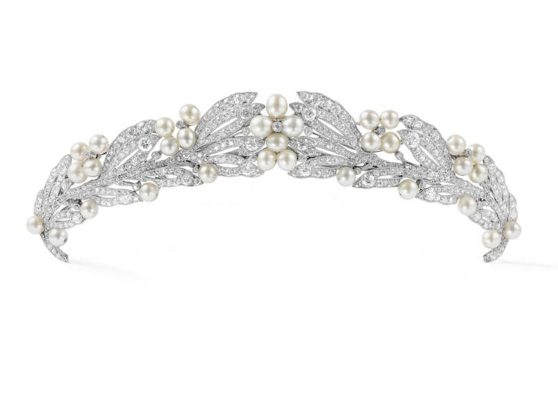
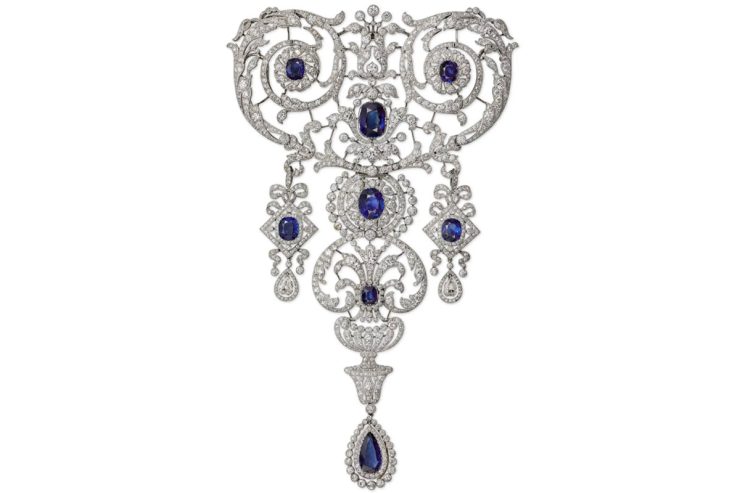
One of Cartier’s most distinctive contributions to modern jewelry is its translation of architectural principles into precious objects. The exhibition highlights how classical ornament, such as acanthus leaves or Greek key patterns, informed the Maison’s design vocabulary. Articulated bracelets resemble rhythmic friezes; tiaras evoke the clarity of temple pediments; brooches balance vertical and horizontal elements with architectural precision.
Belle Époque: rediscovering the classical language
The Belle Époque represented a fertile period for Cartier’s dialogue with antiquity. Across Europe, aristocrats and intellectuals sought to align themselves with classical ideals, viewing antiquity as a marker of sophistication and cultural authority. Cartier responded by developing a refined neoclassical vocabulary characterized by elegance, linearity and graphic restraint.
Platinum and the reinvention of form
The introduction of platinum revolutionized jewelry design, making possible unprecedented levels of delicacy. Cartier embraced this innovation, creating jewels of extraordinary lightness that nonetheless retained structural clarity. Classical motifs adapted to this new medium acquired a fresh, modern vitality. Laurel wreaths became ethereal hair ornaments; scrollwork was rendered in subtle diamond tracery; geometric motifs achieved crisp articulation.
Modern Cameo
This section also explores Cartier’s reinterpretation of the cameo, a quintessential union of sculpture and jewelry. Rather than reproducing ancient models, Cartier abstracted the cameo concept, treating the jewel as a micro-relief shaped through contrasts of material and light. This approach aligns with the exhibition’s overarching theme: transformation rather than imitation.
Modernism, Cocteau, and the rebirth of myth
The 20th century introduced new stylistic and conceptual horizons for Cartier. The Maison embraced influences from modern art, global cultures and technological innovation while maintaining a sustained dialogue with antiquity. This period is defined not by the abandonment of classical references, but their distillation into essential forms.
Jean Cocteau and the geometry of myth
Jean Cocteau, a key figure in the French avant-garde, played an important role in reshaping Cartier’s engagement with classical motifs. His fascination with myth informed several collaborations that resulted in pieces of striking conceptual clarity. Cocteau’s influence is visible in the duality of form, the purity of line and the balance between minimalism and symbolism that characterize Cartier’s mid-century creations.
Hybrid figures and symbolic power
Mythological creatures appear throughout this section as emblems of psychological and cultural complexity. Cartier’s treatment of these motifs reveals a sensitivity to the emotional charge associated with such figures in antiquity. Whether manifested as subtle suggestions or bold statements, these creations highlight the Maison’s commitment to bridging archaic symbolism and modern aesthetic concerns.
Contemporary perspectives: antiquity reimagined for the present
The final chapters of the exhibition examine how contemporary Cartier designers reinterpret antiquity in a world shaped by digital culture, new materials and global hybridity. Today, classical references are no longer bound to a single stylistic idiom; instead, they appear as echoes, resonances and conceptual foundations.
Jewelry language rooted in memory
Contemporary Cartier works resonate with memory, of craftsmanship, of symbolic systems and of universal narratives. The exhibition highlights how even the most innovative pieces retain a dialogue with classical geometry, balance and symbolism. The jewel emerges not only as an ornament but as a cultural artifact that negotiates between tradition and innovation.
Ancient structures, new techniques
Modern Cartier designers explore volumetric experimentation, chromatic contrasts and unconventional materials, yet the echoes of antiquity persist. Classical clarity continues to inform proportion; mythological concepts shape the expressive possibilities of form. This continuity underscores the exhibition’s central insight: antiquity remains an active presence in contemporary creation.
Why “Cartier and the Myth” matters today
The exhibition carries a resonance that extends beyond its aesthetic and historical significance. It offers a new way of understanding how cultural memory is shaped, transmitted and reinvented. By placing Cartier in dialogue with antiquity, the exhibition reframes jewelry not as an accessory, but as an artistic medium capable of engaging with questions of identity, heritage and imagination.
A museum transformed
Visitors accustomed to the solemnity of Palazzo Nuovo will encounter a transformed space: still reverent, but newly animate. Cartier’s creations introduce flashes of color, light and narrative detail that activate new ways of seeing the classical marbles. The juxtaposition produces a heightened awareness of the materials, techniques and expressive strategies employed by both ancient and modern artisans.
An editorial interpretation of antiquity
Although grounded in scholarship, the exhibition cultivates a tone of editorial clarity and accessibility. It invites visitors to consider how antiquity survives in contemporary culture—not as an academic field, but as a set of images, symbols and ideals that shape how we understand beauty and meaning. The narrative unfolds with the elegance of a magazine feature, yet retains the precision and authority of museum research.
The roman context
Rome, a city where layers of time overlap in a dense visual and cultural fabric, provides an ideal setting for this exhibition. The Capitoline Museums embody the civic and symbolic legacy of ancient Rome. To host Cartier within their walls is to emphasize the continuity of artistic aspiration: the search for proportion, clarity, symbolism and refinement transcends historical boundaries. Visitors leave with a renewed sense of how antiquity permeates modern creativity, quietly, persistently and with enduring relevance.
Share your personal experience with the ArcheoRoma community, indicating on a 1 to 5 star rating, how much you recommend "Cartier and the Myth at the Capitoline Museums"