Within the panorama of twentieth-century art history, Mexico occupies a wholly distinctive position. While Europe was undergoing the profound transformations of the historical avant-gardes and the United States was moving towards a new cultural centrality, the Latin American country was elaborating its own idea of modernity, founded on the dialogue between the heritage of ancient pre-Columbian civilizations, the colonial tradition and the demands of contemporaneity.
Art historians have defined this creative season as the Mexican Renaissance, a cultural phenomenon that involved painting, architecture, literature and monumental arts, contributing to the construction of a new national identity after the Revolution of 1910. Diego Rivera was certainly its principal interpreter, but alongside him worked figures of extraordinary importance such as José Clemente Orozco, David Alfaro Siqueiros, Frida Kahlo, María Izquierdo, Rufino Tamayo and numerous other artists who helped redefine the role of the visual arts in contemporary society. The exhibition proposes a reinterpretation of this complex cultural history, restoring the collective character of one of the most original artistic experiences of the twentieth century.
Diego Rivera and the birth of Modern Mexican Art
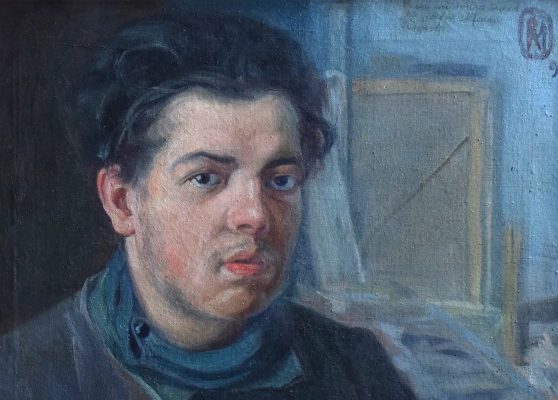
The figure of Diego Rivera represents one of the principal points of reference in twentieth-century visual culture. His work occupies a central position not only for the contribution it made to the development of Mexican Muralism, but also for its ability to synthesize profoundly different artistic and cultural experiences, transforming them into a modern language capable of interpreting the history and identity of his country.
Rivera’s artistic career belongs to a particularly complex historical process, in which Mexico sought to define its own cultural image through the recovery of Indigenous traditions, the confrontation with European culture and the reflection on the profound social transformations that affected the country between the nineteenth and twentieth centuries.
From the Academy of San Carlos to the European Avant-Gardes
His studies at the Academy of San Carlos provided Rivera with a solid technical preparation and a deep knowledge of history painting and the Western figurative tradition. Yet the cultural context in which the artist was formed was already marked by a growing interest in Mexico’s archaeological heritage and Indigenous cultures, considered fundamental elements of national history.
The progressive appreciation of pre-Columbian testimonies and of the Mexican landscape contributed to the birth of a new artistic sensibility, destined to influence subsequent generations profoundly.
Artistic training and the construction of a national consciousness
It is within this context that Diego Rivera’s formative years are set. The exhibition documents the artist’s relationship with the academic tradition and the cultural heritage of his country, highlighting how his subsequent production represents the result of a long process of elaboration rather than a radical break with the past.
Rivera’s formation coincided with a phase of intense cultural elaboration. Mexican artistic institutions were progressively moving beyond the academic model of European derivation in order to construct a language more closely connected to the history and specific character of the national territory.
Paris, Cubism and the discovery of modernity
The European sojourn represented one of the decisive moments in Rivera’s career. The years spent in Paris allowed him to engage with the principal experiences of the historical avant-gardes, taking part directly in one of the most important artistic laboratories of the early twentieth century.
The dialogue with Cubism and with the research developed by European artists contributed to the definition of a personal language in which the fragmentation of forms and the search for new compositional balances were combined with a constant attention to the monumentality of images.
At the same time, the study of Italian painting and Renaissance frescoes offered Rivera a model that would profoundly influence his later activity as a muralist. The public function of art, the monumentality of compositions and the capacity to transform history into figurative narrative are among the elements that connect his research to the great artistic experiences of the Italian Renaissance.
Muralism and the Mexican Renaissance
His return to Mexico coincided with one of the most significant periods in the country’s contemporary history. The Revolution of 1910 had profoundly changed the political and social balance of the nation, generating the need to construct new instruments of collective representation.
José Vasconcelos and the cultural project of the new State
The cultural policies promoted by José Vasconcelos assigned the visual arts an educational and civic function. Painters, architects and intellectuals were called upon to participate in the construction of a new national consciousness through works intended for public spaces and accessible to the entire population.
Muralism represented only one expression of this broader cultural process, today identified by scholars as the Mexican Renaissance. Through the recovery of Indigenous roots, historical memory and popular traditions, Mexico elaborated its own idea of modernity, capable of dialoguing with the principal international artistic experiences.
Rivera, Orozco and Siqueiros
Diego Rivera, José Clemente Orozco and David Alfaro Siqueiros represent the three principal interpreters of Muralism. Their activity helped transform public buildings into great spaces of historical narration and civic participation.
Although they shared the same cultural project, the three artists developed profoundly different languages. Rivera favoured a monumental representation of Mexican history, characterized by a compositional balance of classical ancestry; Orozco elaborated a strongly dramatic painting, in which reflection on violence and the human condition assumes a central role; Siqueiros experimented with new pictorial techniques and daring perspectival solutions, contributing to the renewal of contemporary public art.
The comparison between these experiences testifies to the complexity of Muralism and demonstrates how the Mexican Renaissance cannot be interpreted as a uniform artistic phenomenon, but rather as a cultural season characterized by multiple sensibilities and different interpretations of the relationship between art and society.
The other protagonists of Modern Mexican Art
One of the greatest merits of the exhibition project lies in having restored the collective character of Mexican artistic modernity. Diego Rivera occupies a central position, but the construction of the country’s cultural identity was the result of a dialogue among numerous artists who, through different experiences, contributed to the definition of the Mexican Renaissance.
José María Velasco and the origins of national painting
Landscape as cultural identity
The works of José María Velasco constitute one of the starting points of modern Mexican visual culture. His great landscapes transform the national territory into a symbol of collective memory, assigning to nature a historical and cultural value that goes beyond simple descriptive representation.
The views of the Valley of Mexico, the mountains and the archaeological testimonies of pre-Columbian civilizations contribute to the construction of an imaginary destined to influence the artists of the twentieth century profoundly.
Dr. Atl and the discovery of the modern landscape
Nature as a symbol of the nation
Among the most original figures of Mexican artistic culture is Gerardo Murillo, known by the pseudonym Dr. Atl. Painter, theorist and scholar of natural phenomena, he devoted much of his research to the representation of the country’s great landscapes and, in particular, its volcanoes.
His works transform nature into an element of identity and contribute to the definition of a new idea of national landscape, in which the force of natural elements assumes a symbolic and cultural meaning.
Saturnino Herrán and Indigenismo
The recovery of Mexico’s cultural roots
The work of Saturnino Herrán occupies a fundamental position in the transition between the nineteenth and twentieth centuries. His compositions dedicated to Indigenous populations and popular traditions testify to the birth of a new artistic sensibility in which Mexico’s cultural heritage is recognized as a central element in the construction of national identity.
This attention to the country’s historical and social roots would profoundly influence the subsequent development of Muralism and of the Mexican Renaissance.
Frida Kahlo and the reinvention of Self-Portraiture
Among the most significant figures represented in the exhibition, Frida Kahlo occupies a truly distinctive position. While sharing with Diego Rivera an interest in Mexico’s cultural heritage, Kahlo developed an artistic language of remarkable independence that would profoundly influence twentieth-century art. Her work demonstrates that the renewal of Mexican art was not confined to the monumental language of Muralism but could also find expression through intimate and deeply personal forms of representation.
Identity, memory, and popular culture
Self-portraiture became the principal vehicle of Frida Kahlo’s artistic investigation. Rather than serving as a conventional exercise in likeness, her self-images function as reflections on personal and collective identity, where autobiography intertwines with the broader cultural history of Mexico.
Kahlo’s paintings combine personal experience with symbols drawn from popular traditions, pre-Columbian civilizations, religious imagery, and the natural world. Traditional clothing, animals, plants, and ritual objects become part of a complex symbolic language that contributes to the construction of a modern image of Mexico deeply rooted in its cultural heritage.
The dialogue between Kahlo, Rivera, and the other protagonists of the Mexican Renaissance reveals how the search for national identity could be pursued through different artistic strategies, in which personal and collective experience contributed equally to the definition of modern Mexican culture.
The search for Mexicanidad
One of the central themes of twentieth-century Mexican art is the search for mexicanidad, a concept that expresses the aspiration to define a modern cultural identity through the recovery of the country’s historical traditions.
Frida Kahlo’s work offers one of the most original interpretations of this idea. The heritage of Indigenous civilizations, popular culture, religious practices, and folklore are reinterpreted from a contemporary perspective, demonstrating how tradition could become a means of understanding modern reality.
Within the exhibition, her paintings illustrate one of the most innovative aspects of the Mexican Renaissance: the ability to develop different artistic languages united by a common concern for cultural and historical identity.
María Izquierdo and women artists in twentieth-century Mexico
The presence of María Izquierdo further broadens the perspective on modern Mexican art. Her work developed through a personal reinterpretation of popular traditions and the symbolic world of everyday life, offering a vision profoundly different from that of Mexican Muralism.
Still lifes, domestic scenes, and images inspired by popular culture testify to the diversity of artistic experiences that flourished during the twentieth century and underline the important contribution of women artists to the construction of modern Mexican identity.
Rufino Tamayo and the limits of social realism
The figure of Rufino Tamayo demonstrates that modern Mexican art cannot be identified exclusively with Social Realism and Muralism. His work represents one of the most original alternatives to those dominant tendencies and reveals the plurality of artistic experiences that characterised the Mexican Renaissance.
A different vision of modernity
Although Tamayo shared with Rivera and his contemporaries a profound interest in Mexico’s cultural heritage, he rejected the idea that art should be exclusively concerned with the representation of political events or social transformation. Instead, he developed a highly personal artistic language based on the expressive power of colour and the synthesis of form.
References to pre-Columbian cultures coexist in his paintings with the influence of European modernism and the principal international artistic movements of the twentieth century, giving rise to a visual language distinguished by both poetic intensity and universal significance.
His work demonstrates that Mexican modernity could also be interpreted through a poetic and symbolic dimension, in which the cultural memory of the nation was transformed into a language open to international artistic dialogue.
The diversity of the Mexican Renaissance
The presence of Rufino Tamayo alongside Diego Rivera, José Clemente Orozco, David Alfaro Siqueiros, and Frida Kahlo reveals one of the most fascinating aspects of the Mexican Renaissance: its capacity to accommodate profoundly different artistic experiences without abandoning the search for a shared cultural identity.
Mexican Muralism undoubtedly represents the movement’s most celebrated expression, yet monumental public painting coexisted with symbolic explorations, chromatic experimentation, and poetic interpretations of reality, all of which contributed to the richness and complexity of twentieth-century Mexican art.
The exhibition’s path
One of the exhibition’s most significant achievements lies in its decision to interpret Diego Rivera’s career within the broader cultural transformation that shaped Mexico between the late nineteenth and twentieth centuries. Modern Mexican art is therefore presented not as the achievement of a single individual but as the product of a complex network of artistic, political, and intellectual experiences.
The exhibition’s structure follows this historical perspective, connecting Rivera’s artistic formation with the roots of Mexican visual culture, the dialogue with European modernism, the cultural climate that emerged after the Revolution of 1910, and the later developments that expanded the horizons of Mexican artistic modernity.
The roots of Modern Mexican Art
Landscape, history, and national identity
The opening sections are devoted to the artistic experiences that prepared the ground for the Mexican Renaissance. The emergence of a modern cultural consciousness is explored through the growing interest in landscape, archaeology, and the popular traditions of the country.
Figures such as José María Velasco and Saturnino Herrán assume particular importance in this context. Their works reveal how the landscape, Indigenous communities, and Mexico’s historical memory became essential elements in the construction of a new image of the nation.
The recovery of pre-Columbian civilizations and local traditions was far more than an antiquarian interest: it became one of the principal means through which Mexico sought to define its own cultural identity within the modern world.
Mexico and the European Avant-Gardes
Diego Rivera between Europe and America
One of the exhibition’s most compelling sections explores the relationship between Mexican artists and the principal European avant-garde movements. Rivera’s years in Paris and his engagement with Cubism demonstrate the active participation of Mexican culture in the international artistic debates of the early twentieth century.
Mexican artistic modernity emerges as the result of a continuous dialogue between different experiences. Formal innovations developed in Europe were reinterpreted in the light of Mexico’s own cultural traditions, giving rise to a visual language that was both original and profoundly rooted in national history.
The Mexican Renaissance and the renewal of the arts
Muralism and the construction of collective memory
The Mexican Revolution marked a decisive moment in the political and cultural history of the nation. The new state assigned the visual arts an important educational and civic role, encouraging an extensive programme of cultural renewal that involved painters, architects, writers, and intellectuals.
Mexican Muralism became one of the most celebrated expressions of this process. The monumental cycles created by Diego Rivera, José Clemente Orozco, and David Alfaro Siqueiros transformed public buildings into visual narratives of Mexican history, depicting pre-Columbian civilizations, the Spanish conquest, the struggle for independence, the Revolution, and the transformations of contemporary society.
The exhibition, however, presents Muralism as one element within the broader framework of the Mexican Renaissance, avoiding the reduction of twentieth-century Mexican art to a single artistic movement.
The diversity of mexican modernity
Alongside monumental painting flourished profoundly different artistic paths. The works of Frida Kahlo, María Izquierdo, Rufino Tamayo, Manuel Rodríguez Lozano, Julio Castellanos, and the other artists represented in the exhibition testify to the extraordinary variety of artistic research that developed throughout the century.
The search for mexicanidad, the recovery of popular traditions, the dialogue with international modernism, and the reflection on the relationship between individual and society provide the common thread that links these diverse experiences.
Why visit the exhibition?
The exhibition is particularly valuable for its ability to offer a nuanced interpretation of modern Mexican art, moving beyond simplified readings that identify this remarkable cultural phenomenon exclusively with Diego Rivera or Mexican Muralism.
Through the dialogue established between artists belonging to different generations and artistic tendencies, the exhibition presents the portrait of a society that entrusted the visual arts with the task of reflecting upon its own history and identity.
An artistic and cultural phenomenon
One of the principal merits of the exhibition lies in its restoration of the collective character of the Mexican Renaissance. Rivera occupies a central place, yet the exhibition demonstrates the contribution made by numerous artists to the formation of modern Mexican visual culture.
The works of José María Velasco, Dr. Atl, Saturnino Herrán, José Clemente Orozco, David Alfaro Siqueiros, Frida Kahlo, María Izquierdo, Rufino Tamayo, and the other artists represented reveal an extraordinary diversity of artistic languages and cultural perspectives.
Mexico and Europe in dialogue
A modernity shaped by cultural exchange
The exhibition also offers an opportunity to examine the relationship between Mexican and European artistic culture, highlighting the exchanges that characterised the early twentieth century and the active role played by Mexican artists in international artistic developments.
Rivera’s participation in the avant-gardes, the recovery of pre-Columbian traditions, and the subsequent emergence of Mexican Muralism demonstrate Mexico’s ability to construct its own vision of modernity through dialogue with different cultural experiences.
Art, identity, and memory
The contemporary relevance of the Mexican Renaissance
One of the most compelling aspects of the Mexican Renaissance is its reflection on the relationship between art and the construction of collective identity. The recovery of Indigenous cultures, the celebration of popular traditions, and the dialogue with the modern world remain issues of considerable relevance today.
In this perspective, the exhibition provides an opportunity to reconsider one of the most original artistic movements of the twentieth century through the dialogue established among artists who, despite developing profoundly different visual languages, shared the ambition of creating a modern cultural identity for their country. The encounter between Diego Rivera, José Clemente Orozco, David Alfaro Siqueiros, Frida Kahlo, Rufino Tamayo, and the other protagonists of the Mexican Renaissance ultimately reveals an extraordinary creative season whose influence extended far beyond Latin America and secured a lasting place in the history of modern art.