The Victor Emmanuel II National Monument, commonly referred to as the Vittoriano, stands as a monumental tribute to Italy’s unification and its first king, Victor Emmanuel II of Savoy. Located in the heart of Rome, in Piazza Venezia, this architectural masterpiece is a prominent symbol of Italian patriotism and national identity. Conceived by the architect Giuseppe Sacconi, the monument reflects the neoclassical style with eclectic influences, integrating elements that resonate with Italy’s rich cultural heritage.
Construction of the Vittoriano began in 1885 and culminated in 1935, with its official inauguration occurring on June 4, 1911, during the celebrations of the 50th anniversary of Italy’s unification. The monument serves not only as a memorial to Victor Emmanuel II but also as a public space, embodying the ideals of unity and freedom. It houses the Altar of the Fatherland, which since 1921 has been the resting place of the Tomb of the Unknown Soldier, symbolizing the sacrifice of Italian soldiers in war. The Vittoriano continues to play a central role in national celebrations, underscoring its enduring significance in the cultural and historical landscape of Italy.
Description of Victor Emmanuel II National Monument (Vittoriano)
The Victor Emmanuel II National Monument, commonly known as the Vittoriano, stands as a testament to Italy’s rich historical and cultural heritage. This grandiose structure, located in the heart of Rome, is a symbol of national unity and pride. Visitors to the monument can explore a variety of architectural and artistic features that reflect the neoclassical style with eclectic influences. The monument not only serves as a public space for reflection and commemoration but also offers panoramic views of the city, making it a must-visit for tourists interested in Italy’s history and architecture. Key features include the Altare della Patria, the majestic equestrian statue of Victor Emmanuel II, and the intricate mosaics and sculptures that adorn the interior spaces.
The Altare della Patria
At the heart of the Vittoriano lies the Altare della Patria, an imposing altar dedicated to the homeland. This central feature is not only a focal point of the monument but also a site of profound national significance, housing the Tomb of the Unknown Soldier. The altar is flanked by grand staircases and adorned with a statue of the goddess Roma, symbolizing the eternal city and its role as the capital of Italy. Visitors can witness the solemn changing of the guard ceremony, which adds a layer of reverence to the experience.
The altar’s design is a harmonious blend of classical elements, with its large marble steps leading up to the statue of Roma. The surrounding reliefs depict scenes of labor and patriotism, drawing inspiration from Virgil’s Bucolics and Georgics. The presence of eternal flames and the vigilant honor guards further emphasize the monument’s role as a place of remembrance and national pride.
The Equestrian Statue of Victor Emmanuel II
Dominating the central architectural axis of the monument is the equestrian statue of Victor Emmanuel II, the first king of a united Italy. This bronze statue is a masterpiece of monumental sculpture, capturing the king in a dynamic pose atop his horse. The statue, designed by Enrico Chiaradia, is not only a tribute to the king’s pivotal role in Italian unification but also a striking example of late 19th-century artistry.
The statue rests on a marble base adorned with allegorical figures representing the noble cities of Italy. These figures symbolize the foundational role these cities played in the unification process. The statue’s location, overlooking the Altare della Patria and framed by the grand colonnade, underscores its significance as a symbol of leadership and unity.
The Sommoportico and Propylea
The sommoportico, or grand portico, is one of the most visually striking elements of the Vittoriano. This elevated colonnade, supported by towering Corinthian columns, provides a dramatic backdrop to the monument. The columns are adorned with intricate capitals featuring the Italia Turrita, a personification of Italy. The portico’s curvature and scale are reminiscent of ancient Roman architecture, particularly the Temple of Castor and Pollux in the Roman Forum.
Flanking the sommoportico are two propylea, each crowned with a bronze quadriga driven by a winged Victory. These sculptures symbolize the triumph of unity and liberty, core themes of the Risorgimento. The propylea serve as gateways to the monument’s interior spaces, where visitors can explore mosaics and artworks that celebrate Italy’s cultural and historical achievements.
Interior Spaces and Mosaics
The interior of the Vittoriano is a treasure trove of artistic and architectural details. The vestibules of the propylea are adorned with mosaics that depict allegorical scenes of virtues such as Faith, Strength, and Wisdom. These mosaics, crafted with meticulous attention to detail, reflect the artistic trends of the early 20th century, blending Liberty style with symbolic imagery.
Inside the sommoportico, the “ceiling of sciences” features bronze sculptures representing various scientific disciplines. This thematic decoration underscores the monument’s role as a temple of national identity and intellectual achievement. The interior spaces also house the Museo Centrale del Risorgimento, which offers visitors a comprehensive overview of Italy’s path to unification through exhibits of historical artifacts and documents.
The Terraces and Views
One of the highlights of visiting the Vittoriano is the opportunity to ascend to the terraces, which offer breathtaking views of Rome. The terraces are accessible via a series of staircases and elevators, leading visitors to the highest points of the monument. From here, the panoramic vistas encompass the ancient and modern city, providing a unique perspective on Rome’s architectural evolution.
The terraces also feature the altars of the “redeemed cities,” commemorating those regions that joined Italy after World War I. These altars, along with the inscriptions of the Victory Bulletin, serve as reminders of Italy’s historical struggles and triumphs. The combination of artistic beauty and historical significance makes the terraces a fitting conclusion to the exploration of this monumental complex.
History of Victor Emmanuel II National Monument (Vittoriano)
Victor Emmanuel II National Monument, commonly known as the Vittoriano, stands as a testament to Italy’s rich history and the unification process that shaped the nation. Situated in Rome, this monument has witnessed numerous historical events and transformations since its inception. Its history is intertwined with Italy’s journey towards unity, freedom, and national identity, reflecting the country’s evolving political and cultural landscape.
The Inception and Initial Plans (1878-1885)
The idea to construct a monument dedicated to Victor Emmanuel II of Savoy, the first king of a unified Italy, emerged shortly after his death in 1878. Recognized as a pivotal figure in the Italian unification, Victor Emmanuel II was celebrated for his role in liberating Italy from foreign domination. The monument was intended to commemorate not only the king but also the broader Risorgimento movement, which encompassed the political and social efforts leading to Italy’s unification.
In 1878, a proposal to erect a permanent monument in Rome was introduced in the Italian Parliament, gaining approval in May of that year. The initial design competition, held in 1880, faced controversy when a French architect won, leading to a second competition. This time, the focus was on selecting a site that symbolically connected the ancient and modern aspects of Rome, ultimately choosing the northern slope of the Capitoline Hill, a site rich in historical significance.
Construction and Architectural Evolution (1885-1911)
The construction of the Vittoriano began in 1885 under the direction of architect Giuseppe Sacconi. Inspired by classical architecture, Sacconi envisioned the monument as a modern forum, incorporating elements from ancient Greek and Roman designs. The project faced numerous challenges, including archaeological discoveries and the need for extensive demolitions in the surrounding area to accommodate the monument’s grandeur.
Despite these obstacles, the Vittoriano was officially inaugurated on June 4, 1911, coinciding with the 50th anniversary of Italy’s unification. The monument’s design, characterized by its neoclassical style and symbolic elements, aimed to celebrate Italy’s newfound unity and independence. The inauguration ceremony was a significant national event, attended by dignitaries, veterans, and the royal family, reflecting the monument’s importance as a symbol of national pride.
The Interwar Period and Fascist Influence (1911-1945)
Following World War I, the Vittoriano gained additional significance with the addition of the Tomb of the Unknown Soldier in 1921, honoring Italian soldiers who perished in the war. This addition reinforced the monument’s role as a symbol of sacrifice and national unity. During the Fascist regime, the Vittoriano became a stage for political propaganda, with its imagery and ceremonies co-opted to promote the regime’s ideals of military strength and nationalism.
The monument’s association with the Fascist regime led to its politicization, as it was used for rallies and public events. Despite this, the Vittoriano retained its status as a national symbol, embodying the complex interplay between Italy’s liberal and fascist periods. The regime’s fall in 1943 marked a turning point, as the monument’s militaristic connotations were gradually stripped away, restoring its original intent as a celebration of Italian unity and freedom.
Post-War Era and Rediscovery (1945-Present)
In the post-war era, the Vittoriano experienced a period of neglect, as its associations with the Fascist regime led to a decline in its symbolic importance. However, efforts to restore its status as a national symbol began in the late 20th century, culminating in a renewed appreciation for its historical and cultural significance. The monument was reopened to the public in 2000, following extensive restoration efforts, and has since become a focal point for national celebrations and commemorations.
Today, the Vittoriano stands as a testament to Italy’s complex history, embodying the ideals of unity, freedom, and national identity. It serves as a reminder of the sacrifices made during the Risorgimento and the ongoing journey towards a unified and democratic Italy. As a symbol of national pride, the Vittoriano continues to inspire and educate visitors, reflecting the enduring legacy of Victor Emmanuel II and the Italian unification movement.
Visiting Victor Emmanuel II National Monument (Vittoriano)
Approaching the Monument
Visitors approaching the Victor Emmanuel II National Monument, commonly known as the Vittoriano, will first encounter its grand facade, which dominates the northern slope of the Capitoline Hill in Rome. The monument, a striking example of neoclassical architecture, stands as a testament to Italy’s unification and is often referred to as the Altare della Patria. Its prominent position in Piazza Venezia makes it an unmissable landmark in the heart of the city, seamlessly connecting the ancient and modern parts of Rome.
The approach to the monument is characterized by its wide, inviting staircases and expansive terraces, offering visitors a chance to admire the intricate details of the structure. As one ascends, the monument reveals its grandeur, with an impressive colonnade and the iconic statue of Victor Emmanuel II on horseback. The monument is accessible to the public, and its terraces provide panoramic views of the city, making it a popular spot for both tourists and locals.
Exploring the Surroundings
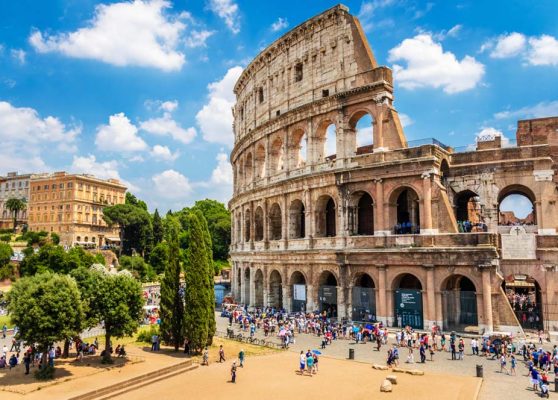
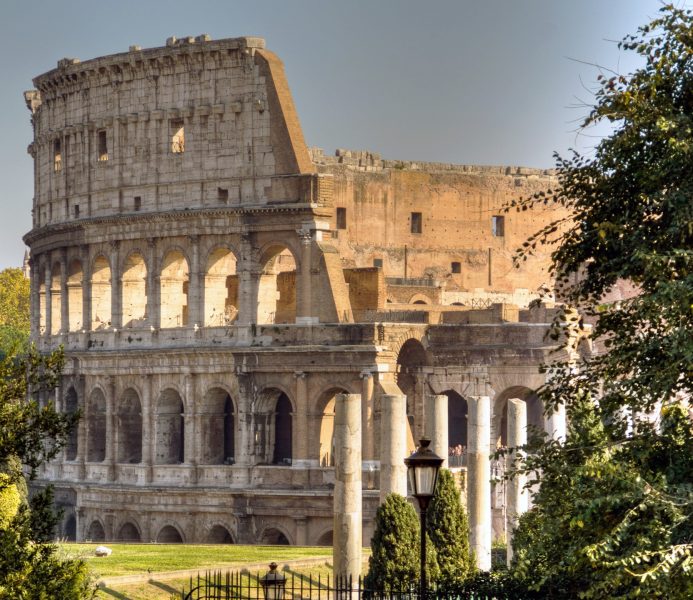
The Vittoriano’s location in the historic center of Rome allows visitors to integrate their visit into a broader itinerary of nearby attractions. Adjacent to the monument are significant cultural and historical sites, such as the Roman Forum and the Colosseum, which are within walking distance. This proximity makes the Vittoriano an ideal starting point for exploring the rich tapestry of Rome’s past.
Visitors can also explore the surrounding area of Piazza Venezia, which is a bustling hub of activity. The piazza is not only a central point for many of Rome’s transport routes but also a place where history and modernity intersect, offering a vibrant atmosphere that reflects the city’s dynamic character.
Practical Information and Tips
Access to the monument is free, allowing visitors to explore its exterior and terraces without any charge. The Vittoriano is designed to be accessible to all, with facilities in place to accommodate visitors with mobility challenges. For those interested in a deeper understanding of the monument’s historical significance, guided tours are available, providing insights into the architectural and cultural importance of this national symbol.
When visiting, it is advisable to allocate sufficient time to fully appreciate the monument and its surroundings. The terraces, in particular, offer stunning views that are best enjoyed at a leisurely pace. Additionally, visitors should be prepared for possible security checks at the entrance, as is common at major historical sites in Rome.