Curated by Andrea Bacchi and Maurizia Cicconi, the exhibition focuses on the exceptional relationship between Gian Lorenzo Bernini and Maffeo Barberini, who later became Pope Urban VIII, his most influential and decisive patron. The exhibition offers a new perspective on the birth of the Baroque, analyzing the artistic, political, and personal dialogue between the two. The event takes on further significance as it coincides with the 400th anniversary of the consecration of St. Peter’s Basilica (1626), one of the pinnacles of the Roman Baroque and of Bernini’s own artistic activity.
Central to the project is an understanding of patronage as a dynamic driver of artistic innovation. The Barberini family recognized Bernini’s unparalleled ability to synthesize sculpture, painting, and architecture into a unified vision and strategically entrusted him with epochal commissions. Their collaboration resulted in monuments that shaped the identity of Baroque Rome, particularly the Vatican Baldachin, the Portraits of Urban VIII, and the renovation of various Barberini residences.
The centrality of Gian Lorenzo Bernini in XVII century Rome
Bernini’s artistic language
To understand seventeenth-century Rome is to understand the figure of Gian Lorenzo Bernini, whose intellectual and artistic presence exceeded that of any of his contemporaries. His approach to sculpture transcended naturalistic representation, establishing a performative and experiential dimension unprecedented in European art. Bernini saw the sculpted figure not as a static object but as a moment of heightened dramatic tension, captured with astonishing technical precision.
Within this framework, the exhibition highlights the profound philosophical implications of his practice: the artist’s attention to movement, gesture, and introspective detail reflects a deep engagement with contemporary debates on human psychology, theology, and the performative nature of devotion.
One of the exhibition’s most revealing contributions is its demonstration of how Bernini’s artistic vocabulary matured in response to the full spectrum of Barberini patronage—from public ceremonies to private devotion, from ecclesiastical representation to dynastic celebration.
His innovations in marble handling, notably the ability to “paint” with light through controlled surface modulation, became a hallmark of Barberini taste and identity. The curators trace how Bernini’s sensitivity to emotional resonance and spiritual intensity allowed him to articulate a visual rhetoric aligned with the Church of Rome’s post-Tridentine aspirations.
Innovation across media
Bernini’s versatility is essential to understanding his impact. His ability to function simultaneously as architect, painter, costume designer, theorist, and dramatist positioned him as the quintessential Baroque polymath. The curators emphasize that this interdisciplinary fluency was not an incidental attribute but a deliberate methodology: Bernini approached each commission as part of a wider system of visual and spatial communication. In this view, architecture, sculpture, and painting were not separate disciplines but interdependent languages capable of generating immersive environments.
Analyses of preparatory drawings and conceptual studies displayed in the exhibition reveal the meticulous planning with which Bernini orchestrated these effects. The material demonstrates that even his most spontaneous-seeming gestures were informed by a sophisticated understanding of optics, proportion, and symbolic communication.
Such insights allow visitors to appreciate the artist as a constructor of meaning, not merely of form. Within the Barberini context, this holistic vision enabled Bernini to craft monumental ensembles capable of synthesizing theology, dynastic ambition, and the theatricality that defined Rome’s public rituals.
The Barberini as cultural architects
The relationship between Bernini and the Barberini emerges as a dialogue between artistic genius and political vision. Rather than passive patrons, the Barberini engaged actively with the conceptual underpinnings of the works they commissioned. Their influence extended into the minutiae of iconographic programs, architectural planning, and even decisions regarding the sourcing of materials. Through these interactions, the family shaped the visual culture of an entire pontificate.
Urban VIII and the culture of magnificence
Urban VIII recognized that cultural patronage was inseparable from political authority. The exhibition elucidates how the pope’s sophisticated understanding of classical precedent and literary symbolism informed his collaboration with Bernini. Archival records reveal Urban VIII’s desire to elevate Rome to a new epoch of artistic splendor, one in which the papacy projected spiritual supremacy through the language of the arts. In this context, Bernini functioned as a visual strategist whose works helped articulate the theological and ideological aspirations of the Barberini pontificate.
The curators further illustrate that Bernini’s creative environment was nourished by the intellectual vibrancy of the Barberini household, where poets, scholars, and theologians cultivated a culture of refinement. This environment contributed to the resonance between Bernini’s artistic ambitions and the family’s political goals, reinforcing their partnership as one of the defining forces of the Roman Baroque.
Exhibition theme: Bernini and his Barberini patrons
Barberini vision of art as power
At the heart of the exhibition lies the recognition that patronage, in this context, constituted a complex system of negotiation, ideological projection, and artistic co-creation. The Barberini sought images capable of articulating a conception of power rooted in virtue, lineage, and divine mandate. Bernini, in turn, responded with works that fused political messaging with emotional and spiritual resonance. The exhibition demonstrates how this interplay generated artworks whose significance extends far beyond their aesthetic qualities.
The thematic layout illustrates how Bernini adapted his language according to context: solemnity for funerary monuments, majesty for papal imagery, intimacy for domestic commissions. Yet a coherent Barberini aesthetic remains discernible—one defined by clarity, splendor, and rhetorical efficacy. It is this capacity to channel institutional identity through artistic form that the exhibition positions as the defining achievement of the Bernini-Barberini collaboration.
A multi-faceted relationship
The curators take great care to avoid idealization. Archival testimonies remind visitors that the relationship between artist and patrons involved moments of tension, disagreements over payment, and aesthetic debates. These instances, far from diminishing the collaboration, reveal the depth of critical engagement that characterized it. Bernini’s working drafts and revisions illustrate how he navigated political expectations while defending his artistic autonomy.
Particularly illuminating is the section dedicated to the intellectual exchange between Bernini and several members of the Barberini household, including Cardinal Francesco Barberini and Cardinal Antonio Barberini. Their theological and diplomatic expertise provided conceptual frameworks for Bernini’s iconographic programs, showing how the artist’s imagery developed through shared reflection rather than solitary invention.
Historical context of Barberini Rome
Barberini Rome was a laboratory of artistic experimentation. The city’s transformation under Urban VIII encompassed infrastructural modernization, architectural expansion, and the systematic promotion of a cultural identity that aligned the papacy with humanistic and scientific innovation. The exhibition situates Bernini’s work within this vibrant context, illustrating the political and ceremonial functions of monumental art in a city that understood its global significance.
Intellectual environment
Documents and printed materials included in the exhibition give insight into the cultural atmosphere cultivated by the Barberini. Their patronage extended to music, poetry, natural philosophy, and the emerging scientific disciplines. These interests informed the conceptual richness of Bernini’s projects.
For example, Barberini literary salons contributed to the allegorical sophistication of several sculptural and architectural programs, while their engagement with classical scholarship shaped the formal vocabulary of Bernini’s designs.
The display of manuscripts and early publications demonstrates that Bernini’s art emerged from—and contributed to—a broader discourse on representation, rhetoric, and the moral agency of images. Visitors are encouraged to appreciate the artist not only as a master craftsman but also as an active participant in the intellectual currents of his age.
The exhibition path
Overview of the curatorial approach
The exhibition’s curatorial structure follows both a chronological and thematic logic, allowing visitors to understand the evolution of Bernini’s collaboration with the Barberini while appreciating the broader symbolic implications of individual works. The guiding principle is to contextualize artworks not as isolated masterpieces but as nodes within a network of ideas, relationships, and ambitions. This approach provides a rare opportunity to understand how Bernini operated within a system of artistic production that involved architects, painters, stonecutters, theologians, and court intellectuals.
Integrated digital displays and comparative visual analysis enrich the visitor’s grasp of workshop practices, material choices, and iconographic strategies. The curators prioritize clarity and depth, ensuring that both specialists and general audiences can navigate the complex intersections between artistic innovation and political culture.
Section I: rise of a patronage network
This introductory section highlights the formative period in which Bernini first came into contact with the Barberini family. Early commissions, such as preliminary portraits and devotional works, reveal the gradual consolidation of trust that would eventually culminate in one of the most influential artistic partnerships in European history. Archival documents indicate that Bernini’s reputation for exceptional skill and interpretive sensitivity made him a natural choice for a family seeking to construct a public image grounded in dignity and intellectual prestige.
Early portraiture
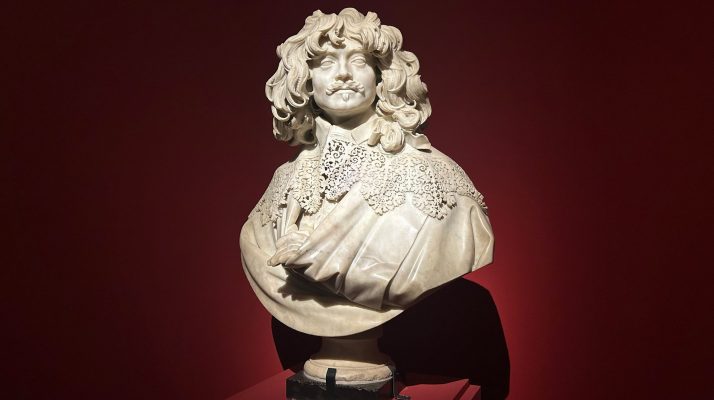
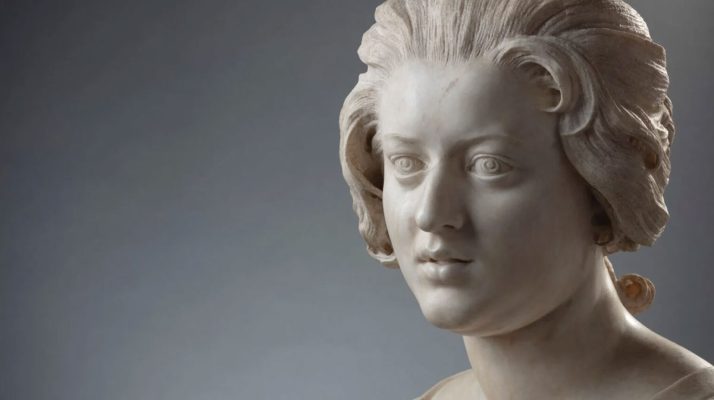
The portrait busts on display demonstrate Bernini’s ability to combine acute observational detail with the rhetorical demands of representation. Far from being mere likenesses, these works articulate hierarchical distinctions, moral virtues, and social aspirations. Visitors will note Bernini’s early experiments with the expressive potential of drapery and the dynamic rotation of the bust—innovations that would later become hallmarks of his mature style. Through these objects, the exhibition reveals how the seeds of Bernini’s monumental achievements were planted in the intimate sphere of portraiture.
Section II: Urban VIII and the transformation of Rome
This section constitutes the core of the exhibition, focusing on the monumental works that defined Bernini’s mature career and shaped the visual identity of the Barberini pontificate. Through a selection of models, drawings, engravings, and original documents, visitors gain rare insight into the complex planning processes behind projects that would forever transform the cityscape of Rome. The curators emphasize the degree to which these works functioned not only as artistic achievements but also as instruments of papal diplomacy and ideological projection.
The Baldachin of St. Peter
The exhibition dedicates a substantial sub-section to the Baldachin, presenting high-resolution reconstructions, structural analyses, and early design studies. The Baldachin is interpreted not simply as an architectural object but as a symbol of papal authority and a manifestation of Barberini identity. Its dynamic helical columns, its bronze structure, and its ornately carved details exemplify Bernini’s ability to merge engineering innovation with symbolic narrative. Visitors encounter the Baldachin as the point at which Bernini’s multifaceted talents coalesce into a fully integrated artistic language.
The Tomb of Urban VIII
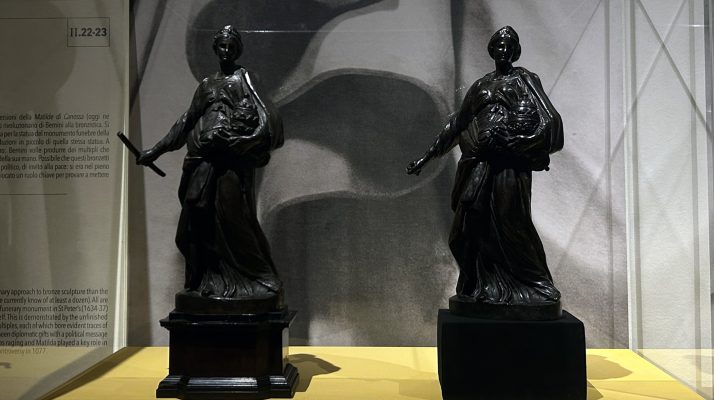
The exhibition’s treatment of the Tomb of Urban VIII underscores the subtle interplay between realism and allegory. The pope’s portrait, rendered with solemn lucidity, is juxtaposed with allegorical figures embodying virtues associated with good governance. Preparatory drawings reveal alternative compositions and discarded symbolic motifs, offering an unprecedented glimpse into the conceptual negotiations between Bernini and Barberini theologians. Such materials highlight the intellectual labor behind the finished monument and underscore Bernini’s role as a thinker capable of designing complex visual syntheses.
Section III: Barberini residences
This section provides a compelling exploration of Bernini’s architectural vision, focusing especially on his contributions to Palazzo Barberini. Visitors encounter architectural models, design sketches, and documentation illustrating the collaborative nature of seventeenth-century architectural practice. The curators emphasize how architecture served as an extension of Barberini political identity, with spatial organization and decorative schemes carefully structured to convey authority, hospitality, and cultural refinement.
Architecture as representation
The exhibition presents architecture as an expressive language in which ceremonial functions, social hierarchies, and aesthetic aims converge. Bernini’s architectural interventions reveal his mastery in orchestrating sequences of spaces intended to guide and shape the visitor’s experience.
Light, proportion, and perspectival strategies became essential tools through which Bernini expressed Barberini magnificence. These insights encourage visitors to reconsider architecture as a dynamic medium capable of synthesizing political ideology and sensory engagement.
Section IV: legacy of the Barberini-Bernini collaboration
The concluding section evaluates the enduring legacy of the Bernini-Barberini partnership. Far from ending with Urban VIII’s death, Bernini’s influence persisted through the dissemination of his stylistic principles across generations. Painters, sculptors, architects, and theorists continued to engage with his models as touchstones of artistic excellence. The exhibition situates this legacy within a broader cultural context, demonstrating how Bernini’s achievements shaped European aesthetics well into the modern era.
Bernini’s workshop and dissemination of style
Bernini’s workshop emerges as a key site of artistic transmission. Through drawings, collaborative works, and pedagogical notes, visitors witness the ways in which Bernini’s methods—his attention to gesture, his integration of narrative, his fluidity between media—were absorbed and reinterpreted by successive generations. The workshop functioned as both an educational institution and a creative laboratory, ensuring the survival and evolution of Bernini’s legacy across Europe.
Why Visit the exibition?
A rare convergence of masterpieces
The exhibition offers an exceptional opportunity to encounter works rarely displayed together. Loans from major international institutions complement the Palazzo Barberini collections, allowing visitors to appreciate the full scale of Bernini’s achievements. The meticulous curation foregrounds the complexity of his creative process, from conceptual sketches to final monumental forms.
Scholarly depth and public accessibility
Designed for both specialists and the wider public, the exhibition balances academic rigor with clarity. Interpretative tools—scientific analyses, restored documents, high-resolution models—enhance the viewer’s understanding without overshadowing the artworks themselves. Themes such as patronage, Baroque ideology, and artistic innovation are presented with precision and nuance.
Immersive experience of Baroque
Visiting the exibition means entering the cultural and intellectual world that shaped one of history’s greatest artists. Palazzo Barberini, itself a masterpiece of Baroque architecture, provides the ideal setting. The exhibition invites visitors to examine the intricate ties between art, power, religion, and identity, offering insights that extend far beyond traditional aesthetic appreciation. In doing so, it reaffirms Bernini’s position not only as a master of form, but also as a thinker whose work continues to challenge and inspire.